If you have been told you need extensive dental work, the first number you probably want to know is the full mouth dental implants cost. That question makes sense. Replacing most or all of your teeth is a major decision, and cost matters just as much as comfort, appearance, and long-term results.
The challenge is that there is no one-size-fits-all price. Full-mouth implant treatment can vary widely depending on your oral health, the number of implants used, the type of restoration placed, and whether extra procedures are needed before treatment begins. What matters most is understanding what you are paying for and whether the treatment plan gives you real long-term value.
What affects full mouth dental implants cost?
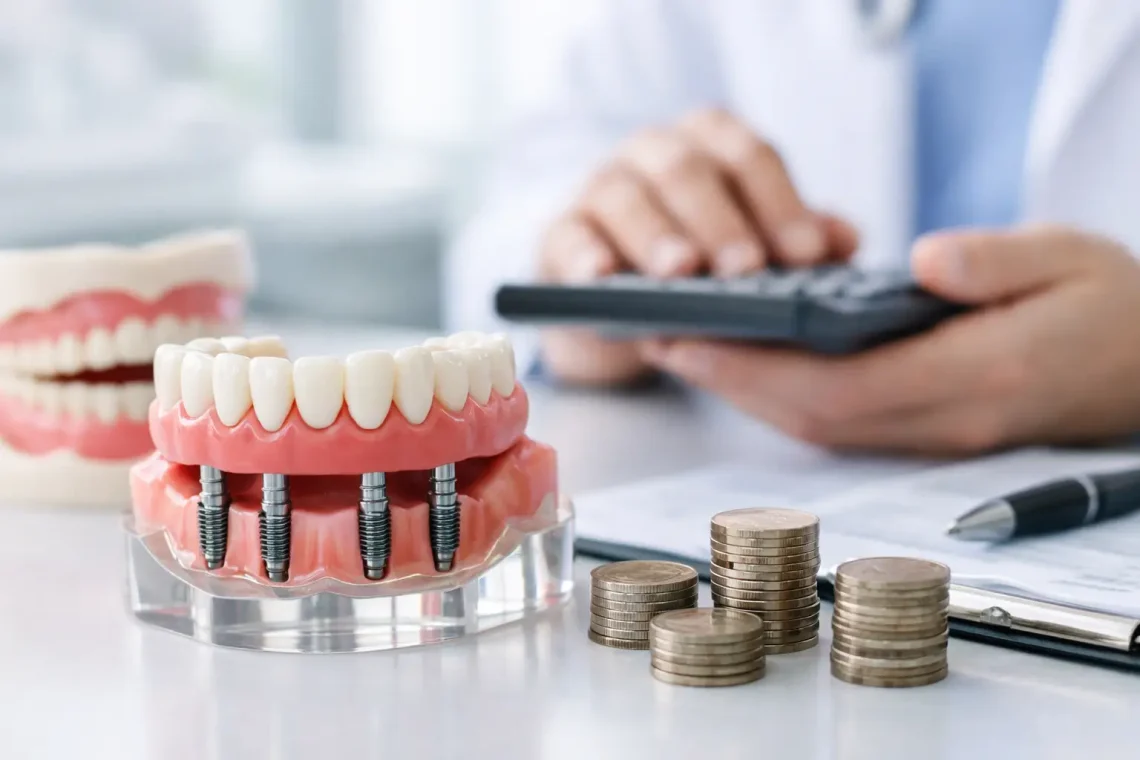
The biggest factor is the type of full-arch solution you receive. Some patients are candidates for an implant-supported denture, while others want a fixed bridge such as All-On-4 or All-On-X. A removable option usually costs less upfront than a permanently fixed restoration, but that lower entry price may come with trade-offs in feel, function, and long-term maintenance.
The number of implants also affects cost. Despite the name, full-mouth treatment does not always mean one implant for every missing tooth. Many modern systems support a full arch of teeth on four, six, or more implants per jaw. A patient with stronger bone and a straightforward case may qualify for fewer implants. Someone with more complex anatomy or bite issues may need a different approach.
Materials matter too. A temporary prosthesis costs less than a final restoration made from higher-end materials designed for durability and aesthetics. Acrylic options can be more affordable, while zirconia often costs more because it offers excellent strength, a natural appearance, and wear resistance. For many patients, this is not just a cosmetic decision. The material can influence how the teeth feel over time and how well they hold up under daily chewing.
Pre-treatment work is another key part of pricing. Some patients need extractions, bone grafting, treatment for gum infection, or sinus lifts before implants can be placed. Others can move forward more directly. Two people may both ask about full mouth dental implants cost and get very different estimates because one case is clinically simple and the other requires rebuilding the foundation first.
Typical price ranges for full-mouth implants
In general, a full-arch implant solution for one jaw may range from around $15,000 to $35,000 or more, depending on the provider, materials, technology, and complexity of care. For both upper and lower arches, total treatment often lands somewhere between $30,000 and $70,000+, with some premium cases going beyond that.
That is a broad range, and patients sometimes find it frustrating. But broad ranges are more honest than quoting a low number that leaves out important parts of treatment. A low advertised price may only apply to a single implant post, a temporary restoration, or a limited portion of the process. It may not include imaging, sedation, extractions, custom finals, or follow-up care.
That is why a consultation matters. A real treatment quote should be built around your mouth, not a generic online estimate.
Why prices can differ so much between practices
Not all implant providers offer the same level of planning, experience, or technology. One office may refer you out for scans, surgery, and restoration. Another may handle the process in-house with a more coordinated treatment plan. That difference can affect both cost and convenience.
Experience also plays a role. Full-mouth implant treatment is more complex than replacing a single tooth. Bite balance, implant positioning, jawbone support, smile design, and healing all have to work together. Paying less upfront is not always the better deal if it leads to more adjustments, more discomfort, or a restoration that does not last.
A specialist-driven practice with digital CT imaging, precise planning, and a strong full-arch focus may charge differently than a general office that offers implants as one of many services. For patients comparing options, the better question is not simply, “Who is cheapest?” It is, “What am I getting, and who is best equipped to do this well?”
What should be included in the cost?
When you compare estimates, ask what the number actually covers. A complete fee may include consultation, 3D imaging, surgical planning, extractions, implant placement, a temporary set of teeth, final restoration, follow-up visits, and adjustments. Some quotes bundle these items together, while others separate them.
You should also ask whether sedation is included, whether bone grafting would be extra, and whether the final teeth are acrylic or zirconia. These details can change the total more than patients expect.
A good treatment coordinator or doctor should explain this clearly, without making you feel rushed. Cost transparency builds trust. If pricing feels vague, overly complicated, or too good to be true, it is worth slowing down and asking more questions.
Does insurance help with full-mouth implant costs?
Insurance may help with parts of treatment, but it often does not cover the full cost of implants. Some plans contribute toward extractions, imaging, or prosthetic portions of care. Others offer limited implant benefits or annual maximums that only reduce a small part of the total.
That does not mean treatment is out of reach. Many patients use a combination of insurance, financing, and phased planning. Monthly payment options can make a larger treatment plan more manageable, especially for working adults and retirees trying to balance health needs with a household budget.
If a practice accepts insurance and offers financing, that can make a meaningful difference. The key is to get a clear breakdown of what insurance may cover and what your estimated out-of-pocket cost would be.
Is full-mouth implant treatment worth the cost?
For many patients, yes – but it depends on their goals and current oral health. If you are living with failing teeth, loose dentures, repeated dental infections, or difficulty chewing, the value of treatment goes beyond appearance. Full-mouth implants can improve bite stability, speech, comfort, and confidence. They can also support facial structure and reduce the daily frustration that comes with removable appliances.
That said, not every patient needs the most expensive option. Some do well with implant-supported dentures instead of a fixed full-arch bridge. Others may choose treatment one arch at a time. The right plan balances health, function, lifestyle, and budget.
Worth is personal. For one patient, the priority is eating comfortably again. For another, it is speaking confidently at work. For another, it is avoiding years of repairs on teeth that are already failing. Cost matters, but so does what life looks like after treatment.
How to compare value, not just price
A smart comparison looks at more than the bottom-line number. Ask who is performing the surgery, what technology is used for planning, what type of final teeth you will receive, how many full-arch cases the office handles, and what support is provided after surgery.
Also pay attention to how the team communicates with you. Full-mouth rehabilitation can feel overwhelming at first. You want a practice that explains the process clearly, answers questions with patience, and gives you confidence that you are being treated as a person, not a sales target.
For many Southern California patients, affordability and quality both matter. That is exactly why consultation-driven care matters so much. An office like California Dental Implants Specialists can evaluate your bone, bite, and goals in detail, then show you what is possible based on your actual needs instead of guesswork.
The smartest next step
If you are researching full mouth dental implants cost, you are probably not just shopping for a number. You are trying to figure out whether this solution is realistic, whether it will last, and whether it can truly change your day-to-day life.
The best next step is a personalized consultation with clear imaging, honest pricing, and a treatment plan built around your health and budget. Once you see what is included and why, the decision usually becomes much clearer. The right care should feel like an investment in eating, speaking, smiling, and living with confidence again.