
Treatment
All-On-X Full-Mouth Dental Implants
A fixed, full-arch bridge supported by four or more implants — a permanent alternative to dentures that restores chewing strength, speech, and jawbone stimulation.
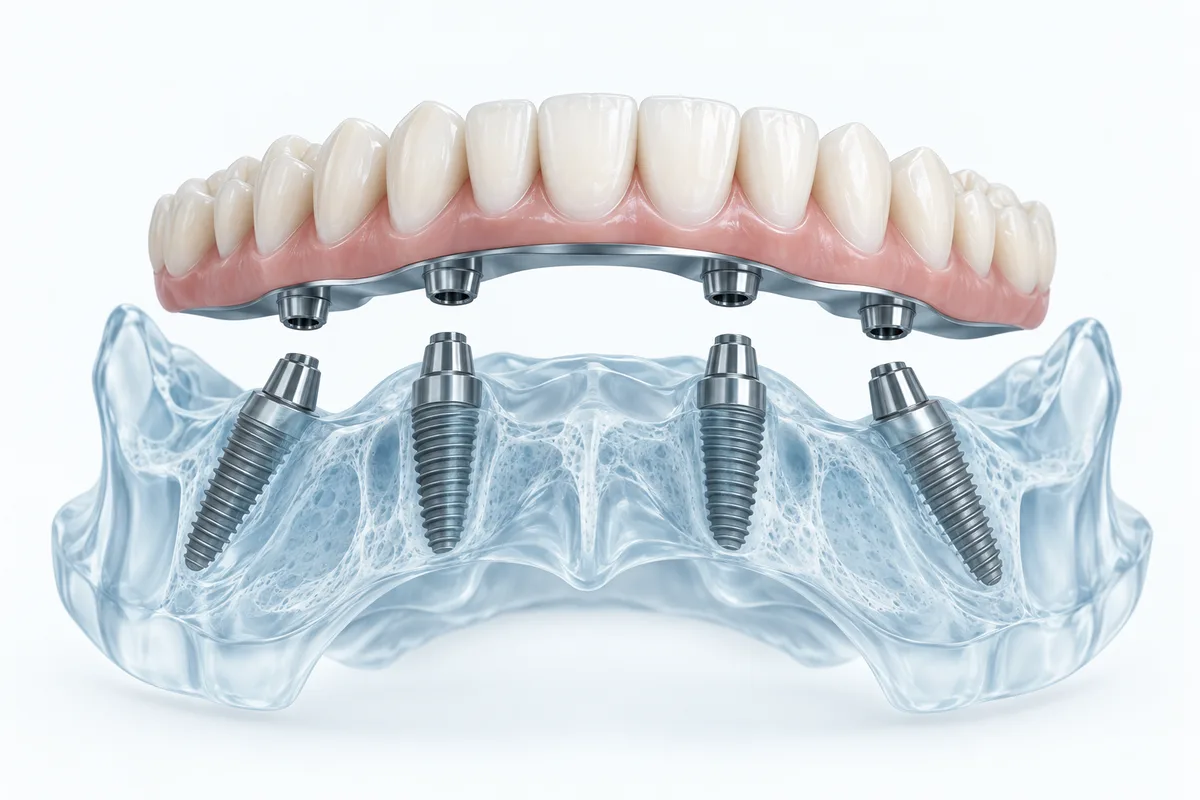
- Eat with confidence againA fixed bridge restores far stronger chewing than a removable denture, bringing back foods many denture wearers give up.
- No slipping, no adhesivesThe bridge is secured to implants. Speaking, laughing, and eating do not shift it.
- Helps preserve the jawboneImplant support delivers chewing stimulation to the bone, helping prevent the shrinkage that removable dentures accelerate.
- Designed around bone lossAngled, strategically placed implants can reach stronger bone, so many patients with significant bone loss qualify without major grafting.
- Same-day temporary teeth in eligible casesMany full-arch patients leave the placement visit with a fixed temporary bridge, so they are never without teeth while healing.
All-On-X replaces every tooth in an upper or lower arch with a fixed bridge supported by strategically placed implants — most commonly four to six per arch, with more when extra strength is called for. The bridge is secured to the implants and stays in place: it does not slip, does not need adhesive, and is removed only by your dental team for maintenance.
The name covers a family of treatments. All-On-4 uses four implants per arch and often avoids bone grafting by angling implants into stronger bone; All-On-X adds implants where more load-bearing support or longevity is wanted. The final bridge is custom-made — commonly in zirconia — to match your face and bite.
Because the implants work like tooth roots, this approach also does what no removable denture can: it keeps stimulating the jawbone, which helps prevent the bone shrinkage and facial changes that follow full tooth loss.
How it works
Consultation and 3D imaging
CT imaging maps bone volume and anatomy across the whole arch, and your doctor designs the implant positions and bridge before surgery day.
Extractions and implant placement
Remaining failing teeth are removed and the implants are placed — for most full-arch cases, in a single visit, with sedation options available.
Fixed temporary bridge
In eligible cases a fixed temporary bridge is attached the same day or shortly after, so you leave with teeth in place while the implants heal.
Healing and integration
The implants fuse with the jawbone while you follow a soft-food diet and attend follow-up visits.
Final custom bridge
Once integration is confirmed, your final full-arch bridge is fabricated and secured, designed around your face, bite, and smile line.
Who it's for
All-On-X is designed for people missing most or all of the teeth in an arch — or facing that reality soon because of failing teeth or advanced gum disease — and for long-time denture wearers who want a fixed alternative.
Significant bone loss usually does not rule it out; the technique was developed for exactly that situation. General health matters more: full-arch treatment is a longer surgical procedure, so we review your medical history carefully and coordinate with your physician when needed. CT imaging at the consultation determines implant count and position.
Recovery
Full-arch surgery involves more sites than a single implant, so expect more swelling and a longer soft-food phase — but the overall pattern is the same: the first days are the most tender, most patients feel substantially normal within a couple of weeks, and the deeper bone healing continues for months.
Our recovery and aftercare guide covers the general healing timeline; your team gives you written instructions specific to full-arch treatment.
Honest limitations
Full-arch treatment is a significant surgical and financial commitment. The honest considerations:
- Implant failure affects the whole bridge. The prosthesis depends on its supporting implants; infection or failed osseointegration at one site can require rework of the restoration.
- The bridge is durable, not eternal. The implants are intended as a long-term foundation, but the prosthetic teeth wear with daily use and may need repair or replacement after years of service — sooner with heavy grinding.
- Hygiene still matters. Fixed bridges must be cleaned around and under daily, plus professional maintenance visits, to prevent peri-implantitis.
- Health and smoking factors. Uncontrolled diabetes, certain medications, and nicotine use raise complication risks and are reviewed candidly before treatment.
- Scope and cost. Full-arch treatment is priced as a comprehensive plan — separate from our per-implant $699 offer (which covers the titanium implant post, exam, and X-rays; abutment and crown priced separately) — and some patients need preparatory procedures that add time and cost.
Talk through your options with an implant specialist
A consultation covers your exam, imaging, and a written treatment plan with clear pricing — so you can decide with complete information.