Sticker shock is real when you first hear the full mouth dental implants cost without insurance. For many patients, the number feels overwhelming at first, especially if you have been struggling with missing teeth, loose dentures, repeated dental work, or ongoing pain. But the price only makes sense when you understand what is actually included, what drives the cost up or down, and which treatment options give you the best long-term value.
If you are comparing solutions for severe tooth loss, full-mouth implant treatment is very different from getting a filling, a crown, or even one or two single implants. This is a complete restoration of your bite, smile, and oral function. In many cases, it is also a way to stop the cycle of temporary fixes that keep adding up over time.
What full mouth dental implants cost without insurance usually looks like
Without insurance, full-mouth dental implants can range widely depending on the type of treatment you need. In general, patients may see costs from roughly $20,000 to $60,000 or more per arch, or $40,000 to $120,000 or more for both upper and lower arches. That is a broad range, but there is a reason for it.
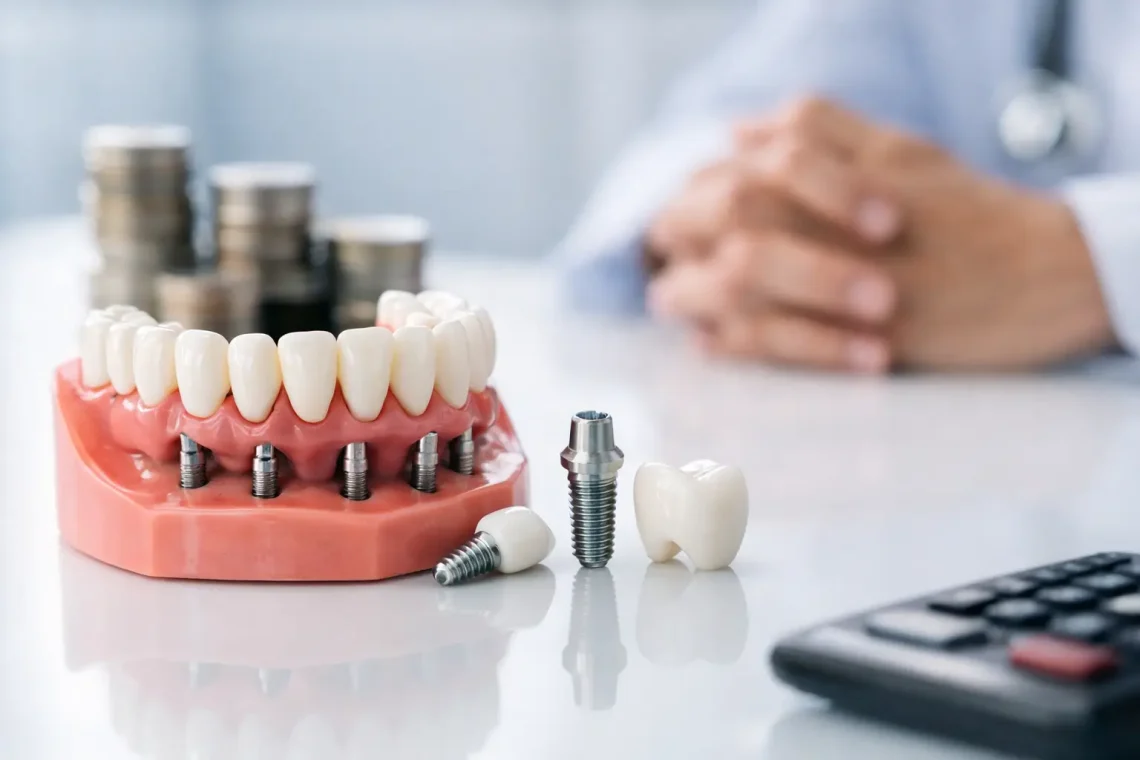
Some patients are good candidates for streamlined full-arch solutions such as All-On-4 or All-On-X, where a full set of teeth is supported by a strategic number of implants. Others need additional implants, extractions, bone grafting, sedation, or more complex surgical planning. The final fee depends on your oral health, bone volume, materials, and how customized your case needs to be.
That is why online pricing can feel confusing. Two people may both say they need full-mouth implants, but one patient needs a relatively straightforward upper arch restoration while another needs both arches rebuilt after years of bone loss and failing dental work. Those are not the same case, and they should not be priced the same.
Why the price varies so much
The biggest cost factor is the type of restoration. Traditional full-mouth reconstruction with an implant replacing each missing tooth is usually the most expensive path and often not necessary. Full-arch systems use fewer implants to support a complete row of teeth, which can make treatment more efficient while still delivering strong, long-lasting function.
The number of arches matters too. Replacing one arch costs less than rebuilding both the upper and lower. If you only need the top or bottom restored, your total investment will be lower than someone who needs a full-mouth solution on both arches.
Bone condition is another major variable. If you have gone years without teeth, or have worn unstable dentures for a long time, the jawbone may have shrunk. Some patients can move forward with tilted implant placement and advanced planning, while others need grafting or preparatory treatment. That extra care adds to the total cost but may be necessary for a stable result.
Materials also affect price. A temporary fixed bridge costs less than a final prosthesis made with stronger, more esthetic materials designed for long-term wear. Some patients start with an immediate temporary restoration and later upgrade to a premium final bridge once healing is complete.
Then there is the provider itself. Experience, technology, and treatment coordination matter. A specialty-focused implant practice with digital CT imaging, precise planning, and a team that performs full-mouth cases regularly may not be the cheapest option on paper, but it often offers more predictability and fewer costly surprises.
What is usually included in the total cost
When patients hear a large number, they often assume it is only paying for the implants. In reality, full-mouth treatment may include much more than that. Your quote may cover consultation, 3D imaging, treatment planning, extractions, implant surgery, temporary teeth, follow-up visits, and the final fixed restoration.
That is why line-by-line comparisons can be misleading. One office may advertise a low starting fee, but charge separately for imaging, sedation, abutments, temporaries, or the final prosthesis. Another may present a higher number that includes far more of the actual treatment process.
The smartest question is not simply, “How much is it?” It is, “What exactly does this fee include, and what could increase it later?” That question can save you from choosing a price that looks attractive at first but grows once treatment begins.
Full-arch implants vs dentures and repeated dental work
At first glance, removable dentures look far more affordable. For some patients, they are the right short-term option. But dentures can come with trade-offs that affect comfort, confidence, and long-term oral health. They may slip while eating or speaking, create sore spots, and do not stimulate the jawbone the way implants do.
Over time, that matters. Continued bone loss can change facial structure, reduce denture stability, and lead to repeated relines, remakes, and adjustments. If you have already spent years replacing failing teeth, repairing old bridges, or dealing with loose dentures, full-mouth implants may be the more cost-effective decision in the bigger picture.
This is especially true for patients who want to eat normally again, speak more clearly, and stop planning daily life around removable teeth. Full-mouth implants are a larger upfront investment, but they are often chosen because they offer a stronger sense of permanence.
How to think about value, not just price
If you are comparing providers, cost matters. It should. But value matters more.
A lower fee is not always the better deal if the treatment plan is rushed, the diagnostic process is limited, or the final restoration is not designed for long-term durability. On the other hand, the highest price does not automatically mean the highest quality either. What you want is clarity, experience, and a treatment plan that fits your needs instead of a one-size-fits-all package.
A good consultation should explain whether you are a candidate for All-On-4, All-On-X, implant-supported dentures, or another option. It should also explain your bone condition, whether extractions are needed, what kind of restoration you will receive, and how the office handles the temporary and final phases of care.
For many patients, peace of mind is part of the value. Knowing your case has been planned with advanced imaging and handled by an implant-focused team can make a major difference in confidence before treatment even begins.
Paying for full mouth dental implants without insurance
Most patients do not pay the full mouth dental implants cost without insurance all at once in cash. Financing is often the bridge between wanting treatment and actually moving forward with it.
Monthly payment plans can make full-arch care much more manageable, especially for working adults and retirees on a fixed budget. Some practices also offer free consultations, promotional pricing on certain implant services, or phased treatment options that help break the process into more affordable steps.
This is where transparency matters. Ask what financing programs are available, what down payment may be required, and whether your plan covers only surgery or also includes the final teeth. You want the monthly payment to be realistic, but you also want a clear picture of the total investment.
If you are in Southern California, practices like California Dental Implants Specialists have built their model around making advanced implant care more accessible through consultation-driven planning and patient-friendly financing options. That matters when you are weighing a life-changing treatment against a household budget.
Questions worth asking at your consultation
A consultation should leave you feeling informed, not pressured. Ask whether you are a candidate for immediate-load full-arch implants, how many implants are recommended per arch, whether extractions or bone grafting are expected, and what type of final restoration you will receive.
You should also ask who is performing the surgery, what imaging is used for planning, and whether the quote includes temporaries, follow-up care, and your final teeth. If two treatment plans have very different prices, ask why. A trustworthy office should be able to explain the difference clearly.
Is it worth it?
For the right patient, yes. Full-mouth implants can restore far more than appearance. They can improve chewing, speech, bite stability, and daily comfort. They can also reduce the frustration and embarrassment that often come with advanced tooth loss or unstable dentures.
That said, worth is personal. It depends on your goals, your oral health, your budget, and how tired you are of temporary solutions. Some patients want the least expensive way to replace teeth. Others want the most stable and natural-feeling solution available. Neither mindset is wrong, but they lead to different choices.
If you have been putting this decision off because the numbers feel intimidating, the next best step is not guessing. It is getting a real exam, a real scan, and a real treatment plan. Once you see what your case actually requires, the cost becomes much easier to understand, and the path forward often feels more achievable than you expected.