If you’re comparing implant supported dentures vs All-On-4, you’re probably asking a simple question: “Which option is really going to last, feel solid, and be worth the money?”
At California Dental Implants Specialists, we place and restore implants every day across our Southern California centers, so we see long-term results from both options. The “best” choice isn’t the same for everyone – but the difference in stability, comfort, and maintenance over 10–20 years can be huge.
In this guide, we’ll break down how All-On-4 (and other All-On-X full mouth dental implants) compare with implant-supported dentures so you can make a confident, informed decision.
First, Let’s Define Your Options
What Are Implant-Supported Dentures?
Implant-supported dentures (sometimes called “overdentures”) are full dentures that clip, snap, or attach to several dental implants placed in your jaw. The implants act like anchors, so the denture is more stable than a traditional removable plate.
Key traits:
- Usually uses 2–4 implants in the lower jaw and sometimes more in the upper jaw.
- Dentures may still be removable for cleaning.
- More secure than traditional dentures, but still some movement, bulk, and acrylic coverage.
- Great upgrade for long-time denture wearers who want better stability.
What Is All-On-4 (and All-On-X)?
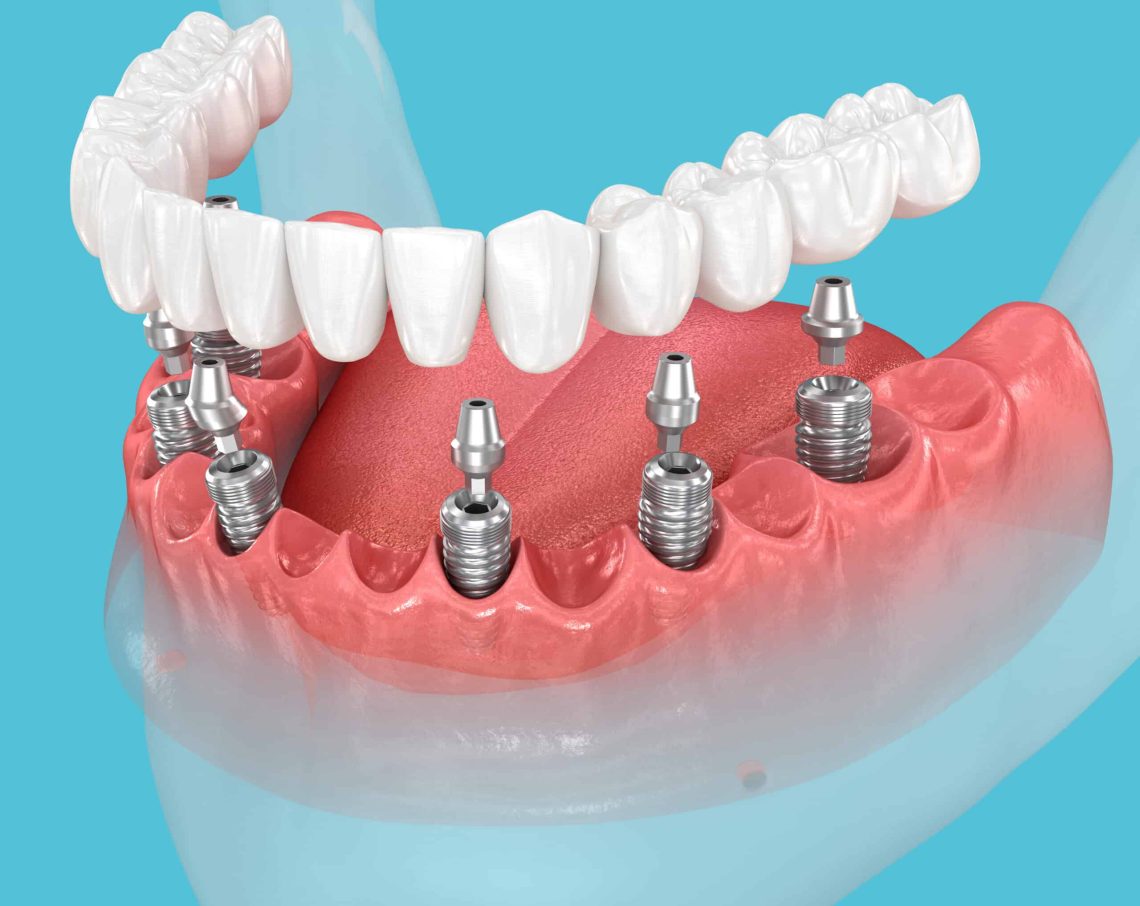
All-On-4 is a specific type of full-arch implant bridge designed to replace all teeth in one jaw using only four strategically placed implants. Today, many patients benefit from All-On-X, which follows the same concept but uses 4–6 implants depending on bone quality and anatomy.
Key traits:
- Full-arch, fixed bridge that is screwed into implants – it does not come out at home.
- Typically less bulky than a denture, with a more natural feel when you speak and chew.
- Often designed to support your facial structure and smile line like natural teeth.
- In many cases, allows “teeth in a day” – a fixed temporary bridge on the same day as extractions and implant placement.
If you’d like a deeper overview of these treatments, our main Why Dental Implants? page and the Dental Implant FAQ section are excellent places to start.
Long-Term Bone Health: Which Option Protects Your Jaw Better?
One of the biggest differences between traditional dentures and full-arch implant solutions is what happens to your jawbone over time. Without tooth roots (or implants) to stimulate the bone, the jaw will gradually shrink. This affects:
- The fit and stability of any denture sitting on the gums.
- Your facial profile and lower face support.
- How “aged” or “sunken in” your smile may appear over the years.
Implant-Supported Dentures and Bone Loss
Implant-supported dentures help slow bone loss around the areas where implants are placed. However, because much of the chewing force is still spread across the denture base and gums, they may not preserve bone as evenly through the entire arch.
All-On-4 / All-On-X and Bone Preservation
With All-On-4 and All-On-X, the implants are placed in carefully planned positions to support a full-arch bridge and distribute chewing forces through the bone. This typically offers better long-term bone stimulation, which is why many patients experience:
- More stable facial structure over time.
- Less need for repeated relines or major adjustments.
- Improved support for lips and cheeks compared to traditional dentures.
To learn more about how implants help prevent deterioration, you can also read our article on how dental implants can prevent bone loss in the jaw.
Comfort, Confidence, and Everyday Function
If you’ve worn traditional dentures, you already know: it’s not just about having “something” to smile with. It’s about how confidently you can eat, laugh, and talk without worrying.
What It’s Like Living with Implant-Supported Dentures
Implant-supported dentures are a major step up from standard plates:
- Less slipping and shifting during meals.
- Improved chewing power.
- More security when speaking and laughing.
However, they still tend to:
- Cover more of your gums and sometimes the palate (upper jaw).
- Feel bulkier than natural teeth or a streamlined bridge.
- Require removal for cleaning in many designs.
What It’s Like Living with All-On-4 / All-On-X
All-On-4 and All-On-X are designed to feel and function closer to natural teeth:
- Fixed in place: only your dental team removes the bridge for maintenance.
- More natural bite and chewing power for many foods patients avoided for years.
- Streamlined design – often less acrylic and no palate coverage.
- No nightly removal routine – you simply brush and clean around the bridge and implants.
For a broader comparison of how full-arch implants feel and perform compared to traditional dentures, you might also like our article on dental implants vs dentures.
Which Lasts Longer Financially? Long-Term Cost Comparison
At first glance, implant-supported dentures usually have a lower upfront cost than a full All-On-4 bridge. But the long-term cost picture is more nuanced.
Typical Costs Over Time with Implant-Supported Dentures
With implant-supported dentures, your investment may include:
- Implant placement surgery.
- Attachment components (locators, bars, or clips).
- The denture itself.
- Periodic relines, adjustments, and replacement dentures as the jawbone changes.
- Replacement of worn attachment parts over the years.
Over a 10–15 year period, it’s common for patients to replace their prosthesis more than once and pay for multiple maintenance visits.
Typical Costs Over Time with All-On-4 / All-On-X
An All-On-4 or All-On-X treatment plan often includes:
- Extractions (if needed).
- Full-arch implant placement.
- A same-day temporary fixed bridge (in many cases).
- A custom-designed final full-arch bridge.
While the initial fee is higher, many patients experience:
- Fewer major replacements over the long term.
- Less need for relines due to better bone preservation.
- Improved quality of life that they feel justifies the investment.
If you’re concerned about affordability, we encourage you to review our financing and insurance options. We also have a detailed article on dental implant financing made easy that explains how patients spread the cost of treatment into comfortable monthly payments.
Treatment Time and the Overall Process
Both implant-supported dentures and All-On-4 / All-On-X follow similar biological healing timelines – but the experience can feel quite different.
Implant-Supported Denture Timeline
- Consultation and planning.
- Implant placement (usually several implants per jaw).
- Healing period for osseointegration (typically a few months).
- Attachment of the denture to the implants.
- Ongoing adjustments and relines as needed.
All-On-4 / All-On-X Full-Arch Timeline
- Advanced planning with 3D CT scanning and digital imaging.
- Extractions and implant placement in a single visit for most full-arch cases.
- Placement of a fixed temporary bridge the same day or shortly after (in eligible cases).
- Healing and integration period.
- Fabrication and placement of your final, custom full-arch bridge.
For a step-by-step overview of what to expect, visit our implant process page.
Who Is a Better Fit for Each Option?
Your health, bone levels, lifestyle, and goals all play into whether implant-supported dentures or All-On-4 is the better long-term choice.
You May Be a Good Candidate for Implant-Supported Dentures If:
- You’ve worn traditional dentures for years and are frustrated with looseness.
- You want a more secure option but still prefer a removable denture.
- You have bone loss that makes full-arch bridges more complex, but you still have enough bone for several implants.
- Your budget is more limited, and you want an improvement over standard dentures without the full investment of All-On-4.
You May Be a Good Candidate for All-On-4 / All-On-X If:
- You want a fixed, non-removable solution that feels closest to natural teeth.
- You’re ready to invest in long-term stability, comfort, and appearance.
- You’re tired of bulky dentures, adhesives, and worrying about movement.
- You want full-arch restoration that also helps support your facial structure.
If you’re unsure which category you fall into, our team can evaluate your mouth, bone levels, and medical history and give you honest guidance. You can also learn more about candidacy in our article on 5 signs you’re a good candidate for dental implants.
Why Work with California Dental Implants Specialists?
Choosing between implant-supported dentures and All-On-4 is a big decision – and the experience of your provider matters just as much as the treatment you select.
At California Dental Implants Specialists, our implant centers are equipped with in-office digital CT scanning, advanced planning software, and technology tailored specifically for full-arch implant solutions. We focus on predictable, long-lasting outcomes and compassionate care from your first consultation through your final smile.
We proudly serve patients throughout Los Angeles and Orange County from several convenient locations:
- California Dental Implants Specialists – Huntington Beach
18800 Main St #110A
Huntington Beach, CA 92648
Phone: (714) 418-4480 - California Dental Implants Specialists – Pacifica
18800 Main St #110C
Huntington Beach, CA 92648
Phone: (714) 418-4480 - California Dental Implants Specialists – Marina del Rey
4292 Lincoln Blvd
Marina del Rey, CA 90292
Phone: (310) 905-8747 - Downey Dental Implants | California Dental Implants Specialists
8512 Paramount Blvd
Downey, CA 90240
Phone: (562) 662-3773
You can see all our offices on the locations page and learn more about our team on the About Us page.
Ready to Talk About Your Full-Arch Options?
Whether you’re leaning toward implant-supported dentures or a full All-On-4 / All-On-X solution, the first step is a personalized consultation. We’ll review your goals, scan your jawbone, explain your options in detail, and outline a clear treatment and financial plan.
To schedule your consultation, please call the location most convenient for you or request an appointment through our contact page. We’re here to help you choose the solution that will give you long-term comfort, confidence, and a smile you’re proud to show.