The biggest surprise for many patients is this: full mouth dental implants do not get cavities, but they still need excellent daily care. If you are wondering how to clean full mouth dental implants, the goal is simple – keep the gums, implant connections, and prosthetic teeth as clean as possible so your investment stays healthy, comfortable, and long-lasting.
That matters more than most people realize. Food debris, plaque, and bacteria can still build up around implants, especially near the gumline and underneath a full-arch bridge. When that buildup is ignored, the gums can become irritated, sore, or swollen. Over time, that inflammation can threaten the bone and tissue supporting the implants. In other words, the prosthetic teeth may be strong, but the health of the surrounding tissue is what keeps everything stable.
Why cleaning full mouth implants is different
Cleaning full mouth implants is not exactly the same as cleaning natural teeth, and it is not the same as caring for traditional dentures either. With natural teeth, you are mostly focused on enamel, gumlines, and the spaces between teeth. With implant-supported full arches, you also have to pay attention to the underside of the bridge, the areas where the restoration meets the gums, and any spots where food can get trapped.
This is why some patients feel a learning curve at first. A fixed full-arch restoration can look and feel beautifully natural, but because it stays in place, you need the right approach to clean around it thoroughly. Once the routine becomes familiar, most patients find it very manageable.
How to clean full mouth dental implants every day
The best routine is one you can follow consistently. For most patients, that means cleaning in the morning and again before bed, with a quick rinse or water flush after meals if food tends to collect.
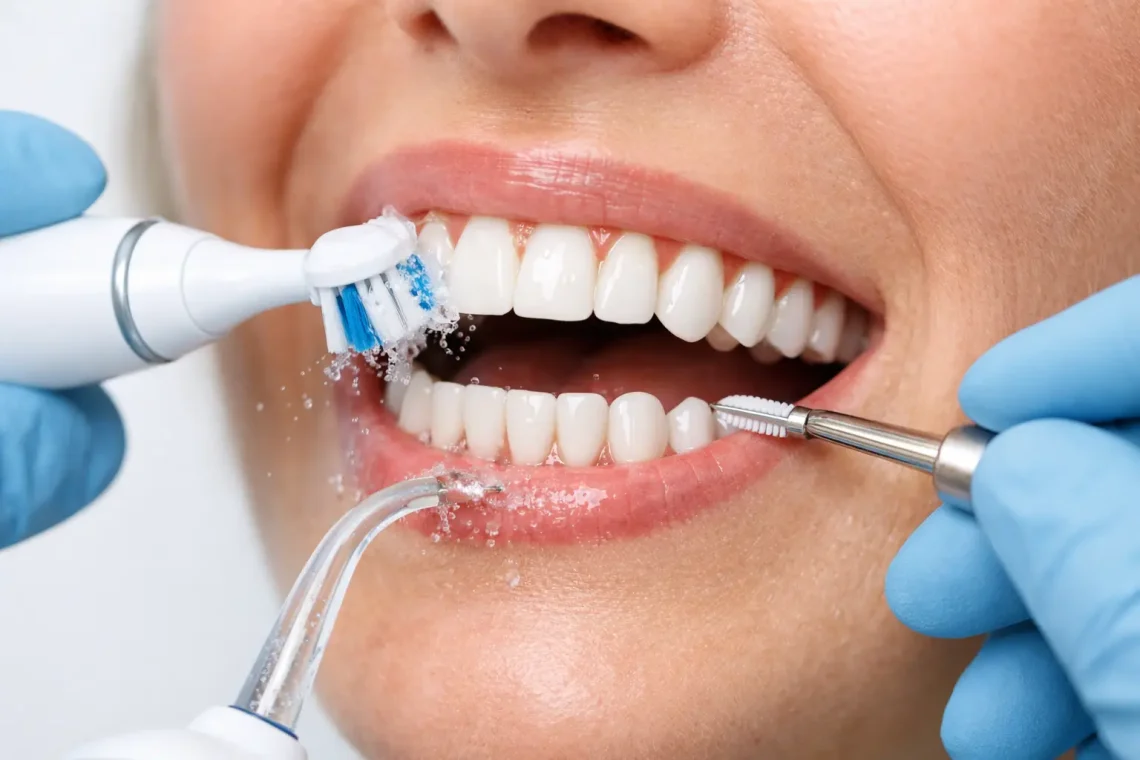
Start with a soft-bristled toothbrush or an implant-safe electric toothbrush. Brush gently along the front, back, and chewing surfaces of the prosthetic teeth. Then slow down and angle the brush toward the gumline where the restoration meets the tissue. That edge is one of the most important places to keep clean because plaque tends to collect there.
Next, clean underneath the arch. This is the step patients skip most often, and it is the one that can make the biggest difference. Depending on the design of your prosthesis and the amount of space beneath it, your dentist may recommend a water flosser, super floss, interdental brushes, or a combination of these tools. The goal is to remove debris from under the bridge without irritating the gums.
A water flosser is often one of the easiest tools to use for full mouth implants. Aim the stream along the gumline and under the prosthetic arch to flush out food particles and loosen plaque. It is effective, convenient, and especially helpful for patients who struggle with manual flossing. Still, it should not always be viewed as a complete replacement for other cleaning methods. In some cases, threader floss or super floss can reach areas that need more direct contact.
Interdental brushes can also be useful if they are the correct size and used gently. They help clean around implant posts and tight spaces where a regular toothbrush cannot reach. The wrong size, however, can be uncomfortable or too abrasive, so this is one of those areas where personalized guidance matters.
The best products for full mouth implant care
You do not need an overflowing bathroom drawer to take care of your implants. In fact, keeping the routine simple usually leads to better long-term habits. What matters most is using products that are effective but gentle.
A soft toothbrush is usually the safest place to start. Many patients do well with a low-abrasion toothpaste because highly abrasive formulas can dull or scratch certain prosthetic materials over time. Non-alcohol mouth rinses are often preferred when extra freshness is needed, especially if your mouth tends to feel dry.
Water flossers are popular for a reason. They are practical, easy to use, and particularly helpful for full-arch restorations. Super floss or floss threaders can add another level of cleaning under the bridge. Some patients also benefit from proxy brushes or rubber-tip cleaners for detail work along the edges.
The trade-off is that not every tool is right for every restoration. An All-On-4 case may have different cleaning needs than implant-supported dentures or a different style of full-arch bridge. The shape of your gums, the contour of the prosthesis, your hand dexterity, and your sensitivity level all play a role.
Common mistakes patients make
One of the most common mistakes is assuming implants need less care than natural teeth. In reality, they require just as much attention, and sometimes more precision. You cannot afford to be casual about the tissue around them.
Another mistake is brushing the visible teeth but ignoring the underside of the bridge. If food and plaque stay trapped there day after day, bad breath, inflammation, and tenderness can follow. Patients sometimes think discomfort means the implants are failing, when the real issue is simply that the tissues need better cleaning.
Using hard-bristled brushes or aggressive scrubbing is another problem. More pressure does not mean a better clean. It can irritate the gums and make daily care unpleasant, which makes people less likely to stay consistent.
Some patients also wait too long between professional maintenance visits. Even if your home care is excellent, full mouth implants still need regular checkups and cleanings. Certain areas are difficult to access on your own, and your dentist needs to monitor the health of the gums, bone, and prosthetic components.
What if food keeps getting stuck?
This is a very common concern, especially in the first few weeks after treatment or after receiving a new prosthesis. Full mouth restorations are designed to restore function and appearance, but there may still be small spaces where food can collect. That does not always mean something is wrong.
It may mean your cleaning routine needs a slight adjustment. A water flosser after meals can make a big difference. Taking a minute to rinse and clean after eating fibrous foods, meats, rice, or seeded foods can help prevent buildup later in the day.
If food impaction feels excessive, painful, or new, it is worth having your dentist check the fit and contours of the prosthesis. Sometimes a minor adjustment improves comfort and makes cleaning easier.
Signs your implants need more attention
Healthy implants should feel stable and comfortable. The gums around them should look calm, not puffy or irritated. If you notice bleeding when cleaning, persistent bad breath, tenderness, swelling, or a bad taste that keeps returning, those are signs your implant hygiene may need improvement or that the area should be professionally evaluated.
Pain is not something to brush off. The earlier inflammation is addressed, the easier it usually is to manage. Waiting tends to make treatment more involved and more expensive, which is exactly what most patients want to avoid.
Professional cleanings still matter
Even patients with excellent habits benefit from regular implant maintenance visits. Professional care helps remove hardened buildup, check for gum inflammation, inspect the prosthesis, and confirm that the implants remain healthy and secure.
This is also the best time to fine-tune your at-home routine. Small changes in brushing angle, flossing technique, or tool selection can dramatically improve results. At California Dental Implants Specialists, patient education is part of protecting long-term success, because the best implant treatment does not end when the smile is delivered.
Building a routine you will actually keep
The ideal implant cleaning routine is not the most complicated one. It is the one you can repeat every day without frustration. For many patients, that means brushing carefully twice a day, cleaning underneath the bridge at least once daily, rinsing after meals when needed, and staying consistent with maintenance visits.
If your hands are not as steady as they used to be, powered tools may help. If you travel often, a simplified kit can keep you on track. If your gums are sensitive, gentler tools and better technique usually work better than avoiding the area. There is no prize for doing it the hard way.
Full mouth dental implants are designed to give you confidence when you eat, speak, and smile. Protecting that confidence comes down to everyday care. A few focused minutes each day can help preserve comfort, support your gums, and keep your new smile feeling like it truly belongs to you.