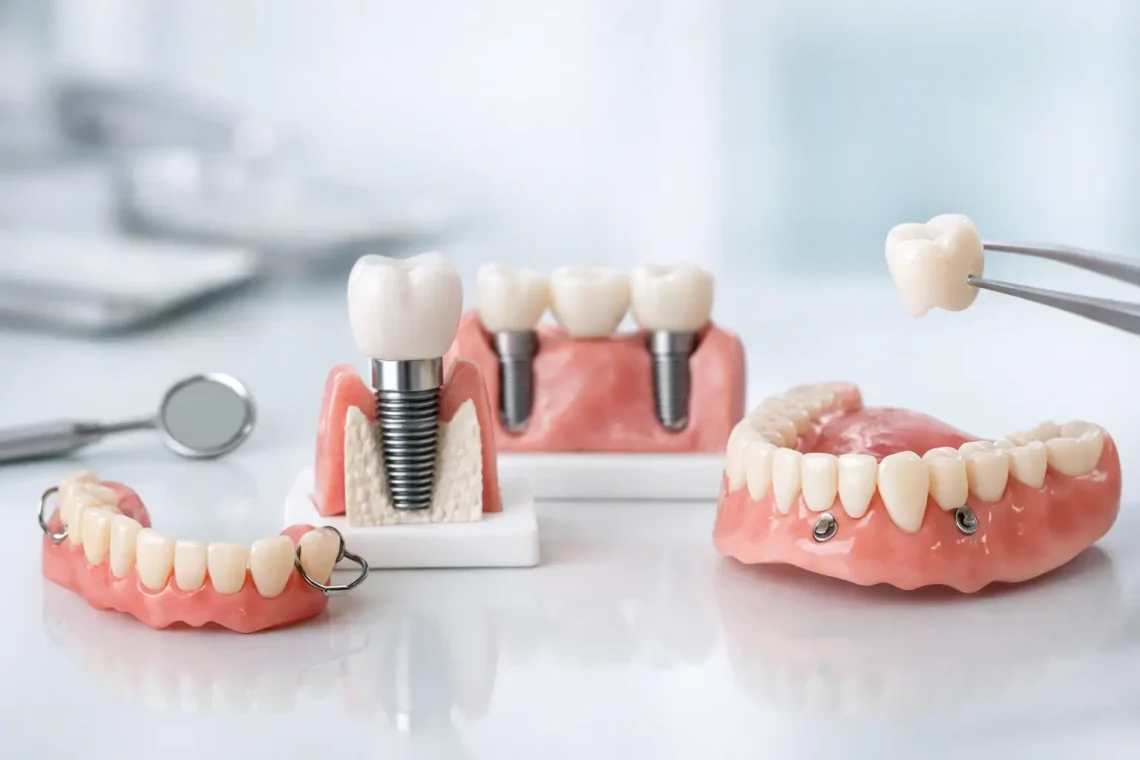
A denture that shifts when you laugh, clicks while you speak, or makes certain foods feel off-limits can affect far more than your smile. The best alternatives to dentures are designed to address the problem underneath the frustration: missing tooth roots and the loss of support that follows. For many patients, dental implants create a more stable, natural-feeling path back to comfortable eating, clearer speech, and everyday confidence.
The right solution depends on how many teeth are missing, the condition of your jawbone and gums, your health history, and whether you want a removable or fixed restoration. A consultation with implant imaging can turn a confusing decision into a clear, personalized treatment plan.
Why Traditional Dentures Can Become Difficult
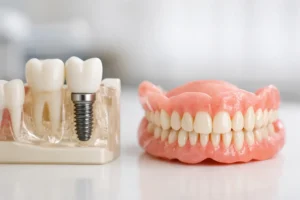
Conventional dentures rest on the gums. While they can be an accessible option after tooth loss, they do not replace the roots that once stimulated and supported the jawbone. Over time, the jaw may change shape, which can make a denture feel looser and require relines, adjustments, or replacement.
Adhesives may help some people, but they do not always solve movement or pressure points. Lower dentures can be especially challenging because there is less surface area for them to rest on. Patients often tell us they want to stop planning meals around their teeth, worrying about a denture slipping, or removing their teeth at night.
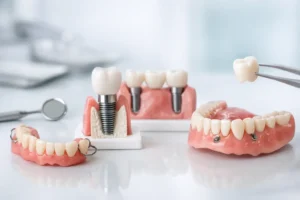
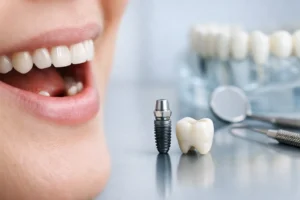
Dental implants are small posts placed in the jawbone to serve as artificial tooth roots. Once healed and restored, they can support a crown, bridge, or full arch of teeth. Not every alternative is right for every patient, but implants change what is possible when stability is the priority.
Best Alternatives to Dentures for Different Needs
Single-tooth dental implants
If you are missing one tooth or a few teeth in different areas of the mouth, a single-tooth implant may be the most conservative option. An implant is topped with a custom crown that is shaped and colored to blend with your natural teeth. Unlike a traditional bridge, it does not usually require neighboring healthy teeth to be filed down for support.
This option can be especially valuable when the missing tooth is visible in your smile or used heavily for chewing. It also helps maintain space between surrounding teeth and provides stimulation to the jaw in the area of the missing root. Treatment timing varies based on healing needs, bone availability, and whether an extraction is necessary.
Implant-supported bridges
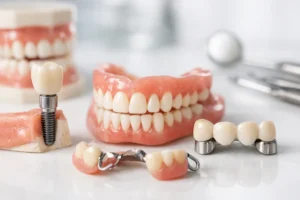
An implant-supported bridge replaces several missing teeth in a row without requiring one implant for every tooth. Instead of resting on the gums or attaching to natural teeth, the bridge is supported by strategically placed implants.
For a patient missing three adjacent teeth, for example, an implant bridge can provide a fixed solution that feels more secure than a removable partial denture. It can improve bite function and eliminate the clasps that many people dislike about traditional partials. Your implant specialist will determine the appropriate number and position of implants based on your bite, bone structure, and the length of the bridge.
Implant-supported dentures
Implant-supported dentures are a strong choice for people who need to replace most or all teeth but are comfortable with a removable appliance. Two or more implants, depending on the treatment plan, secure the denture with specialized attachments. The denture can snap into place for improved stability and be removed for cleaning.
Compared with a conventional denture, this option can reduce movement and often makes chewing and speaking feel more predictable. It may also reduce the need for adhesive. Because the restoration remains removable, it can be a more budget-conscious step toward implant treatment for some patients.
There is a trade-off: even though implant-supported dentures are much more stable, they are not the same as a fully fixed set of teeth. They still need to be removed daily and require periodic maintenance of the attachment components.
All-On-4 or All-On-X full-mouth implants
For patients who have lost all or nearly all teeth in an upper arch, lower arch, or both, All-On-4 and All-On-X treatment can provide a fixed full-arch restoration. A complete bridge of teeth is supported by a planned number of implants, often placed at angles that make effective use of available bone.
This is one of the most life-changing alternatives to dentures for patients who want teeth that stay in place. A fixed full arch can restore the feeling of having a stable smile for meals, conversations, photos, and daily life. Many patients appreciate that they do not have to remove the teeth at night.
Full-mouth implant treatment is more involved than a conventional denture, and it requires careful planning. Digital CT imaging helps the clinical team evaluate bone volume, sinus position, nerves, bite forces, and the ideal implant placement. Some patients may need extractions, bone grafting, treatment for gum disease, or a staged approach before receiving their final teeth.
Fixed Teeth vs. Removable Teeth: What Is the Real Difference?
The decision often comes down to the level of security and convenience you want. A removable implant-supported denture is anchored and typically far more stable than a traditional denture, but you take it out to clean it. A fixed implant bridge is attached by the dental team and stays in place full time.
Fixed teeth are often preferred by patients who want the closest experience to natural teeth. They can be an excellent fit for people who are tired of denture movement and want to eat with more confidence. However, fixed full-arch treatment generally involves a greater financial investment and a more comprehensive surgical plan.
A removable option may be the better fit when budget, anatomy, hygiene preferences, or personal comfort make it the practical choice. The best treatment is not automatically the most extensive treatment. It is the one that supports your health, lifestyle, and long-term goals without creating unnecessary strain.
Can You Get Implants If You Have Bone Loss?
Bone loss is common after tooth loss, especially when someone has worn dentures for years. It does not automatically rule out implants. In many cases, modern planning allows implants to be placed in areas with stronger available bone, while other patients may benefit from bone grafting or a different treatment design.
A 3D CT scan is essential because a standard visual exam cannot show the full picture. It allows the implant specialist to see the jawbone in detail and plan treatment with precision. This is also why a free implant consultation should be more than a quick price quote. It should include a thoughtful conversation about your anatomy, health, goals, timeline, and financial options.
Smoking, uncontrolled diabetes, active gum infection, teeth grinding, certain medications, and prior radiation treatment can affect implant planning and healing. These factors do not always disqualify someone from care, but they deserve honest discussion before treatment begins.
What to Expect From the Implant Process
The process begins with an evaluation, digital imaging, and a treatment recommendation. If teeth need to be removed, your provider will explain whether implants can be placed at the same appointment or after a healing period. Once implants are placed, they need time to integrate with the bone before the final crown, bridge, or full-arch teeth are completed.
Some full-arch patients may receive a temporary set of teeth during the treatment process. Your final restoration is designed after healing and bite planning, with attention to comfort, function, and a natural appearance. Follow-up visits and excellent home care matter because implants need healthy gums and regular professional maintenance to last.
Cost is understandably part of the conversation. Rather than choosing solely by the lowest initial number, ask what is included: imaging, extractions, temporary teeth, final restorations, sedation, follow-up care, and any needed maintenance. California Dental Implants Specialists helps patients explore transparent treatment options, financing, and insurance benefits so implant care can feel more attainable.
If dentures are keeping you from enjoying meals, speaking freely, or smiling without hesitation, you do not have to accept discomfort as the permanent answer. A personalized implant consultation can show you what your jaw can support and help you choose a solution that feels like a genuine return to yourself.