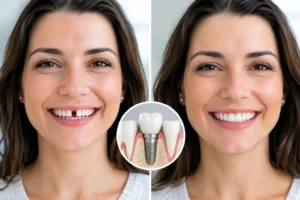
Losing a front tooth changes more than a photograph. It can make you cover your mouth when you laugh, hesitate during conversations, and worry about biting into an apple or sandwich. So, can implants replace front teeth? For many qualified patients, yes. A front tooth implant can replace a missing tooth from root to crown, creating a stable, natural-looking result that supports both your smile and your oral health.
The key is careful planning. Front teeth sit in the most visible part of your smile, where gum shape, tooth color, bite alignment, and facial appearance all matter. A successful result requires more than placing an implant. It requires a personalized plan designed around the details that make your smile look like you.
Can Implants Replace Front Teeth Successfully?
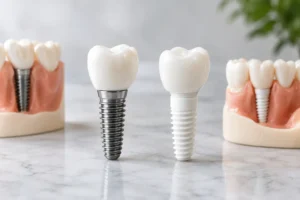
A dental implant is a small titanium post placed in the jawbone where the natural tooth root once was. After it bonds with the bone, it can support a custom crown that is shaped and shaded to blend with neighboring teeth. Unlike a removable partial denture, an implant is fixed in place. Unlike a traditional bridge, it may allow your dentist to replace one missing tooth without reshaping the healthy teeth beside it.
Front tooth implants are commonly used to replace a missing central incisor, lateral incisor, or canine. They can also be part of a larger implant bridge or full-mouth restoration plan when several teeth are missing.
Because an implant replaces the root as well as the visible tooth, it helps direct chewing forces into the jawbone. That stimulation is valuable. After tooth loss, the bone in that area can gradually shrink. Replacing the tooth sooner can help preserve the foundation needed to support your lips, gums, and facial structure.
Why Front Tooth Implants Require Extra Precision
A back tooth implant needs to handle strong chewing pressure. A front tooth implant must do that while also looking completely at home in your smile. Small details are visible: the height of the gumline, the curve of the crown, the way light passes through the porcelain, and the spacing between teeth.
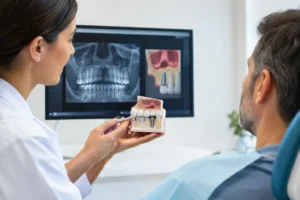
This is why advanced imaging and treatment planning matter. A digital CT scan allows the implant team to evaluate bone volume, nearby tooth roots, and the ideal implant position before treatment begins. The final crown is then designed to complement your natural smile rather than look noticeably different from it.
The gum tissue is especially important in the front of the mouth. If the gums have receded after trauma, infection, or a long-standing missing tooth, a patient may need grafting or soft-tissue treatment to create the best possible frame for the new crown. This can add time to treatment, but it often improves the long-term appearance and stability of the result.
What Happens When a Front Tooth Is Removed?
Every case is different. If a front tooth is badly damaged, cracked below the gumline, or affected by infection, the first step may be a gentle extraction. From there, your implant specialist will decide whether the implant can be placed immediately or whether the area should heal first.
Immediate implants
In some cases, the implant can be placed on the same day a tooth is removed. This approach may reduce the number of surgical visits and may help preserve bone and gum contours. Patients may also receive a temporary tooth so they do not have to leave with a visible gap.
Immediate placement is not automatically the best choice, though. There must be enough healthy bone to stabilize the implant, and active infection or severe bone loss may change the plan. The safest approach is the one that gives the implant the strongest foundation.
Delayed implant placement
When bone or gum tissue needs time to heal, the tooth may be removed first and the implant placed later. Bone grafting may be recommended if the jaw has lost volume or if the extraction site needs additional support.
Waiting can feel frustrating when the missing tooth is near the front of your smile. However, a temporary replacement option can protect your appearance while your mouth prepares for the final implant. Thoughtful timing is part of protecting your investment in a result built to last.
Will a Front Tooth Implant Look Natural?
It can, especially when the process includes detailed cosmetic planning. The implant itself sits below the gumline. What people see is the crown, which is custom-made to match the color, length, shape, and translucency of nearby teeth.
Your specialist may take digital scans, photographs, and shade measurements before the crown is made. If you plan to whiten your natural teeth, it is usually best to do that before selecting the final crown color. Porcelain crowns do not respond to whitening treatment the same way natural enamel does.
A temporary crown can also serve an important purpose. It may help guide gum tissue into a natural shape while the implant heals. Once the implant has fully integrated with the bone, the final crown is attached. The goal is a result that looks balanced when you smile and feels secure when you speak and eat.
Who Is a Good Candidate for a Front Tooth Implant?
Many adults who have lost a front tooth are candidates for implants, but a consultation is the only way to know whether treatment is right for you. Your implant team will evaluate your bone health, gums, bite, medical history, and goals for your smile.
Healthy gums and adequate jawbone are helpful, but they are not the only path to treatment. Patients with bone loss may still qualify after bone grafting or with a carefully planned alternative solution. Even if you have worn a bridge or partial denture for years, it may be possible to explore implant-supported treatment.
Smoking, uncontrolled diabetes, active gum disease, and teeth grinding do not always rule out implants, but they require additional planning. For example, a nightguard may protect a front tooth crown if you grind or clench in your sleep. Honest conversations about health habits help create a plan that supports predictable healing.
What Are the Alternatives to a Front Tooth Implant?
An implant is often an excellent long-term option, but it is not the only option. A traditional dental bridge can replace a missing front tooth by anchoring a false tooth to crowns on the teeth next to the gap. This can be a practical choice when those neighboring teeth already need crowns, but it requires altering them.
A removable partial denture can replace a tooth quickly and may cost less initially. However, it can shift during eating or speaking and does not provide the same jawbone stimulation as an implant. A resin-bonded bridge, sometimes called a Maryland bridge, may be considered in select cases, particularly when a less invasive temporary or conservative option is needed.
The right choice depends on your oral health, timeline, budget, and expectations. A quality consultation should make the trade-offs clear rather than push every patient toward the same treatment.
How Long Does Treatment Take?
The full timeline can range from several months to longer when grafting or complex healing is needed. Implant placement itself is often completed in one appointment. What takes time is the biological healing process, called osseointegration, when the implant bonds with the jawbone.
During that period, you may wear a temporary tooth so you can continue smiling confidently. Once healing is complete, the final crown is placed and adjusted for comfort and bite balance. Patients should expect follow-up visits, especially for front teeth, where fine adjustments can make a meaningful difference in appearance.
Making Front Tooth Implant Care More Attainable
Cost is understandably part of the decision. The total investment can vary based on whether you need an extraction, bone graft, temporary tooth, custom crown, or additional procedures. Asking for a written treatment plan helps you understand what is included and avoid surprises.
At California Dental Implants Specialists, the consultation process is designed to give patients clear answers about candidacy, timing, and payment options. With in-house imaging, accessible financing, insurance acceptance, and a patient-focused approach, treatment can feel more manageable without compromising the precision a front tooth restoration deserves.
If you are living with a missing or failing front tooth, waiting can allow bone and gum changes to progress. A consultation can give you a clear path forward, whether you are ready for an implant now or need a staged plan that protects your smile for the future.