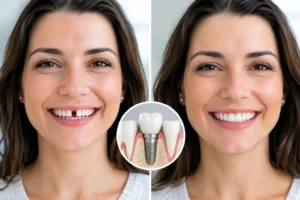
A missing tooth can change more than a photograph. It can make you favor one side while chewing, avoid certain foods, speak less freely, or worry that nearby teeth are shifting. This dental implant cost guide is designed to make the financial side of restoring your smile clearer, so you can compare treatment options with confidence rather than guessing from a headline price.
Dental implants are a long-term tooth replacement solution, but there is no single honest price for every patient. Your final cost depends on the number of teeth being replaced, the health of your jawbone and gums, the type of restoration you need, and whether supporting treatment is required before implant placement.
What Does a Dental Implant Actually Include?
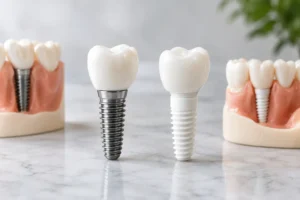
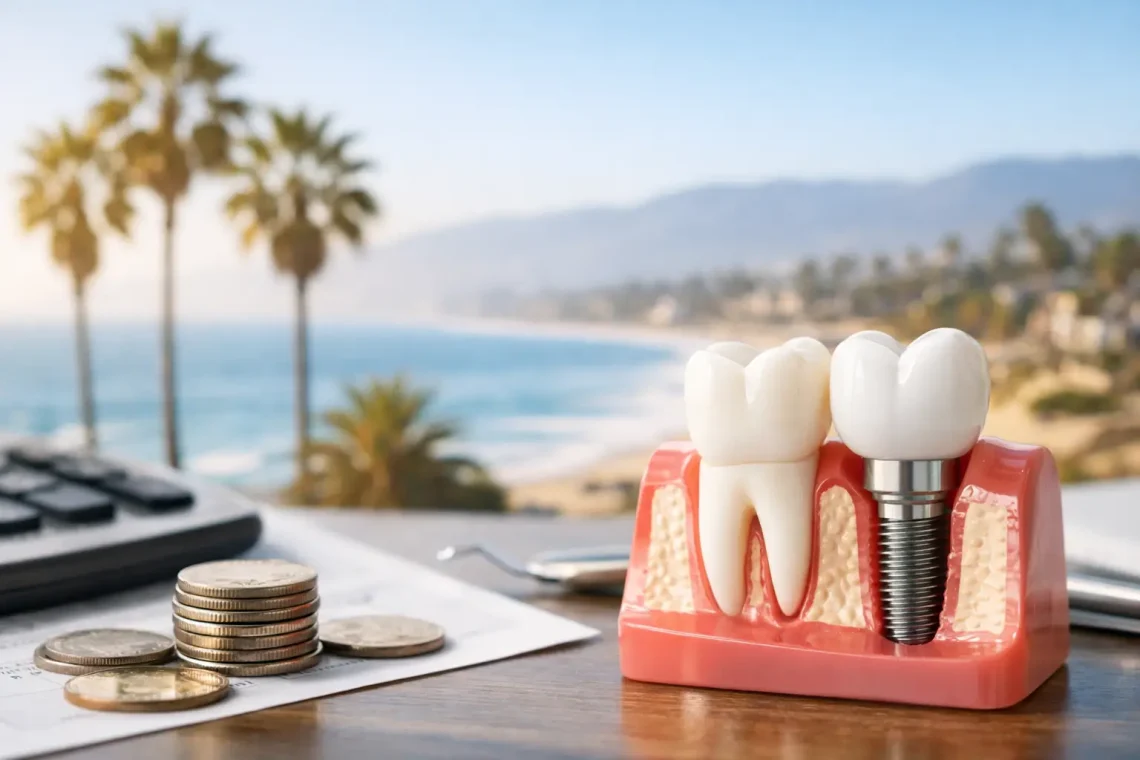
When people hear “implant,” they may be referring to the complete replacement tooth. Clinically, that replacement usually has three parts: the implant post placed in the jawbone, the abutment that connects the post to the restoration, and the custom crown, bridge, or full-arch prosthesis visible above the gumline.
A meaningful price conversation should identify which of those components are included. Some advertised offers may cover the implant post only, while others may include additional components or apply to a specific stage of treatment. That does not make a promotion misleading, but it does mean patients should ask for a written treatment plan that clearly separates the promotional price from any necessary clinical services.
At California Dental Implants Specialists, treatment planning begins with a consultation and digital CT imaging so the team can evaluate bone volume, nerve location, sinus position, bite forces, and the condition of remaining teeth. This level of planning helps determine whether a straightforward implant is appropriate or whether your case needs added preparation for a stable, lasting result.
Dental Implant Cost Guide: What Changes the Price?
The most useful way to compare dental implant costs is not to search for one average number. Instead, look at the clinical factors behind the estimate. A lower starting price can be valuable, especially when it makes care more accessible, but the treatment must still fit your health needs and include the essentials required for a functional final tooth.
The number and location of missing teeth
Replacing one missing tooth usually requires a single implant and crown. Replacing several adjacent teeth may be better suited to an implant-supported bridge, which can restore multiple teeth without placing an implant for every gap. For patients missing most or all teeth, full-mouth solutions such as All-On-4 or All-On-X can support an entire arch of fixed teeth with strategically placed implants.
Front teeth often demand extra attention to gum contours and natural appearance. Back teeth must withstand heavy chewing pressure. Both can affect planning, materials, and the complexity of the final restoration.
Bone grafting, sinus lifts, and extractions
Implants rely on healthy bone for support. If a tooth has been missing for years, the jawbone may have narrowed or lost height. Gum disease, infection, trauma, or long-term denture use can also affect the foundation available for an implant.
Some patients can move directly to implant placement. Others may need an extraction, bone graft, sinus lift, or healing period first. These steps add to the overall cost and timeline, but they are not unnecessary extras. They may be what allows an implant to be placed safely and positioned for better long-term support.
The restoration material and design
The crown or bridge is not merely cosmetic. It is the part that helps you chew, speak, and maintain a balanced bite. Materials vary in appearance, strength, and cost. Your dentist may recommend different options based on where the tooth sits, how strongly you bite, whether you grind your teeth, and the look you want to achieve.
For full-mouth treatment, the design of the final bridge, the number of implants used, and the material selected can create a substantial difference in cost. A detailed plan should explain whether you are receiving a temporary restoration, a final restoration, or both.
Experience, technology, and follow-up care
An implant is a surgical procedure as well as a restorative treatment. Advanced imaging, guided planning, specialist experience, and careful bite design can help reduce uncertainty and support a more predictable outcome. Those factors may be reflected in the fee, but they can also protect the investment you are making in your health and comfort.
Ask how follow-up visits, adjustments, and maintenance are handled. A good result is not simply an implant placed on surgery day. It is a restoration that feels comfortable, functions reliably, and is monitored over time.
How Much Do Dental Implants Cost in Southern California?
Costs in Southern California can vary widely because every patient’s needs are different. A simple single-tooth case with healthy bone has a very different scope from a case involving extraction, grafting, a custom crown, and several months of follow-up. Full-mouth implant treatment is a larger investment because it replaces an entire arch and involves extensive surgical and restorative planning.
Rather than relying on a broad online estimate, ask for a personalized quote after an examination and CT scan. Your treatment plan should show the recommended procedure, anticipated supporting services, restoration type, and payment options. This gives you a more accurate number than a generic “per implant” price.
If you see a $699 dental implant promotion, ask what it covers, whether you are a candidate, and which costs may apply to your specific treatment. A price-forward offer can be an excellent starting point for eligible patients. The key is understanding the complete pathway from consultation through your finished smile.
Insurance and Financing Can Change What You Pay
Dental insurance coverage for implants differs significantly by plan. Some plans contribute toward the crown, extraction, imaging, or other related services even if they do not cover the implant post in full. Others may have annual maximums, waiting periods, exclusions, or requirements for preauthorization.
Do not assume insurance means treatment is out of reach if the implant itself is not fully covered. A knowledgeable financial coordinator can review available benefits and help you understand what may apply. Financing can also divide qualified patients’ treatment costs into manageable monthly payments, allowing you to begin care without waiting until the full amount is available upfront.
When comparing payment options, focus on the total cost, repayment term, interest rate if applicable, and monthly amount. The right plan is one that supports your budget without pushing you into a treatment choice that does not meet your clinical needs.
Questions to Ask Before You Commit
A consultation should leave you feeling informed, not pressured. Before choosing an implant provider, make sure you receive clear answers to these questions:
- What is included in the quoted price, and what services could add to it?
- Do I need extractions, bone grafting, gum treatment, or a sinus lift?
- Is the estimate for the implant post only, or for the post, abutment, and final crown or bridge?
- Will I receive a temporary tooth while my implant heals?
- How long will treatment take, and how many visits should I expect?
- What insurance benefits and financing options are available for my case?
Price matters, and it should. But the best value is not always the lowest initial number. It is a treatment plan built around the condition of your mouth, delivered with appropriate precision, and designed to help you eat comfortably and smile without hesitation for years to come.
If tooth loss is affecting your confidence or daily comfort, a consultation can replace uncertainty with a clear plan. You deserve to understand your choices, your expected costs, and the path toward a stronger, more natural-feeling smile.