
Patient education
Implant Dentures vs Traditional Dentures Compared
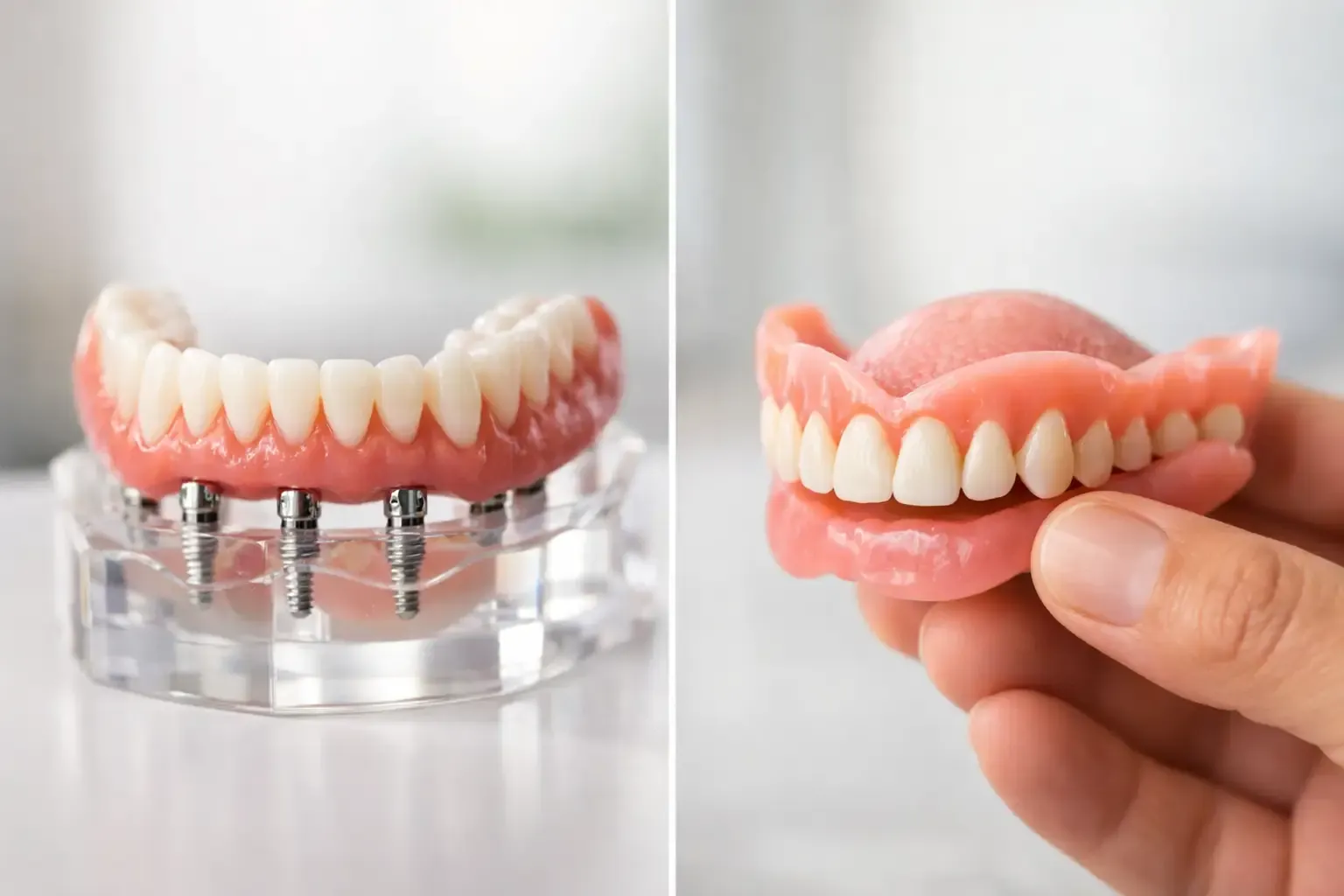
A denture that shifts when you laugh, rubs your gums during dinner, or makes you avoid certain foods can affect far more than your smile. When comparing implant dentures vs traditional dentures, the real question is not simply which option replaces missing teeth. It is which solution gives you the comfort, function, confidence, and long-term support your life requires.
Traditional dentures remain a practical choice for many people, particularly after recent extractions or when budget and treatment time are major concerns. Implant-supported dentures offer a more secure alternative by anchoring replacement teeth to dental implants placed in the jaw. Both can restore a complete-looking smile, but their everyday experience is very different.
Implant Dentures vs Traditional Dentures: How They Work
Traditional dentures are removable appliances that rest on the gums. A full denture replaces all teeth in an upper or lower arch, while a partial denture fills spaces between remaining natural teeth. They are custom-made to fit the contours of your mouth and may be held in place with suction, clasps, or denture adhesive.
For many patients, traditional dentures provide an affordable, non-surgical way to replace teeth. They can often be made relatively quickly once the gums have healed after extractions. However, because they sit on soft tissue rather than attach to the jawbone, they can move under biting pressure. Over time, changes in the gums and jaw may also affect their fit.
Implant dentures use small titanium dental implants that act as artificial tooth roots. After the implants integrate with the jawbone, a custom denture attaches to them through specialized connectors. Depending on your needs, the denture may snap on and off for home cleaning or be fixed in place and removed only by a dental professional.
The number of implants used depends on the arch, bone availability, bite, and treatment goals. Some patients do well with two implants supporting a lower denture, while full-mouth solutions such as All-On-4 or All-On-X use multiple implants to support a full fixed bridge. A consultation and digital CT scan help determine which approach is appropriate for your anatomy.
The Difference You Feel Every Day
The biggest advantage of implant-supported dentures is stability. When replacement teeth are anchored to implants, they are much less likely to slip while talking, smiling, or eating. Many patients find this changes how freely they participate in meals, social events, and everyday conversations.
Chewing ability is another meaningful difference. Traditional dentures can restore function, but they may make it difficult to bite into crisp apples, enjoy steak, or eat nuts and other firmer foods comfortably. Implant dentures typically provide stronger biting support because force is transferred through the implants rather than relying solely on the gums.
Speech can improve with either option, especially when missing teeth have made pronunciation difficult. Still, a loose denture may click or shift while speaking. Implant support helps the denture remain in a consistent position, which can make speech feel more natural after the adjustment period.
Comfort is more personal. A well-made traditional denture should not cause ongoing pain, but sore spots and pressure areas can develop as the mouth changes. Implant dentures reduce the movement that often causes rubbing. They do require a surgical procedure and a healing period, so the path to comfort is different, but many patients consider the added stability well worth it.
Bone Support Is a Long-Term Consideration
After teeth are lost, the jawbone no longer receives the stimulation created by natural tooth roots. The body gradually resorbs bone in that area, which can change facial contours and make dentures looser over time. Traditional dentures replace visible teeth, but they do not stop this bone loss.
Dental implants stimulate the jawbone when you chew, helping preserve the bone around them. They cannot reverse every change that has already occurred, and some patients need bone grafting before implants can be placed. Still, implant treatment is often the stronger option for protecting jaw structure over the long term.
This issue matters particularly for patients who have worn dentures for years. A lower denture can become increasingly difficult to stabilize as the ridge flattens. Even two strategically placed implants may dramatically improve retention and reduce the frustration of a lower denture that will not stay put.
Cost: Upfront Price vs Long-Term Value
Traditional dentures generally have a lower upfront cost because they do not involve surgery, implants, or advanced diagnostic planning. For someone who needs replacement teeth quickly or is not ready to pursue implant treatment, they can be an effective starting point.
Implant dentures require a larger initial investment. Costs vary based on the number of implants, whether extractions or bone grafting are needed, the type of denture, sedation needs, and the final restoration. It is wise to ask for a written treatment plan that clearly separates the surgical, restorative, and follow-up components.
The long-term value can be different from the initial price. Traditional dentures often need periodic relines, adjustments, repairs, or replacement as the mouth changes. Implant dentures also need professional maintenance, and removable implant dentures may eventually need replacement attachments. Yet their security, function, and potential bone-preserving benefits can make them a worthwhile investment for patients seeking a more permanent-feeling solution.
Affordable care should not mean unclear care. At California Dental Implants Specialists, patients can discuss financing options, insurance acceptance, and a treatment plan designed around their specific needs before making a decision.
Which Option Is Right for You?
There is no one-size-fits-all answer. Traditional dentures may be a sensible choice if you want a non-surgical solution, have medical considerations that make surgery less suitable, need a lower upfront cost, or are using dentures as an interim step while planning future implants.
Implant dentures may be worth considering if your current dentures move, cause embarrassment, limit the foods you eat, or require frequent adhesive. They can also be an excellent solution if you want greater chewing power and a more secure smile without necessarily choosing a fully fixed bridge.
Good implant candidates need healthy enough gums and sufficient bone, although bone grafting or advanced full-arch techniques can expand options for many people. Conditions such as uncontrolled diabetes, heavy smoking, certain medications, and untreated gum disease can affect healing. These factors do not automatically rule out implants, but they deserve an honest clinical conversation.
What to Ask at Your Consultation
A quality consultation should do more than provide a price. It should help you understand the condition of your jawbone, the cause of your tooth loss, and what each treatment option will require over time. Digital CT imaging is especially valuable because it allows the provider to assess bone volume and plan implant placement with precision.
Ask whether your implant denture would be removable or fixed, how many implants are recommended, what the healing timeline looks like, and how you will care for the final teeth. You should also ask what is included in the estimate and how future maintenance is handled. Clear answers help you compare options based on outcomes, not just an initial number.
You do not have to keep living around a loose denture or postpone a conversation because treatment feels out of reach. A personalized evaluation can show you whether traditional dentures, implant-supported dentures, or a full-arch implant solution is the most realistic path toward eating comfortably, speaking clearly, and smiling without hesitation.