
Patient education
Zirconia Versus Acrylic Full Arch Options
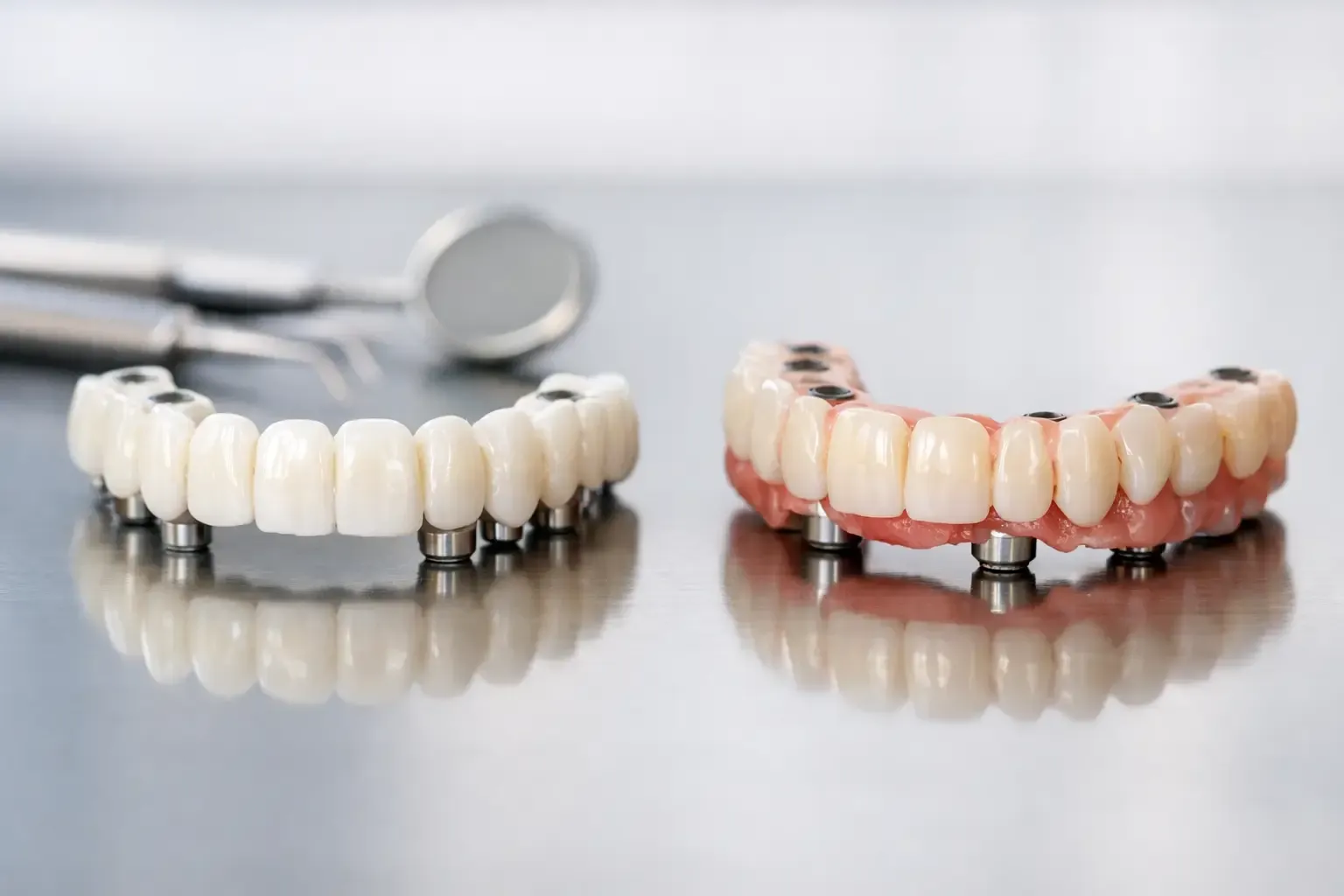
A full-arch implant restoration should do more than fill a space. It should help you enjoy meals, speak without worrying about movement, and feel comfortable showing your smile again. When comparing zirconia versus acrylic full arch options, the right choice is not simply about picking the strongest material. It is about matching the restoration to your bite, bone structure, esthetic goals, lifestyle, and budget.
Both materials can be used with All-On-4 or All-On-X treatment to create a fixed, implant-supported set of teeth. Both can look natural and restore meaningful chewing function. The differences become clearer when you consider how each material wears, feels, repairs, and performs over time.
Zirconia Versus Acrylic Full Arch Restorations
A zirconia full arch is typically milled from a solid, high-strength ceramic. It may include tooth-colored zirconia with carefully designed gum-colored ceramic where needed to create proper smile proportions. Because it is custom designed digitally, zirconia can deliver a refined, natural-looking result with excellent color stability.
An acrylic full arch generally uses acrylic teeth and pink acrylic gum material attached to a titanium framework. This design has been widely used in full-mouth implant treatment for many years. It is lighter than zirconia, easier to modify, and often more budget-friendly, particularly when it is used as an initial or transitional fixed restoration.
Neither option is automatically better for every patient. A durable final result depends on far more than the visible teeth. Implant placement, the number of implants used, bite design, bone support, daily hygiene, and regular maintenance all matter.
Strength and Long-Term Wear
Zirconia is known for its resistance to wear, staining, and fracture. For patients who want a highly durable final restoration and a polished appearance that holds up over time, it can be an excellent choice. It does not absorb pigments the way acrylic can, so coffee, tea, and red wine are less likely to change its color.
That strength comes with a trade-off. Zirconia is difficult to repair if it chips, fractures, or needs significant changes after it has been made. While damage is not common when the restoration is properly planned and maintained, repairs can be more involved than they are with acrylic.
Acrylic is more prone to wear, surface scratches, staining, and occasional fracture over the years. Patients who grind their teeth or have a strong bite may wear acrylic teeth more quickly. Still, acrylic can be a very practical choice because it is generally easier to repair, reline, or adjust when needed.
For some patients, especially those beginning full-mouth implant treatment, an acrylic provisional makes sense while the gums heal and the bite is refined. It gives the dental team an opportunity to evaluate speech, chewing comfort, tooth position, and smile appearance before a final restoration is made.
Your Bite Matters More Than You May Think
A person with a history of heavy grinding, clenching, or broken dental work needs a carefully managed bite regardless of material. A night guard may be recommended to protect the restoration and the implants. Choosing zirconia does not eliminate the need for maintenance, and choosing acrylic does not mean accepting a weak smile.
The goal is to create a bite that distributes forces as safely as possible. Digital CT imaging, implant planning, and an experienced surgical and restorative team can help make that outcome more predictable.
Appearance, Comfort, and Speech
Both zirconia and acrylic can create a beautiful, natural-looking smile. Zirconia often has an advantage in surface polish and color stability. Its smooth finish can closely resemble natural enamel, and it can maintain that appearance for many years with proper care.
Acrylic can also look highly esthetic, particularly when it is designed by a skilled lab and customized for the patient. It provides flexibility in shaping the pink gum portion of the restoration, which can be valuable for patients who have experienced bone and gum loss after years of missing teeth.
Comfort is more than material alone. The thickness, contour, and position of the full arch affect how it feels against the lips, tongue, and cheeks. These details also influence speech. Some patients need a brief adjustment period with either option, especially when replacing dentures or severely damaged teeth.
A well-designed restoration should support the lips and facial profile without feeling bulky. That is why a consultation and detailed treatment planning are so valuable. Your final teeth need to fit your face and function, not just look good in a photo.
Repair and Maintenance Expectations
Every fixed full-arch restoration requires care. Although it does not come out like a traditional denture, it still needs daily cleaning underneath and around the implant-supported bridge. A water flosser, specialized floss, and regular professional visits can help protect the gums and implants.
Acrylic restorations are often simpler to repair when a tooth chips or the pink material becomes worn. Depending on the design and condition of the framework, repairs may sometimes be completed without replacing the entire bridge.
Zirconia restorations are highly resistant to everyday wear, but repairs can be more complex. In certain cases, a damaged zirconia bridge may need laboratory repair or replacement. This does not make zirconia a poor choice. It simply means patients should understand the long-term maintenance picture before selecting a material.
Your dental team may periodically remove the fixed restoration for professional cleaning and inspection. This allows the implants, tissue, screws, and framework to be checked carefully. Routine maintenance helps catch small concerns before they become expensive problems.
Cost Differences Between Zirconia and Acrylic
Cost is often an important part of the decision, and it deserves an honest conversation. Acrylic full arches usually cost less than zirconia because the material and laboratory process are generally less expensive. They can offer an accessible path to a fixed smile, especially for patients balancing treatment needs with a defined budget.
Zirconia usually represents a higher upfront investment. Its durability, stain resistance, and premium finish can make it appealing for patients seeking a long-term final restoration. However, higher cost does not automatically mean it is the right clinical choice for every mouth.
The total cost of full-mouth implant treatment can also vary based on extractions, bone grafting, sedation, the number of implants, temporary teeth, and the complexity of your case. Financing options and insurance benefits, when available, may help make treatment more manageable. A clear treatment plan should explain what is included and whether your restoration is temporary or final.
When Acrylic May Be the Better Choice
Acrylic may be the right fit when a patient needs a transitional fixed bridge during healing, wants an option that is easier to repair, or is looking for a more affordable way to restore full-arch function. It can also work well when the restorative design requires more bulk to replace lost gum and bone volume.
It is not a second-rate material. For the right patient, a properly designed acrylic full arch can provide confidence, stability, and a major improvement over removable dentures or failing teeth.
When Zirconia May Be the Better Choice
Zirconia may be an excellent option for patients who have completed healing, have a stable bite, and want a highly durable final bridge with strong stain resistance. It is often attractive to patients who want a smooth, polished look and are prepared for the higher initial investment.
The best zirconia cases begin with precise planning. If implants are positioned correctly and the restoration is designed with the right contours, zirconia can offer years of dependable function and natural-looking results.
The Best Material Is the One Designed for Your Mouth
Material selection should happen after a complete evaluation, not before. Your provider should assess your bone levels, gum health, bite forces, facial support, existing teeth, and long-term goals. A patient who needs teeth removed and immediate fixed teeth may have different needs from someone replacing an older implant bridge.
At California Dental Implants Specialists, the conversation starts with your health, comfort, and priorities. Advanced imaging and a personalized consultation help identify whether an acrylic provisional, an acrylic final bridge, or a zirconia final restoration makes the most sense for your situation.
If you are tired of loose dentures, painful chewing, or hiding your smile, do not let material choices become another source of stress. A thoughtful implant consultation can give you clear answers, realistic expectations, and a plan built around the life you want to return to.