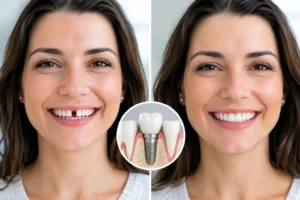
A missing tooth does more than leave a gap in your smile. Bone loss after missing teeth can begin quietly, often before people notice changes in chewing, facial shape, or the way nearby teeth start to shift. That is why waiting too long to replace a tooth can turn a simpler fix into a more complex treatment plan.
The good news is that bone loss is not random, and it is not something you just have to accept. When you understand why it happens, you can make better decisions about timing, treatment, and long-term oral health.
Why bone loss after missing teeth happens
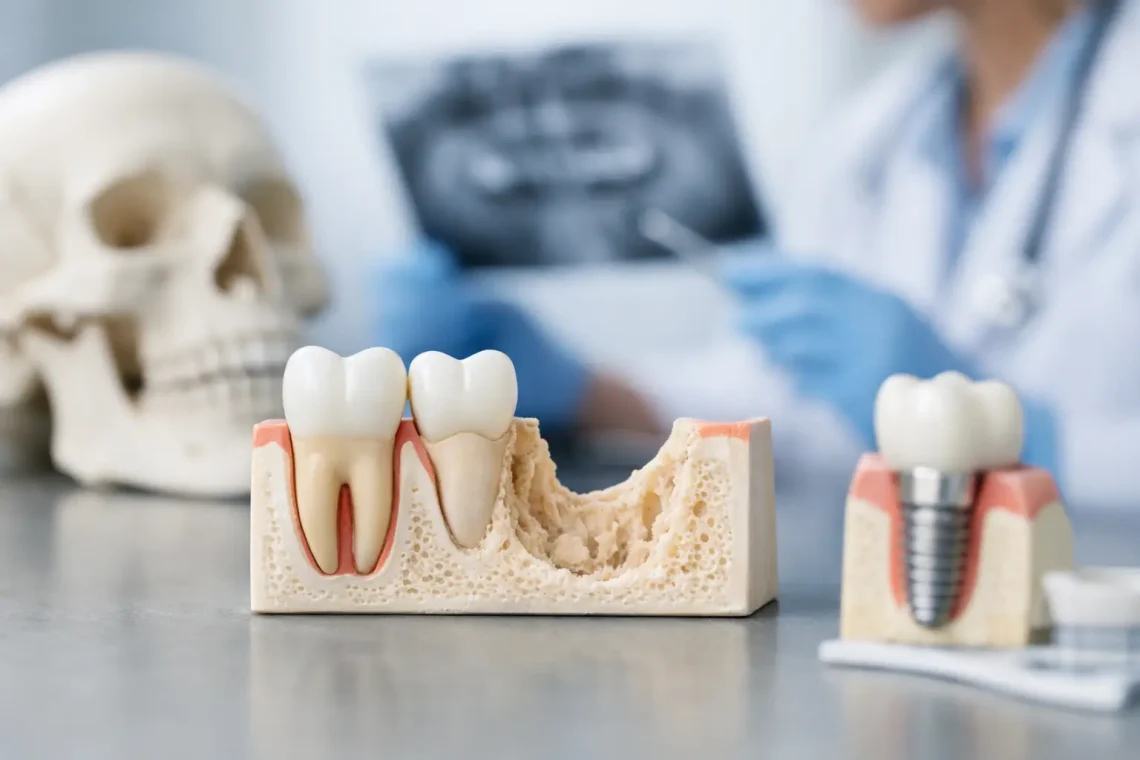
Your jawbone stays strong through stimulation. Every time you bite and chew, the roots of your natural teeth transfer pressure into the bone. That pressure tells the body the bone is still needed.
When a tooth is removed or lost, that signal drops off. The body starts to resorb, or break down, the unused bone in that area. This is a normal biological response, but it creates real problems over time. The longer a tooth is missing, the more likely the surrounding bone is to shrink in height and width.
This process can start within the first few months after an extraction. Some patients lose bone quickly, while others lose it more gradually. It depends on factors like overall health, gum condition, the location of the missing tooth, and how long the space has been left untreated.
What bone loss can look and feel like
In the early stages, you may not feel anything at all. That is part of the problem. Bone loss often happens silently.
As it progresses, the effects become more noticeable. You might find that chewing feels uneven, food traps more easily, or neighboring teeth begin to tilt toward the open space. If several teeth are missing, the bite can change enough to affect how the jaw functions.
Bone loss can also change facial appearance. The jaw helps support the lower face, especially around the lips and cheeks. When that support decreases, the face can start to look sunken or prematurely aged. Patients are often surprised to learn that what they think is just a cosmetic issue is actually tied to missing bone structure underneath.
Bone loss after missing teeth and future treatment options
One of the biggest reasons to act early is that bone loss after missing teeth can limit your replacement options later. This is especially relevant for patients who know they want a strong, long-term solution.
For example, dental implants depend on healthy jawbone for support. If too much bone has been lost, you may still be a candidate for implants, but additional procedures such as bone grafting may be needed first. That adds time, healing, and complexity.
This does not mean you have missed your chance if a tooth has been gone for years. Many patients with advanced bone loss can still be treated successfully. It simply means earlier treatment usually gives you more straightforward choices.
Why dentures and bridges do not stop bone shrinkage
Traditional tooth replacement can restore appearance and some function, but not every option protects the jawbone the same way.
A removable denture rests on top of the gums. It can help with daily activities, but it does not replace the tooth root, so it does not provide the same bone stimulation. Over time, the jaw can continue to shrink beneath the denture, which is one reason dentures may start to feel loose and need frequent adjustments.
A traditional bridge fills the visible gap by using support from adjacent teeth. It can be an effective option in certain cases, but it also does not stimulate the bone where the tooth root used to be. The space may look restored, while the underlying bone still continues to resorb.
That difference matters. If preserving jaw structure is part of the goal, the replacement method should be evaluated not just for appearance, but for what it does below the gumline.
How dental implants help preserve bone
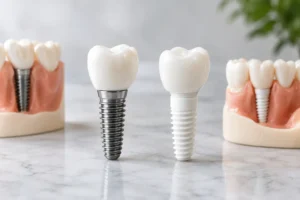
A dental implant is placed in the jawbone where the missing root used to be. Once it heals and integrates with the bone, it can function much like a natural tooth root, delivering the kind of stimulation the bone needs.
That is what makes implants different. They do not just fill a space. They help support the bone, maintain bite stability, and provide a secure foundation for a crown, bridge, or full-arch restoration.
For someone missing one tooth, that may mean replacing the tooth without affecting the neighboring healthy teeth. For someone missing many teeth, implant-supported solutions can provide more stability than traditional dentures while also helping preserve more of the jaw over time.
Of course, every case is different. If bone loss is already significant, treatment may need to be staged. But even then, implants often remain the option most closely aligned with long-term bone preservation.
How fast does jawbone loss happen?
There is no single timeline that applies to everyone, but the first year after tooth loss is often when the most dramatic changes occur. Research and clinical experience consistently show that the bone can shrink noticeably during that period, especially if the tooth was recently extracted and not replaced.
After that, the process usually continues at a slower pace. If gum disease is also present, bone loss can accelerate. Smoking, uncontrolled diabetes, and chronic oral inflammation can also make things worse.
This is why a prompt consultation matters. You do not need to panic, but you also do not want to assume nothing is happening because you feel fine.
Signs you should schedule an evaluation
Some patients seek help right after an extraction. Others wait until a bridge feels unstable, a denture slips, or an old missing tooth starts creating problems. Both types of patients deserve a clear path forward.
It is smart to schedule an evaluation if you have a recently removed tooth, a tooth that has been missing for months or years, a denture that no longer fits well, or visible changes in facial fullness or bite alignment. Even if you are unsure whether implants are right for you, an exam with digital imaging can show how much bone is present and what options make the most sense.
That imaging matters because bone loss is not always obvious from the outside. A clinical exam and CT scan can reveal the amount of available bone, the position of nearby structures, and whether treatment can move directly to implants or should begin with preparatory care.
What if you have already lost bone?
You still may have excellent options. This is where many patients feel discouraged when they should actually be getting answers.
Depending on the location and severity of bone loss, treatment may involve bone grafting, sinus lift procedures in the upper back jaw, or strategic implant planning that works around available anatomy. In full-mouth cases, advanced options such as All-On-4 or All-On-X can often help patients who have significant tooth loss and reduced bone volume.
The right solution depends on your health, your goals, your budget, and how much treatment you want to complete at one time. Some patients want the fastest route to fixed teeth. Others need to phase treatment carefully. A good implant plan accounts for both clinical needs and real life.
Why timing matters more than people think
Many adults put off treatment because they are busy, nervous, or worried about cost. Those concerns are understandable. But delaying replacement often leads to more than a longer wait. It can mean more shifting, more bone loss, and more involved treatment later.
Acting sooner does not always mean doing everything immediately. Sometimes it simply means getting the consultation, understanding your condition, and creating a plan before the situation worsens. That alone can reduce stress because you are making decisions based on facts instead of uncertainty.
For patients in Southern California comparing providers, this is where experience and technology make a difference. Practices like California Dental Implants Specialists use advanced imaging to plan treatment precisely, which helps patients understand both the problem and the path to a lasting solution.
The bigger picture behind a single missing tooth
It is easy to think one missing tooth is a small issue if it is not visible when you smile. But the jaw does not treat it as a minor event. Bone, bite, nearby teeth, and facial support all respond to that loss.
Replacing a missing tooth is not just about filling space. It is about protecting function, preserving bone, and keeping more treatment options open for the future. If you have been living with a gap and hoping it can wait a little longer, this is a good time to find out what your jaw is telling you now, while there is still more to preserve.