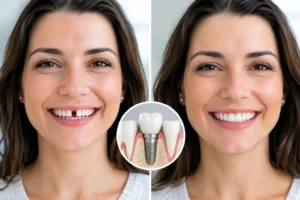
A missing tooth changes more than your smile. It can make favorite foods harder to enjoy, affect speech, and gradually change how your bite feels. When patients begin considering a permanent replacement, one question comes up quickly: does insurance cover implants? The honest answer is sometimes – but coverage varies widely by plan, the reason for treatment, and the specific parts of the implant process.
Dental implants can be a lasting investment in comfort, function, and confidence. Knowing how insurance works before treatment helps you make decisions based on clear numbers rather than surprises.
Does Insurance Cover Implants? It Depends on Your Plan
Many dental insurance plans now offer some implant coverage, but it is rarely as simple as seeing the word “implant” in a benefits summary. Some plans pay a percentage toward the implant post, the abutment, the crown, or a combination of these components. Others cover only an alternative treatment, such as a removable partial denture or traditional bridge.
Even a plan that includes implant benefits may have restrictions. Your insurer may require a waiting period, limit payment to a certain frequency, exclude teeth lost before the policy began, or classify implants as a major service with a lower reimbursement percentage. A plan may also have an annual maximum that is much lower than the total cost of implant treatment.
For example, a policy might pay 50% of eligible major services up to a $1,500 annual maximum. That can still be helpful, but it does not necessarily mean the insurer will pay half of every step in a complete implant case. Once the annual maximum is reached, remaining costs become the patient’s responsibility.
What Parts of Dental Implant Treatment May Be Covered?
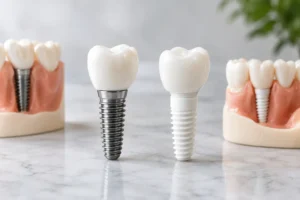
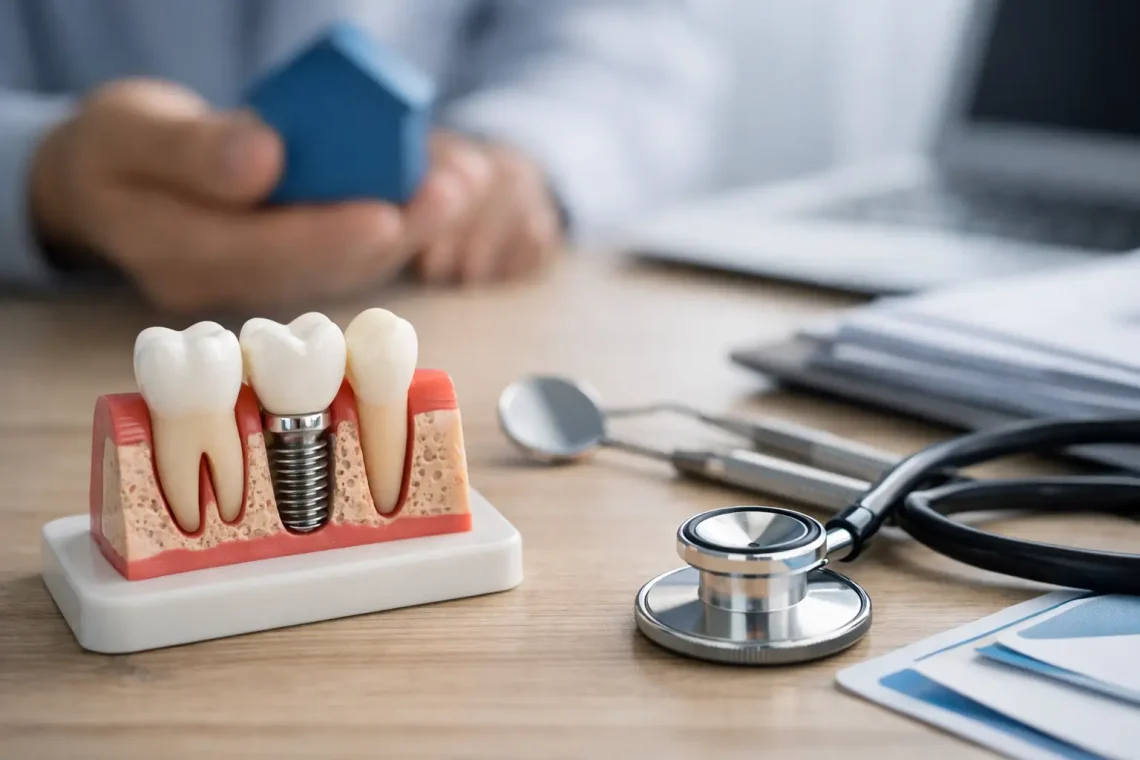
A dental implant is not one single item. It is a treatment process that may include diagnostic imaging, an extraction, bone grafting, the implant post placed in the jawbone, an abutment, and a custom crown. For full-mouth treatment, the plan can also involve temporary teeth, a fixed bridge, or implant-supported dentures.
Coverage can differ for every stage. Dental insurance may contribute to the final crown but not the implant post. Another plan may cover an extraction while excluding grafting. In some cases, your plan may recognize an implant as covered treatment but pay only the amount it would have paid for a bridge. This is often called an alternate benefit clause.
That does not mean implants are the wrong choice. A bridge may replace the visible gap, but it does not replace the tooth root or help preserve jawbone in the same way an implant can. The best choice should be based on your oral health, long-term goals, and treatment plan – not solely on the benefit category that produces the highest immediate insurance payment.
Why Bone Grafting Is Often a Separate Question
Bone grafting can be necessary when the jawbone has lost volume after a tooth has been missing for some time. It creates a stronger foundation for an implant, but insurers may view it as a separate procedure and may not cover it fully.
Your dentist can determine whether grafting is clinically needed after examining your mouth and reviewing 3D digital CT imaging. This is one reason a personalized consultation matters. A treatment estimate based on a quick online price comparison cannot tell you whether your case requires additional preparation for a stable, lasting result.
Dental Insurance vs. Medical Insurance
Most implant claims are submitted to dental insurance, but medical insurance can sometimes play a role. Medical coverage may be relevant when tooth loss is connected to a covered accident, facial trauma, cancer treatment, congenital conditions, or reconstructive surgery. Medical plans have their own rules, documentation requirements, deductibles, and network restrictions.
Routine tooth loss from decay or gum disease is generally handled through dental insurance rather than medical insurance. Still, it is worth sharing relevant medical history during your consultation. When circumstances support a medical claim, the practice team can help identify the documentation that may be needed.
Four Insurance Details to Check Before Starting Treatment
Calling the number on your insurance card is a smart first step, but ask more than “Are implants covered?” Benefits representatives can provide useful information, yet their answers are not a guarantee of payment. Ask about these four details:
- Whether implants, abutments, and implant crowns are covered separately or excluded.
- Your annual maximum, remaining maximum, deductible, and percentage paid for major services.
- Waiting periods, missing-tooth exclusions, frequency limits, and alternate benefit clauses.
- Whether your chosen dental office is in network and whether a pre-treatment estimate can be submitted.
Bring your insurance information to your consultation whenever possible. The office can review your benefits, explain the expected patient portion, and help you understand the difference between an estimate and a final insurance determination.
Why a Pre-Treatment Estimate Can Help
A pre-treatment estimate, sometimes called a preauthorization or predetermination, is sent to the insurance carrier before treatment begins. It gives the insurer a chance to review the proposed procedure codes and show what it expects to pay under your policy.
This step can be particularly valuable for implant care because there are several components and possible variables. It can reveal whether your insurer will contribute toward the surgical implant, the restoration, or only an alternate option. It can also show whether you have already used part of your yearly maximum for cleanings, fillings, or other dental work.
A pre-treatment estimate is helpful planning information, not a binding promise. Claims can still be affected by eligibility changes, benefit limits, and the insurer’s final review. But it creates a far clearer financial picture before you commit to treatment.
When Insurance Does Not Cover Enough
For many patients, insurance is only one part of the payment plan. That is normal. Dental plans were traditionally designed around preventive care and lower-cost treatments, so annual limits have not always kept pace with the cost of advanced restorative care.
If your plan offers limited implant benefits, do not assume a permanent tooth replacement is out of reach. Consider how insurance, promotional pricing, and financing can work together. A practice that offers clear treatment estimates and flexible payment options can help you spread eligible out-of-pocket costs into manageable payments.
At California Dental Implants Specialists, patients can discuss insurance acceptance, financing options, and the current $699 dental implant promotion during a free consultation. The right plan depends on your clinical needs, including whether you need a single implant, a bridge supported by implants, or full-mouth restoration.
Timing Treatment Around Your Annual Maximum
If you have dental benefits available now and your annual maximum renews soon, it may be possible to phase certain parts of treatment across benefit years. For example, one portion may be completed before renewal and the final crown after benefits reset.
This approach is not right for every case. Healing timelines, implant stability, and your overall oral health must lead the schedule. Your implant provider can explain what timing is clinically appropriate while helping you consider the insurance implications.
Choose Treatment for the Result, Not Just the Reimbursement
The lowest-cost option on paper is not always the best value over time. Removable dentures can be an appropriate solution for some people, but they may shift during meals and do not provide the same anchored feel as implant-supported teeth. Traditional bridges can be effective, yet they may require work on neighboring healthy teeth.
Dental implants are designed to function like replacement tooth roots. With thoughtful planning, precise placement, and good home care, they can support comfortable chewing, clearer speech, and a natural-looking smile. They can also help preserve the bone that supports your facial structure.
Your treatment should fit your health needs and your budget. A compassionate implant consultation gives you space to ask direct questions, review imaging, understand alternatives, and receive straightforward guidance without pressure.
Do not let uncertainty about insurance keep you from finding out what is possible. Bring your benefit information, ask for a personalized estimate, and take the first step toward eating, speaking, and smiling with greater comfort again.