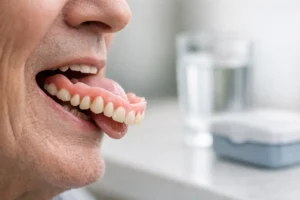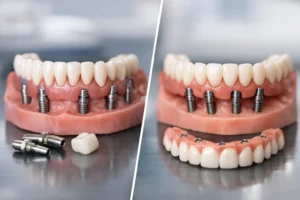
A missing front tooth is hard to hide, but the concern is usually bigger than appearance. A successful front tooth implant case must restore the way you speak, bite, and smile while protecting the gum line and supporting the bone beneath it. Because this area is visible every time you talk or laugh, careful planning makes a meaningful difference in how natural the final result looks and feels.
For many patients, a dental implant is the closest replacement to a natural tooth. It replaces the missing root with a small titanium implant, then supports a custom crown designed to match surrounding teeth. The process is highly predictable, but front teeth require a more detailed approach than teeth farther back in the mouth.
Why a Front Tooth Implant Case Requires Extra Precision
Back teeth do most of the heavy chewing, while front teeth are more visible and guide certain movements of the bite. An implant in the smile zone must be placed in the right position for long-term strength, but it also has to leave room for a lifelike crown and healthy-looking gum tissue.
Even a durable implant can look less natural if it is placed too far forward, too far back, or at the wrong angle. The gum line may appear uneven, the crown may look longer than neighboring teeth, or the color may stand out in photographs. That is why implant specialists evaluate the whole smile, not just the empty space.
The amount and quality of bone also matter. After a tooth is lost, the jawbone in that area can gradually shrink. In the front of the mouth, bone loss may affect both implant stability and facial support. A 3D CT scan helps the treatment team measure available bone and plan the implant position with greater accuracy before treatment begins.
The First Question: Can the Tooth Be Saved?
Not every damaged front tooth needs to be removed. When possible, preserving a healthy natural tooth is generally the preferred option. A specialist will look at the root, remaining tooth structure, gum health, infection level, fracture pattern, and the condition of nearby teeth before recommending an extraction and implant.
An implant may be the better long-term choice when a tooth has a deep fracture, severe decay below the gum line, advanced infection, repeated failed restorations, or too little remaining structure to reliably support a crown. The goal is not to rush into extraction. The goal is to choose a solution that protects your oral health and gives you confidence in the years ahead.
What Happens During Treatment?
Every case is individualized, but a front tooth implant case typically begins with a consultation, digital imaging, and a detailed review of your goals. Your specialist will discuss the condition of the tooth or extraction site, your bite, your medical history, and the cosmetic details that matter to you.
Extraction and Site Preservation
If the damaged tooth must come out, a gentle extraction technique is especially important in the smile zone. The aim is to preserve as much bone and gum tissue as possible. In some situations, a bone graft is placed at the time of extraction to help maintain the shape of the ridge while the area heals.
Some patients are candidates for immediate implant placement, meaning the implant can be placed on the same day the tooth is removed. Others benefit from allowing the extraction site or graft to heal first. Neither approach is automatically better. The right timing depends on infection, bone volume, gum thickness, bite forces, and the ability to place the implant securely.
Implant Placement and Healing
During implant placement, the titanium implant is positioned in the jawbone according to the treatment plan. Modern digital imaging and guided planning can help the specialist determine the safest and most precise location. Most patients are surprised by how manageable the procedure feels with appropriate anesthesia and a clear understanding of what to expect.
The implant then needs time to integrate with the bone. This healing process creates the stable foundation that allows an implant crown to function much like a natural tooth. Healing time varies, but it is common for this phase to take several months.
You will not necessarily have to live with a visible gap during healing. Depending on the case, a temporary tooth may be used to maintain your appearance and help shape the gums. A temporary restoration must be carefully designed so it does not place damaging pressure on a newly placed implant.
Creating the Final Crown
The final crown is where artistry and clinical planning come together. Your care team considers shade, translucency, surface texture, length, width, and the way the tooth reflects light. Natural front teeth are not flat, solid-white blocks. They have subtle variations that help them blend into the smile.
The crown is also designed around your gum line and bite. The goal is a tooth that looks right when you smile and works comfortably when you speak and eat. Minor adjustments may be needed to refine the fit before the final result is completed.
Gum Tissue Can Make or Break the Result
Patients often focus on the crown, but the gum tissue around it is equally important. Healthy, balanced gums frame the tooth and create the visual transition between the crown and the rest of the smile.
Thin gum tissue, prior recession, bone loss, or an uneven gum line can make a front-tooth restoration more challenging. In certain cases, soft-tissue grafting may be recommended to build a thicker, more stable gum foundation. This can add treatment time, but it may improve long-term esthetics and protect against future recession.
There are trade-offs to discuss openly. An immediate implant may shorten the overall timeline for the right patient, while staged treatment may provide better healing conditions in a more complex site. A lower initial price can also be misleading if it does not include the imaging, grafting, temporary restoration, abutment, or final crown needed for a quality result.
How Long Will a Front Tooth Implant Last?
Dental implants are designed for long-term tooth replacement. With good planning, healthy gums, daily care, and regular dental visits, the implant itself can last many years and often much longer. The crown may eventually need replacement because it experiences everyday wear, just as a crown on a natural tooth can.
Protecting your investment starts at home. Brush carefully along the gum line, clean between teeth as instructed, and keep regular professional cleanings. If you clench or grind your teeth, a nightguard may be recommended to reduce force on the crown and implant. Smoking, uncontrolled gum disease, and poorly managed medical conditions can also affect healing and long-term implant health.
A front tooth implant does not decay, but the gum and bone around it still need attention. Implant maintenance is part of maintaining a healthy smile, not an optional extra.
Questions to Ask at Your Consultation
A good implant consultation should leave you clearer, not more confused. Ask whether you have enough bone for an implant, whether a graft is likely, and whether immediate placement is appropriate for your situation. You should also understand what type of temporary tooth will be used, what the full treatment timeline may look like, and what is included in the quoted cost.
It is reasonable to ask who will plan and place the implant, what imaging technology will be used, and how the team approaches color matching and gum aesthetics for front teeth. Experience matters because the smile zone demands both surgical precision and an eye for natural-looking detail.
At California Dental Implants Specialists, the consultation is designed to turn these questions into a personalized treatment plan. You can discuss your priorities, review financing and insurance options, and understand the steps before making a decision.
A missing or failing front tooth can change how you eat, speak, and feel in social situations. The right plan gives you more than a replacement tooth. It gives you a stable, natural-looking foundation to smile comfortably again.