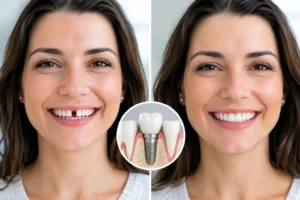
A loose denture can turn an ordinary meal into a stressful calculation: Can I chew this? Will it move when I speak? Will I need adhesive again? Understanding how full mouth implants work can make the path forward feel much clearer. Rather than replacing teeth with a removable appliance that rests on the gums, full-mouth implants use strategically placed implants in the jaw to support a secure, natural-looking set of replacement teeth.
For many people living with advanced tooth loss, failing teeth, or uncomfortable dentures, this treatment can restore more than appearance. It can improve chewing ability, speech, comfort, and the confidence to smile without holding back. The right approach depends on your bone health, remaining teeth, bite, medical history, and goals, which is why a personalized consultation matters.
How Full Mouth Implants Work
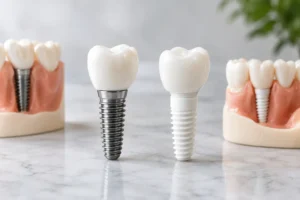
A dental implant is a small post, usually made from biocompatible titanium, that is placed in the jawbone. It acts much like a natural tooth root. After placement, the surrounding bone gradually bonds with the implant in a process called osseointegration. This stable connection gives implants the strength to support replacement teeth.
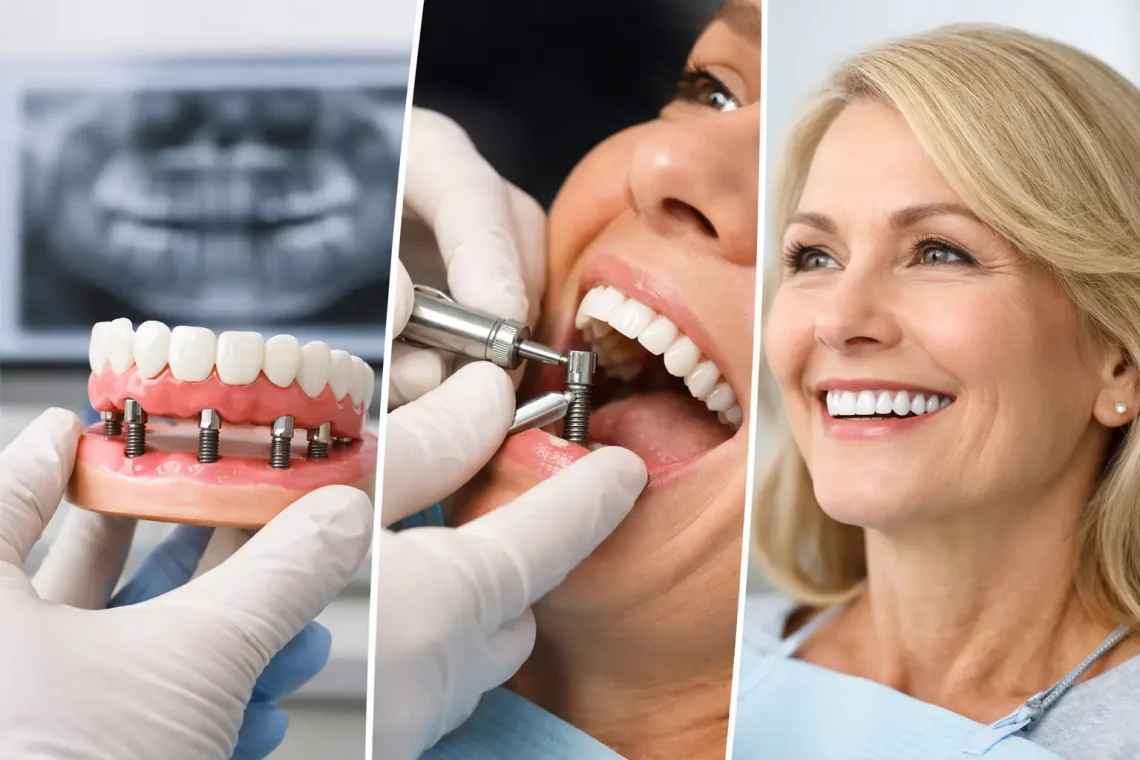
With full-mouth treatment, a specialist does not necessarily place one implant for every missing tooth. Instead, a full arch of teeth can often be supported by a limited number of carefully positioned implants. This is commonly called All-On-4 or All-On-X treatment. The number of implants used can vary depending on the quality and amount of available bone, the force of your bite, and the treatment plan designed for long-term support.
A custom bridge of teeth is attached to those implants. Depending on the plan, it may be fixed in place, meaning only a dental professional removes it for maintenance. Some patients may be better candidates for an implant-supported denture, which snaps securely onto implants but can be removed at home for cleaning. Both options are far more stable than a traditional denture, but they serve different needs.
The Consultation Sets the Direction
Full-mouth implant treatment begins with more than an exam of what is visible above the gums. Your provider needs to understand the condition of the jawbone, gum tissue, bite, and remaining teeth. Digital CT imaging creates a detailed three-dimensional view of the mouth so the implant positions can be planned with precision.
During a consultation, you should expect a conversation about what is bothering you day to day. Maybe you avoid steak, cover your mouth when you laugh, or have reached the point where repeated repairs no longer make sense. The team also reviews health history, medications, smoking habits, and any history of gum disease. These factors do not automatically rule out implants, but they can affect timing, healing, and the recommended approach.
If unhealthy teeth remain, the plan may include extractions. If bone has been lost over time, bone grafting may be recommended in some cases. However, one advantage of angled implant placement in certain All-On-X cases is that it can reduce the need for grafting by making use of denser available bone. There is no one-size-fits-all answer. A responsible plan should be based on your anatomy, not a generic package.
Implant Placement and Temporary Teeth
On the procedure day, the goal is to create a stable foundation for your new smile. For patients who need extractions, failing teeth may be removed first. The implants are then placed at carefully planned locations and angles in the jawbone.
Many full-mouth implant patients can leave with a temporary set of fixed teeth the same day or shortly after surgery. This is often called immediate loading. The temporary bridge lets you avoid leaving the office without teeth while the implants heal, but it is not the final restoration. It is designed to protect the healing process and help establish the look, bite, and speech of your new smile.
Sedation options may be available for patients with dental anxiety or those having extensive treatment. You will receive instructions on medications, oral hygiene, and what to eat during recovery. Most people need to follow a soft-food diet for a period of time. That temporary dietary adjustment is worthwhile because chewing hard foods too soon can place too much pressure on healing implants.
Healing Creates the Strength Behind Your New Smile
The implants need time to integrate with the bone. Healing varies, but it commonly takes several months before the final bridge is delivered. During this period, the temporary teeth allow you to smile and function while your body builds the secure biological connection that makes implant treatment different from a conventional denture.
You may experience swelling, tenderness, or bruising after surgery, particularly during the first few days. These effects are usually manageable with the care instructions provided by your implant team. Keeping follow-up visits is essential. They allow the provider to monitor healing, make adjustments to the temporary restoration, and confirm that the implants remain stable.
A key trade-off is patience. Full-mouth implants can provide a long-term, fixed solution, but the final result should not be rushed. Careful healing and bite planning help protect the investment you are making in your oral health.
Your Final Full-Arch Bridge
Once healing is complete, the temporary bridge is replaced with a final custom restoration. This is where detailed design becomes especially important. Your final teeth should be shaped and positioned to support comfortable speech, proper chewing, facial support, and a natural smile.
Final bridges may be made from different materials, such as zirconia or other high-strength options. The best material depends on your bite, aesthetic goals, available space, and budget. A stronger material may be appropriate for heavy biting forces, while another option may offer different aesthetic or repair advantages. Your specialist should explain the benefits and limitations of the materials being considered.
The final bridge is secured to the implants, creating teeth that stay in place throughout the day. You do not remove a fixed bridge at night, and you do not rely on denture adhesives. While it can feel like getting your own teeth back, it still requires a daily cleaning routine and professional maintenance.
What Daily Life Is Like With Full Mouth Implants
A well-designed full-arch restoration is intended to feel stable and functional. Patients often notice the difference when eating, speaking, and smiling in social settings. Because implants are anchored in the jaw, they can provide more reliable chewing support than a denture sitting on the gums.
That does not mean implants are maintenance-free. Food and bacteria can collect around the bridge and gumline, so daily cleaning is essential. Your care routine may include a soft toothbrush, water flosser, floss threaders, or other tools recommended by your dental team. Professional cleanings and periodic examinations protect both the implants and the restoration.
Implants themselves do not decay, but the surrounding gum and bone can still become inflamed if plaque is not controlled. Smoking, uncontrolled diabetes, teeth grinding, and skipped maintenance visits can raise the risk of complications. If you grind your teeth, a night guard may be part of your long-term plan.
Cost, Candidacy, and Choosing a Provider
The cost of full-mouth implants varies because every mouth starts in a different place. Extractions, sedation, temporary teeth, bone grafting, the number of implants, and the final bridge material can all affect the total investment. A low advertised starting price may apply to a specific component of treatment, so ask for a clear written plan that explains what is included and what may be additional.
For Southern California patients, California Dental Implants Specialists provides consultation-driven planning, in-house digital imaging, financing options, and insurance support to help make advanced implant care more accessible. The most useful consultation is one where you can ask direct questions about the provider’s experience with full-arch cases, the expected timeline, temporary and final teeth, warranties, follow-up care, and payment options.
Full-mouth implants are not simply a cosmetic upgrade. They are a carefully planned way to replace missing or failing teeth with a stable foundation designed for everyday life. If dentures are limiting what you eat, say, or enjoy, a personalized implant consultation can show you what a confident, comfortable next step could look like.