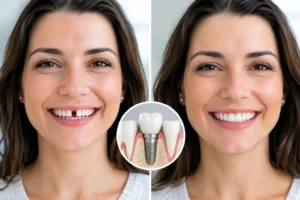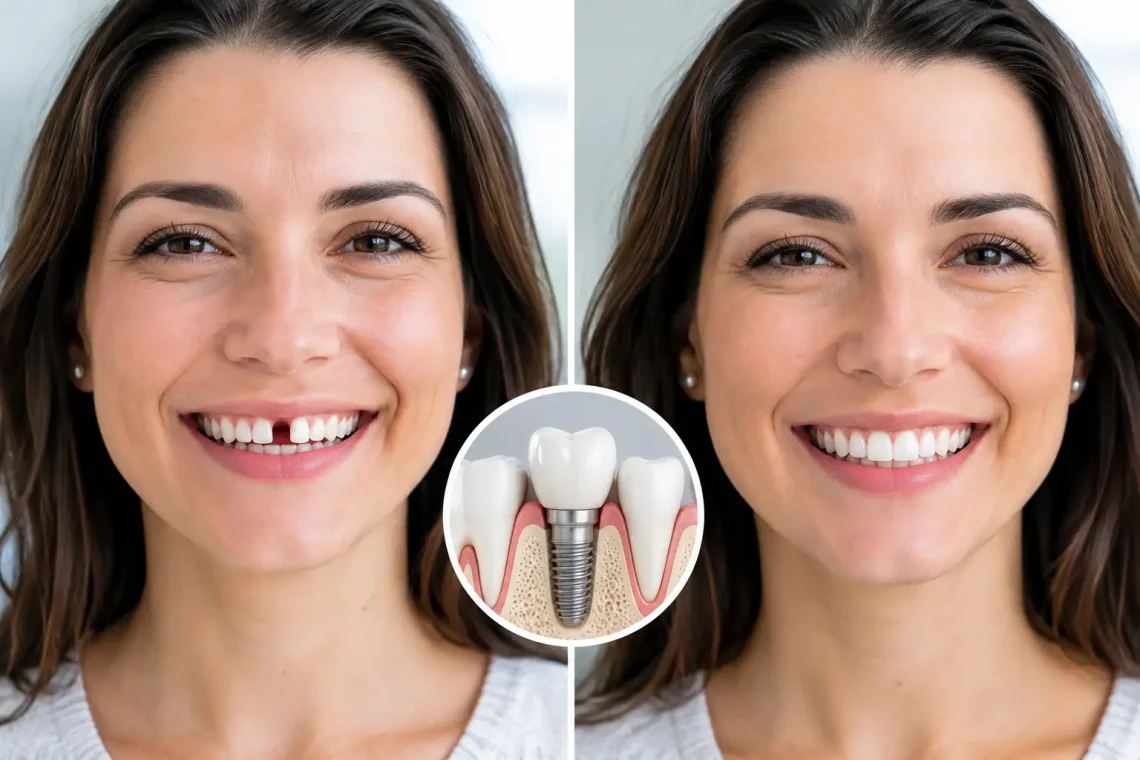
A missing tooth can change more than a photograph. You may start chewing on one side, covering your mouth when you laugh, or avoiding foods that once felt easy to eat. A single tooth implant before after journey is about more than filling a gap. It is a carefully planned way to restore a stable bite, protect the jawbone, and help your smile look and feel complete again.
For many patients, the difference is noticeable in the mirror. The more meaningful change happens in everyday moments: speaking without worrying about a loose replacement, biting into an apple, or sitting down to dinner without planning around one sensitive area of the mouth.
What Does a Single Tooth Implant Replace?
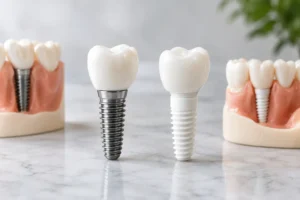
A single dental implant replaces one missing tooth from the root to the visible crown. It has three main parts: the implant post placed in the jawbone, an abutment that connects the post to the restoration, and a custom crown that looks like a natural tooth.
Unlike a traditional bridge, an implant does not require the teeth next to the gap to be filed down for support. Unlike a removable partial denture, it stays in place. Once healed and restored, it is designed to function as a fixed part of your smile.
This distinction matters because a lost tooth leaves more than empty space. Without a tooth root stimulating the jaw, the bone in that area can gradually shrink. Nearby teeth may also begin to drift, which can affect your bite and make cleaning more difficult. Replacing the tooth sooner can help prevent those changes, although the right timing depends on the health of your gums, bone, and remaining teeth.
Single Tooth Implant Before After: What Actually Changes?
Before treatment, a patient may have a visible gap from an old extraction, a tooth that is fractured below the gumline, or a tooth that has failed after years of fillings and root canal treatment. Some people feel no pain at all, while others deal with recurring infection, sensitivity, or difficulty chewing. The emotional impact can be just as real, especially when the missing tooth is near the front of the smile.
After treatment, the goal is a crown that blends with the surrounding teeth in shape, color, and proportion. A properly planned implant should also support comfortable chewing and a stable bite. It should not feel like a removable appliance or require special adhesives.
Still, before-and-after results are not identical for every patient. A front-tooth implant requires especially detailed cosmetic planning because the gumline is visible when you smile. A back-tooth implant may be less visible, but it carries strong chewing forces and needs careful bite adjustment. If bone loss has occurred, bone grafting may be recommended before or during implant placement. That can add time, but it can create a stronger foundation for a long-term result.
The Treatment Process Behind a Natural Result
The best implant outcomes begin with planning, not the day the implant is placed. At your consultation, the dental team evaluates the tooth being replaced, the condition of nearby teeth and gums, your bite, and the amount of available jawbone. Digital CT imaging provides a detailed view beneath the gums, helping the specialist place the implant with precision while avoiding important structures.
If a damaged tooth needs to be removed, it may be possible to place an implant at the time of extraction. In other cases, the area needs time to heal first. Immediate placement can reduce the number of surgical visits for the right candidate, but it is not automatically the best choice. Active infection, thin bone, or certain gum conditions may call for a staged approach.
After placement, the implant needs time to bond with the jawbone through a process called osseointegration. This healing phase often takes several months. During that time, a temporary tooth may be used when needed, particularly in a visible area. Once the implant is stable, the final crown is made to match your smile and attached to the abutment.
The final appointment is not simply about putting in a crown. The team checks the fit, bite, color, and contour so the new tooth works comfortably with the rest of your mouth. Small adjustments at this stage can make a meaningful difference in how natural the restoration feels.
What You May Notice After a Dental Implant
The first days after implant surgery are usually focused on healing. Mild swelling, tenderness, and temporary dietary changes are common. Most patients can manage discomfort with the post-treatment instructions and medications recommended by their provider. Soft foods are often advised initially, and smoking can significantly interfere with healing.
Once the final crown is in place, patients often notice that they no longer have to protect one side of the mouth. Speech may feel more natural if the missing tooth affected pronunciation. The replacement also restores a more balanced appearance by closing the space and supporting the gums around it.
An implant crown will not decay like a natural tooth, but it still requires daily care. Brushing twice a day, cleaning around the implant, and attending regular dental visits are essential. Gum disease can affect the tissues around an implant, so consistent maintenance protects your investment.
Why Photos Do Not Tell the Entire Story
Before-and-after photos can be helpful because they show the visible improvement a well-designed crown can make. They cannot show whether the implant was placed at the proper angle, whether the bone is healthy, or whether the bite is balanced. Those clinical details are what help the result remain comfortable and durable over time.
When reviewing implant results, look beyond the white crown. Notice whether the gumline looks natural, whether the crown fits the neighboring teeth, and whether the overall smile appears balanced rather than overly bright or bulky. Ask how the provider plans for bone support, gum health, and long-term maintenance.
A low price can be appealing, and affordability matters. It is also wise to understand what is included in a quoted implant fee. The implant post, abutment, final crown, CT scan, extraction, bone grafting, sedation, and follow-up visits may be priced separately depending on your needs. Clear treatment planning helps you compare options without surprises.
Is a Single Tooth Implant Right for You?
Many healthy adults are candidates for a single tooth implant, including patients who have had a missing tooth for years. The deciding factors are not age alone. Your specialist will consider gum health, bone volume, medical history, oral hygiene habits, and whether you smoke or grind your teeth.
If there is not enough bone, grafting may make implant treatment possible. If teeth next to the gap already need crowns, a bridge may sometimes be worth discussing. If a patient is managing uncontrolled health conditions or cannot maintain regular follow-up care, it may be better to address those factors first. An honest consultation should explain the advantages and trade-offs of each option.
At California Dental Implants Specialists, the consultation process is designed to make those decisions feel clear rather than overwhelming. With modern imaging, specialist-led planning, financing options, and implant treatment designed around each patient’s needs, restoring one missing tooth can feel more attainable than many people expect.
A single missing tooth does not have to become the tooth you work around for years. The right next step is a personal evaluation that looks beyond the gap and focuses on the healthy, confident smile you want to use every day.