
Patient education
How to Clean Around a Dental Implant: A Daily Routine That Works
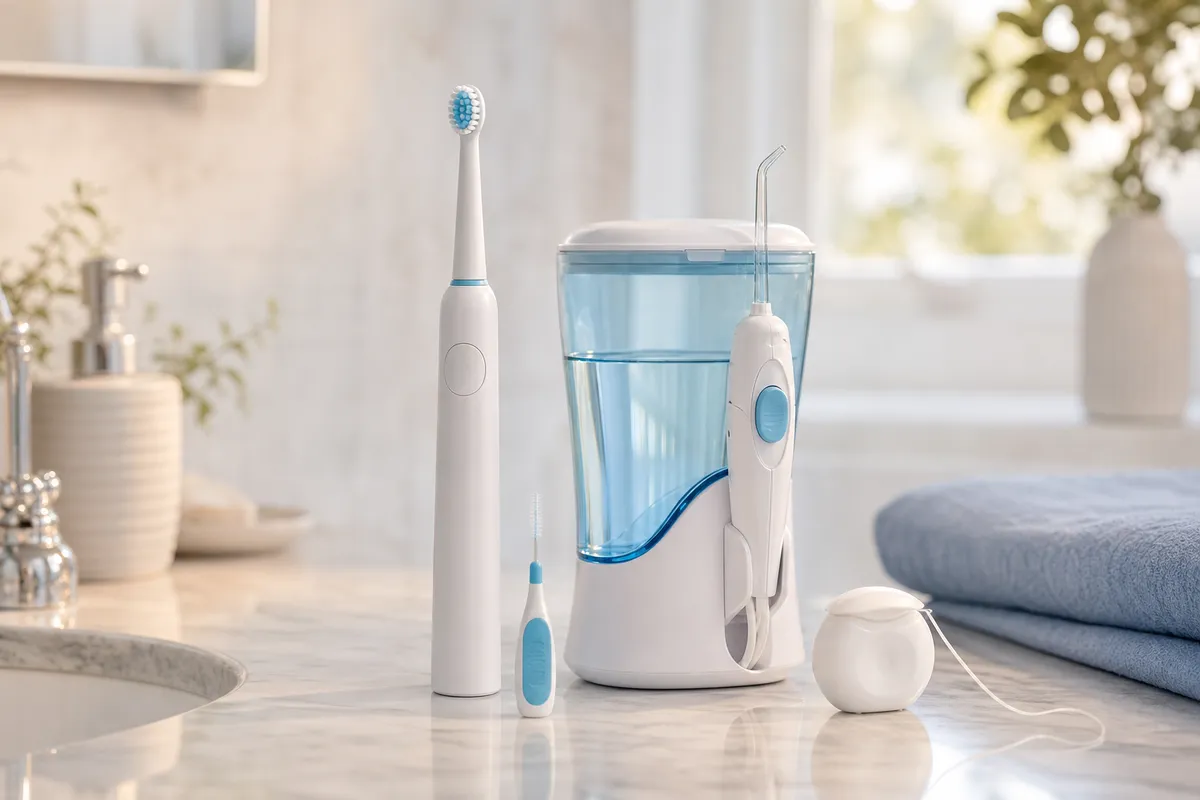
Clean around a dental implant the way you would a natural tooth, with extra attention where the crown meets the gum: brush twice a day with a soft brush, clean between and around the implant once a day with floss, an interdental brush, or a water flosser, and keep regular professional cleanings. The implant itself can't decay, but the gum and bone around it can become inflamed, and that inflammation is what puts implants at risk.
Why the gumline matters most
Plaque that collects where the crown meets the gum can inflame the tissue around the implant. Caught early, that inflammation is usually reversible; left alone, it can reach the bone. Our article on signs a dental implant needs evaluation lists what to watch for.
The daily routine
- Brush twice a day with a soft-bristled manual or electric brush, angled toward the gumline around the implant.
- Clean between teeth once a day: floss wrapped around the crown in a C shape, implant-specific floss, or a small interdental brush.
- Use a water flosser if you find floss hard to manage; many people find it easier around implants and bridges.
- Choose a non-abrasive toothpaste, which is gentler on crown surfaces.
Tools that help
- Interdental brushes with coated wire, sized by your team to fit the spaces.
- Floss threaders or super floss for cleaning under implant bridges.
- End-tufted (single-tuft) brushes for hard-to-reach spots around back implants.
- A water flosser for areas floss can't reach comfortably.
Cleaning under bridges and full arches
Implant bridges and full-arch teeth need cleaning underneath as well as around each implant. Our guide to caring for full-mouth implants covers that routine in detail.
Habits that protect implants
- Don't smoke: smoking is linked to more inflammation around implants.
- If you grind or clench, ask about a night guard to protect crowns and screws.
- Don't use implant teeth to open packages or crack hard foods.
- Keep diabetes and other health conditions managed; they affect gum health too.
See smoking and dental implants and teeth grinding and dental implants.
Professional cleanings
Regular professional cleanings and checkups let your team remove buildup you can't reach and spot inflammation early. They use instruments suited to implant surfaces. Your team sets how often based on your mouth.
When to call
- Bleeding or swelling around the implant that doesn't settle in a few days.
- A bad taste, pus, or tenderness around the implant.
- A crown that feels loose or a change in your bite.
Most of these are treatable when caught early; see dental implant repair for what different problems involve.
If you're considering an implant, a consultation with an exam and imaging gives you a written, itemized plan.
Related questions
How do you floss around a dental implant?
Wrap floss around the implant crown in a C shape and slide it gently below the gumline on each side, or use implant-specific floss, a small interdental brush, or a water flosser. The goal is to clean where the crown meets the gum every day.
What toothpaste is best for dental implants?
A non-abrasive toothpaste is commonly recommended, because highly abrasive pastes can scratch crown surfaces. Ask your team what they recommend for your restoration.
How often should implants be cleaned professionally?
Your team sets the schedule based on your mouth. Regular professional cleanings and checkups let them catch gum inflammation around an implant early, when it's easiest to treat.