A missing tooth does more than leave a space in your smile. Over time, the jawbone in that area can lose the stimulation it needs to stay strong. That is why implant bone grafting may be recommended before or during dental implant treatment. It is not an extra step for every patient. It is a personalized way to create the support needed for a secure, lasting tooth replacement.
For many Southern California patients, hearing the word “graft” can sound intimidating. In reality, modern grafting is a well-established procedure that helps qualified patients move forward with implants when bone loss might otherwise limit their options. With detailed digital CT imaging and a specialist-led treatment plan, you can understand exactly what your jaw needs before treatment begins.
What Is Implant Bone Grafting?
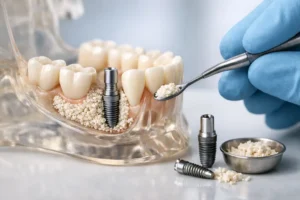
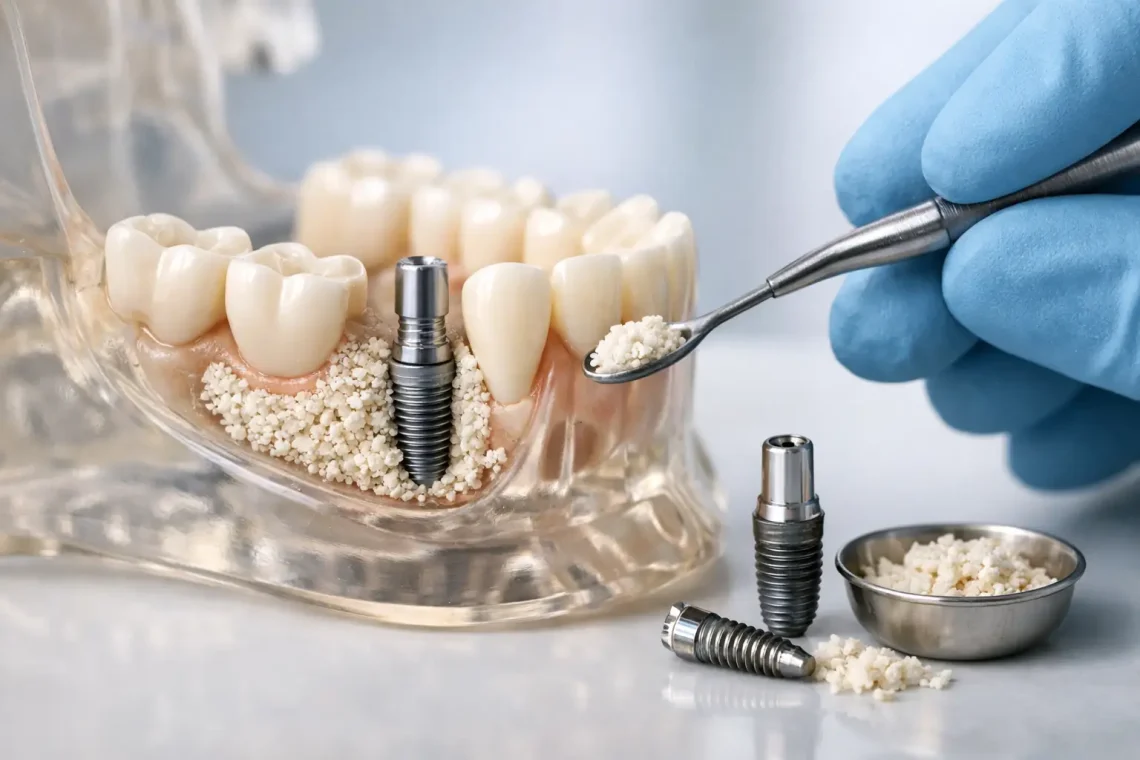
Implant bone grafting is a procedure that adds or preserves bone in an area of the jaw that does not have enough healthy bone volume to support a dental implant. A dental implant needs a stable foundation because it is designed to function like a natural tooth root. It must integrate with the jawbone before it can reliably support a crown, bridge, or full-arch restoration.
The grafting material may come from your own bone, a carefully processed donor source, an animal-derived source, or a synthetic material. Your implant specialist will select an appropriate option based on the location of the bone loss, the amount of rebuilding needed, your health history, and the treatment goals. The material acts as a framework that encourages your body to build new bone over time.
The goal is not simply to add bone. It is to create the right shape, density, and support for a natural-looking, functional result. That precision matters whether you are replacing one tooth or planning full-mouth dental implants.
Why Jawbone Loss Happens After Tooth Loss
Your jawbone stays active when it receives pressure from tooth roots during chewing. When a tooth is removed or lost, that stimulation ends. The bone around the missing tooth can gradually shrink in width and height, especially when the space has been untreated for months or years.
Bone loss can also result from advanced gum disease, infection, trauma, poorly fitting dentures, or prior tooth extractions. In the upper back jaw, the sinus cavity can expand downward after teeth are lost, leaving less available bone for an implant. In the lower jaw, bone loss may affect the width of the ridge where an implant would be placed.
This does not mean you are automatically disqualified from implants. It means your treatment needs to account for the condition of the bone you have today, not the bone you had years ago. Many patients who were told they did not have enough bone can still be candidates with the right planning and approach.
How Do You Know If You Need a Bone Graft?
A visual exam alone cannot show the full picture. Your specialist needs to evaluate the quality and quantity of jawbone beneath the gums. Digital 3D CT imaging makes that possible by showing the bone from multiple angles and helping the team identify nerves, sinus spaces, and the best potential implant position.
You may be more likely to need grafting if you have had a missing tooth for a long time, recently had an extraction because of infection, have periodontal disease, or wear dentures that have become loose as your jaw ridge changes. Still, every case is different. Some patients have enough healthy bone for immediate implant placement, while others benefit from a healing period after grafting.
At California Dental Implants Specialists, the consultation is designed to replace guesswork with a clear treatment plan. You should know whether grafting is needed, why it is recommended, what the timeline looks like, and how it affects the overall cost before you commit to care.
Types of Bone Grafting for Dental Implants
The type of graft depends on where bone is missing and how much support is needed. A small socket preservation graft is often placed at the time of an extraction. Its purpose is to help maintain the shape of the bone after the tooth is removed, which may make later implant placement more straightforward.
A ridge augmentation is used when the jaw ridge has become too narrow or too short for ideal implant placement. The specialist adds grafting material to rebuild the area, sometimes using a protective membrane to keep the material stable while healing occurs.
A sinus lift, also called sinus augmentation, is used in certain upper-jaw cases. The sinus membrane is gently raised so bone grafting material can be placed beneath it. This creates more available height for an implant in the back of the upper jaw.
For patients receiving full-arch treatment, the plan may use advanced implant placement techniques that make the best use of existing bone. In some cases, grafting is still beneficial. In others, it may be avoidable. The right answer depends on your anatomy, the restoration being planned, and the long-term stability of the result.
What Happens During the Procedure?
Bone grafting is typically performed with local anesthesia, and additional comfort options may be available based on your needs and the complexity of treatment. After the area is numbed, the specialist prepares the site and places the grafting material precisely where new support is needed. A membrane or small sutures may be used to protect the area during early healing.
Many smaller grafts are completed in a single visit. If the graft is placed after an extraction, you may leave with a temporary solution while the site heals. Your team will provide specific instructions about eating, brushing, medication, and follow-up appointments.
Patients commonly experience mild swelling, tenderness, or minor bruising for several days. These symptoms are usually manageable with the aftercare plan provided. Avoiding smoking is especially important because tobacco use can interfere with healing and increase the risk of complications.
How Long Does Healing Take Before an Implant?
Healing time depends on the type and size of the graft, the location in your mouth, your overall health, and how well your body forms new bone. A minor preservation graft may be ready for implant placement in a few months. More extensive ridge rebuilding or sinus grafting can require a longer healing period.
Sometimes an implant can be placed at the same appointment as the bone graft. This is more likely when enough native bone is available to stabilize the implant at the start. When there is significant bone loss, separating the procedures may be the safer choice. Waiting can feel frustrating, but it is often an investment in a stronger, more predictable foundation.
Your specialist will monitor healing and use imaging when appropriate to confirm that the area is ready. Once the implant is placed, it also needs time to bond with the bone before the final restoration is attached. Treatment timelines vary, but careful planning helps prevent rushed decisions that could compromise long-term comfort or function.
Is Bone Grafting Worth It?
For a patient who needs it, bone grafting can be the difference between placing an implant in an ideal position and settling for a less predictable solution. It can improve implant stability, support natural facial contours, and help create the foundation needed for comfortable chewing and confident speech.
There are trade-offs to consider. Grafting can add cost and healing time, and no surgical procedure is completely without risk. However, avoiding a recommended graft simply to shorten treatment may lead to compromises in implant placement or durability. A trustworthy provider will explain both the benefits and the alternatives, including whether immediate implants, angled implants, or another tooth replacement option may be appropriate for your situation.
Preparing for a Successful Result
The best outcomes begin before surgery. Share your complete medical history, including medications, diabetes management, immune conditions, and smoking habits. Treat active gum disease or infection before implant treatment whenever possible. Follow instructions for antibiotics, pain medication, and oral hygiene exactly as directed.
After the procedure, choose softer foods until your care team says the area can handle more chewing pressure. Keep the surgical site clean without disturbing it, attend follow-up visits, and call the office if you notice worsening pain, persistent bleeding, fever, or unusual swelling. Your care team would rather answer a question early than have you worry at home.
A bone graft is not a setback on the path to a new smile. For the right patient, it is the careful first step that makes a stable, comfortable implant possible. A consultation with implant-focused specialists can show you what is achievable with your own bone, your timeline, and a plan built for lasting function.