A loose denture can turn ordinary moments – ordering lunch with friends, speaking in a meeting, laughing without covering your mouth – into sources of stress. When patients compare all on 4 vs dentures, they are usually looking for more than replacement teeth. They want to know whether they can eat comfortably, feel secure in public, and make a smart investment in their health and confidence.
Both traditional dentures and All-On-4 full-mouth implants can restore a missing smile. But they work very differently, and the best option depends on your bone health, medical history, lifestyle, expectations, and budget. A personalized consultation and digital CT imaging are the right place to get answers specific to your mouth.
All on 4 vs Dentures: The Core Difference
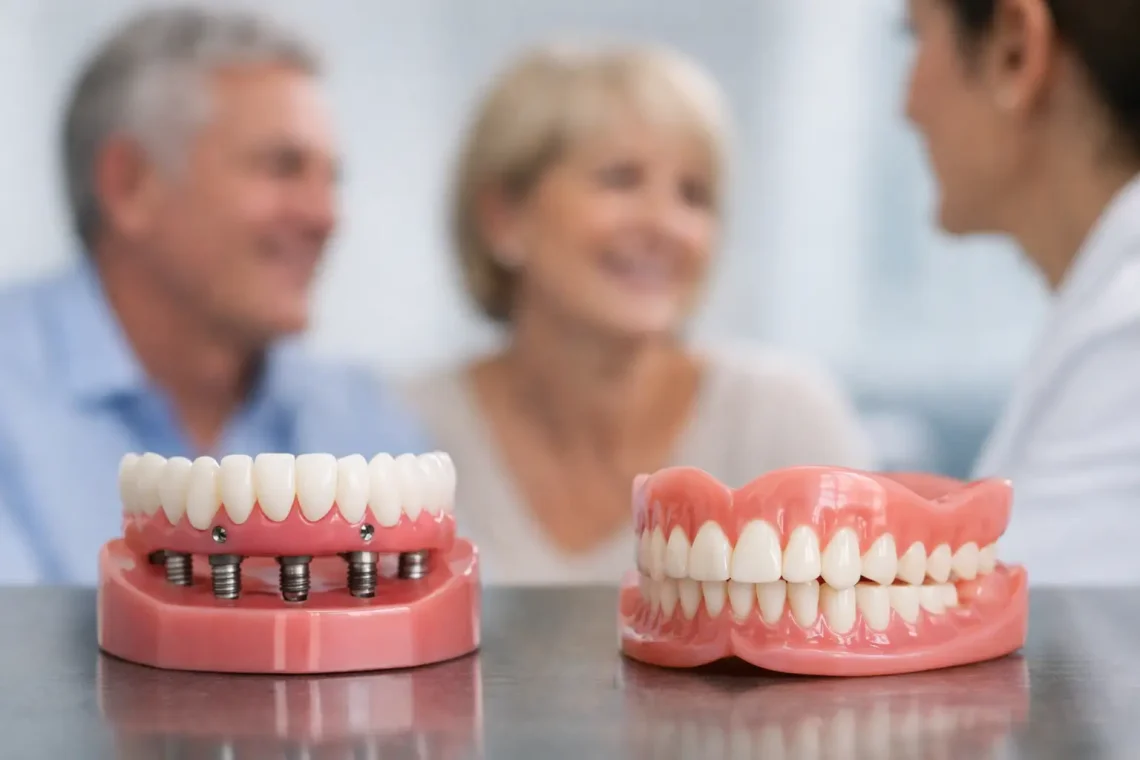
Traditional dentures are removable prosthetic teeth that sit on the gums. A full denture replaces all the teeth in the upper or lower arch and may be held in place by natural suction, adhesives, or a precise fit against the gums. They are a familiar and accessible tooth-replacement option, particularly after extractions.
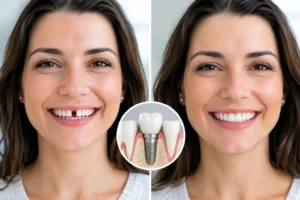
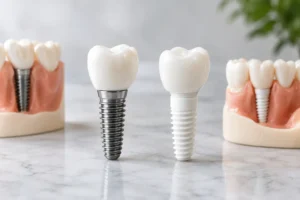
All-On-4 uses four strategically placed dental implants to support a full arch of teeth. The implants are placed in the jawbone, where they act as artificial tooth roots. A fixed bridge attaches to those implants, so the teeth stay in place rather than being removed each night. In many appropriate cases, angled placement in the back of the jaw helps make use of available bone and may reduce the need for bone grafting.
That difference – resting on the gums versus being anchored to the jaw – affects nearly every part of daily life, from chewing force to maintenance.
Stability and chewing ability
Well-made conventional dentures can improve appearance and basic function, but they can still move when you chew or speak. Lower dentures are often more challenging because there is less surface area for suction. Adhesives may help, but they do not change the fact that the denture is resting on soft tissue.
With All-On-4, the replacement teeth are secured to implants. This can provide a more stable bite and allow many patients to enjoy a broader range of foods with greater confidence. You still need to follow your specialist’s healing and dietary instructions, especially early in treatment, but the long-term goal is dependable function without worrying that teeth will shift at the table.
Comfort, speech, and confidence
Denture wearers may experience sore spots, gum irritation, or a bulky feeling across the palate. Because traditional upper dentures often cover the roof of the mouth, some people notice changes in how food tastes or feels. Speech also takes practice, particularly with a new denture.
A properly planned implant-supported full arch is designed to feel secure and look natural. It does not rely on adhesive, and it typically has less palate coverage than a traditional upper denture. Patients often value the freedom to speak, smile, and be close to others without the fear of a denture slipping.
Comfort is personal, however. All-On-4 involves a surgical procedure and a healing period. A removable denture may be the more comfortable immediate choice for someone who cannot undergo surgery or prefers to avoid it.
Jawbone Health Is a Major Part of the Decision
Teeth do more than create a smile. Their roots send chewing forces into the jawbone, helping maintain the bone that supports the face. After teeth are lost, the jawbone can gradually shrink because that stimulation is gone. Over time, this can change facial support and make a denture harder to fit securely.
Traditional dentures replace visible teeth but do not replace tooth roots. Relines and adjustments are often needed as the gums and bone change shape. This is one reason a denture that once fit well may begin to rock or feel loose years later.
Dental implants transfer force to the jawbone more like natural roots. Although no treatment can promise to stop every biological change, implants can help preserve bone in the areas where they are placed. For patients concerned about facial structure and long-term stability, this is often one of the strongest reasons to explore All-On-4.
The Treatment Experience: What to Expect
A traditional denture process usually begins with extractions when needed, followed by impressions, measurements, and fabrication of the denture. An immediate denture may be placed on the day teeth are removed, but it often needs adjustments as the gums heal and shrink. A more definitive denture may be made after healing is further along.
All-On-4 begins with a thorough evaluation. Your implant team reviews your medical and dental history, bite, gum condition, and CT scan to determine whether implants are appropriate and where they can be placed with precision. If you are a candidate, failing teeth may be removed and implants placed in the same appointment. Many patients receive a temporary fixed set of teeth while their implants integrate with the bone, followed later by a final restoration.
The timeline varies. Healing, bone quality, the need for extractions or grafting, and the design of the final teeth all matter. Be cautious with any provider who presents full-mouth restoration as identical for every patient. A successful result depends on careful planning, surgical skill, quality materials, and follow-up care.
Who may be a strong candidate for All-On-4?
All-On-4 may be worth considering if you have many failing or missing teeth, struggle with loose dentures, or want a fixed alternative that supports better daily function. It can also be an option for people who have experienced bone loss but may still have enough bone in key areas for strategic implant placement.
Good candidates need healthy enough gums and bone for treatment, as well as a commitment to home care and regular dental visits. Conditions such as uncontrolled diabetes, heavy smoking, untreated gum disease, or certain medications can affect healing. These issues do not always rule out implants, but they should be discussed honestly with a qualified implant specialist.
Dentures may be the right choice when surgery is not medically advisable, when a patient needs a lower upfront cost, or when they want a removable solution. There is no one-size-fits-all answer. The goal is a treatment plan that is safe, functional, and realistic for your life.
Cost: Upfront Price Versus Long-Term Value
Traditional dentures generally cost less upfront than a full-arch implant restoration. They can be a practical pathway to restoring a smile, especially for patients replacing teeth quickly after extractions. Yet the financial conversation should include future relines, repairs, adhesives, replacement dentures, and the possibility that ongoing bone changes could affect fit.
All-On-4 is a larger initial investment because it includes surgical planning, implant placement, a temporary restoration, and a final full-arch prosthesis. The exact cost depends on factors such as extractions, sedation, bone grafting, the materials selected, and whether one or both arches are being treated.
Price matters, and patients deserve clarity. It should not be the only factor. Ask what is included in a quoted treatment plan, what type of final restoration is planned, how follow-up visits are handled, and what financing or insurance benefits may be available. At California Dental Implants Specialists, a consultation can help clarify options without pressuring you into treatment that does not fit your needs.
Do Not Overlook Implant-Supported Dentures
There is an important middle option for patients deciding between all on 4 vs dentures: implant-supported dentures. Instead of four implants supporting a fixed bridge, a removable denture may snap onto two or more implants. It can offer significantly better retention than a conventional denture while remaining removable for cleaning.
This option may suit a patient who wants more stability but is not ready for a fixed full arch. It is not the same as All-On-4, and it still has its own maintenance requirements, but it can be a meaningful improvement over a denture held only by suction or adhesive.
How to Make the Right Choice
Start with the problems you want to solve. If your top concern is a loose denture, ask which option will provide the stability you need. If you miss eating certain foods, discuss realistic chewing expectations. If you are worried about facial support and long-term bone changes, ask how implant placement may affect your situation. And if cost is the biggest obstacle, request a clear plan that separates immediate needs from long-term goals.
The right full-mouth solution should make your life easier, not leave you guessing at every meal or hiding your smile. A thoughtful consultation can turn a frustrating daily struggle into a clear path toward teeth that look natural, feel secure, and support the way you want to live.