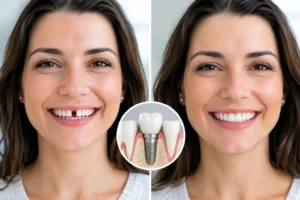
When failing teeth, loose dentures, or repeated dental repairs begin to control what you eat and how confidently you speak, the problem is bigger than appearance. Full mouth dental implants can replace an entire upper arch, lower arch, or both with a stable, natural-looking set of teeth designed to restore daily comfort and function.
For many patients, the decision starts with a simple goal: eat without worry, smile without covering their mouth, and stop planning life around a dental problem. The right treatment can make that goal realistic, but it should begin with a clear understanding of what full-mouth treatment involves, who qualifies, and what affects the final result.
What Are Full Mouth Dental Implants?
Full mouth dental implants are a tooth replacement solution for people missing most or all of their teeth, or for people whose remaining teeth cannot be predictably saved. Instead of replacing every tooth with an individual implant, a specialist places a strategic number of implants in the jawbone to support a complete fixed bridge of teeth.
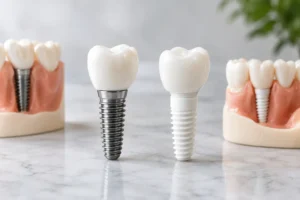
These implants act as artificial tooth roots. Once they integrate with the bone, they provide a secure foundation for a custom full-arch restoration. The final teeth are shaped, colored, and positioned to support a natural smile while helping you chew, speak, and maintain facial support.
Treatment is commonly described as All-On-4 or All-On-X. All-On-4 uses four implants to support a full arch in appropriate cases. All-On-X means the number of implants is tailored to the patient’s bone quality, bite forces, anatomy, and long-term needs. More implants are not automatically better. The best plan is the one that gives you reliable support with a thoughtful surgical and restorative design.
Why Patients Choose Full Mouth Dental Implants
Traditional removable dentures remain an option for some patients, but they can shift during meals, create sore spots, and limit food choices. Adhesives may help temporarily, yet they do not address the loss of tooth roots or the gradual bone changes that can occur after teeth are lost.
Implant-supported full arches are fixed in place by your dental team. That stability is often the difference patients feel immediately in everyday moments: ordering food at a restaurant, talking in a meeting, laughing with family, or simply biting into an apple without hesitation.
A well-planned full-mouth restoration may help patients:
- Chew a wider variety of foods with greater comfort
- Speak more clearly without worrying about dentures moving
- Restore a fuller facial appearance affected by missing teeth
- Avoid the daily removal, soaking, and adhesive routine of traditional dentures
- Replace failing teeth with a durable, fixed solution
The emotional benefit matters, too. Tooth loss can cause people to withdraw from photos, social events, and professional settings. A complete smile cannot solve every concern, but it can remove a daily source of stress and help patients feel more like themselves again.
The First Step Is a Detailed Implant Consultation
Full-mouth treatment should never be a one-size-fits-all purchase. Your consultation is where the clinical plan begins. A dental implant specialist evaluates your teeth, gums, bite, jawbone, medical history, and goals. In-house digital CT imaging provides a three-dimensional view of the bone and critical anatomy, allowing the team to plan implant placement with greater precision.
This visit is also the time to discuss what has not been working for you. Perhaps your dentures are loose, you have painful broken teeth, or years of crowns and fillings are no longer holding up. Your treatment plan should account for the condition of your mouth today and the lifestyle you want after treatment.
Some patients need extractions before implants are placed. Others may need bone grafting, periodontal treatment, or a period of healing before final restoration. In many cases, a temporary fixed set of teeth can be placed on the day of surgery. Whether immediate teeth are appropriate depends on implant stability, bone quality, and the complexity of your case.
What the Treatment Process Usually Looks Like
The process begins with diagnostics and treatment planning. Your doctor determines whether your remaining teeth can be saved or whether removing them provides a healthier long-term foundation. Digital imaging and impressions help guide the position of the implants and the design of the final teeth.
On the day of surgery, any necessary teeth are removed and the implants are placed in the jawbone. Sedation options may be available for patients who feel anxious about treatment. Your comfort, medical needs, and procedure complexity all help determine the best approach.
After implant placement, many patients receive a temporary fixed bridge. This allows you to leave with teeth while the implants heal and integrate with the bone. During this healing period, you will follow a soft-food diet and attend follow-up visits so your care team can monitor healing and make adjustments when needed.
The final bridge is created after adequate healing. This phase is not simply about making teeth look white and straight. Your specialist considers bite balance, speech, lip support, gum appearance, tooth shape, and how the restoration functions when you chew. A beautiful result needs to work comfortably, not just photograph well.
Are You a Candidate for Full Mouth Dental Implants?
Many adults who assume they have waited too long are still candidates for treatment. Age alone is rarely the deciding factor. General health, bone availability, gum condition, medications, smoking habits, and the ability to heal are more relevant.
You may be a strong candidate if you have multiple missing teeth, advanced tooth decay, severe gum disease, failing bridges, or dentures that no longer feel secure. You may also be a candidate if you are tired of spending money on repairs that only delay a more comprehensive solution.
Certain health conditions require additional planning, not automatic disqualification. For example, uncontrolled diabetes, active gum infection, heavy smoking, or medications that affect bone healing can influence timing and treatment options. Honest communication with your implant team helps protect your health and your investment.
Understanding Cost Without Cutting Corners
The cost of full-mouth dental implant treatment varies because every mouth requires a different level of care. A quote may include extractions, sedation, implants, temporary teeth, the final bridge, imaging, follow-up care, and any required grafting or treatment for infection. When comparing offers, ask what is included and what may be added later.
Lower upfront pricing can be appealing, especially when you have already spent years paying for dental repairs. But full-mouth treatment is not an area where you want vague answers about materials, implant brands, the final restoration, or who is responsible for your surgical and restorative care.
The most helpful comparison is value over time. A transparent practice will explain your options clearly, discuss available financing and insurance benefits, and help you understand the difference between a promotional starting price and the complete treatment plan recommended for your needs. Affordable care should still be carefully planned care.
How to Protect Your New Smile
Implants cannot decay like natural teeth, but they still need consistent maintenance. The gum tissue and bone around implants can become inflamed when plaque builds up, and untreated inflammation can threaten the long-term health of the restoration.
Daily cleaning around the bridge, regular professional hygiene visits, and periodic examinations are essential. Your care team will show you how to use the tools that fit your restoration, which may include a water flosser, specialized floss, or small interdental brushes. If you grind or clench your teeth, a night guard may also be recommended to protect your new teeth from excessive force.
Think of your restoration as a long-term commitment between you and your dental team. The implants provide the foundation, but maintenance protects the result.
Choosing a Provider for Full Mouth Implant Care
Full-mouth rehabilitation combines surgery, bite design, aesthetics, and long-term maintenance. Experience matters because the outcome depends on more than placing implants. It depends on accurate diagnostics, careful planning, quality materials, and a team that understands how a full arch should feel and function over years of use.
Ask whether the practice uses three-dimensional CT imaging, how the treatment sequence is planned, what kind of temporary and final teeth are provided, and how follow-up care is handled. You should also feel comfortable asking about payment options, estimated timelines, and what happens if your case requires additional treatment.
At California Dental Implants Specialists, the consultation is designed to give patients clear answers rather than pressure. If you are living with failing teeth or unstable dentures, a personalized evaluation can show you whether a fixed, lasting smile is within reach. The first step is not committing to surgery. It is getting a plan that lets you make your next decision with confidence.