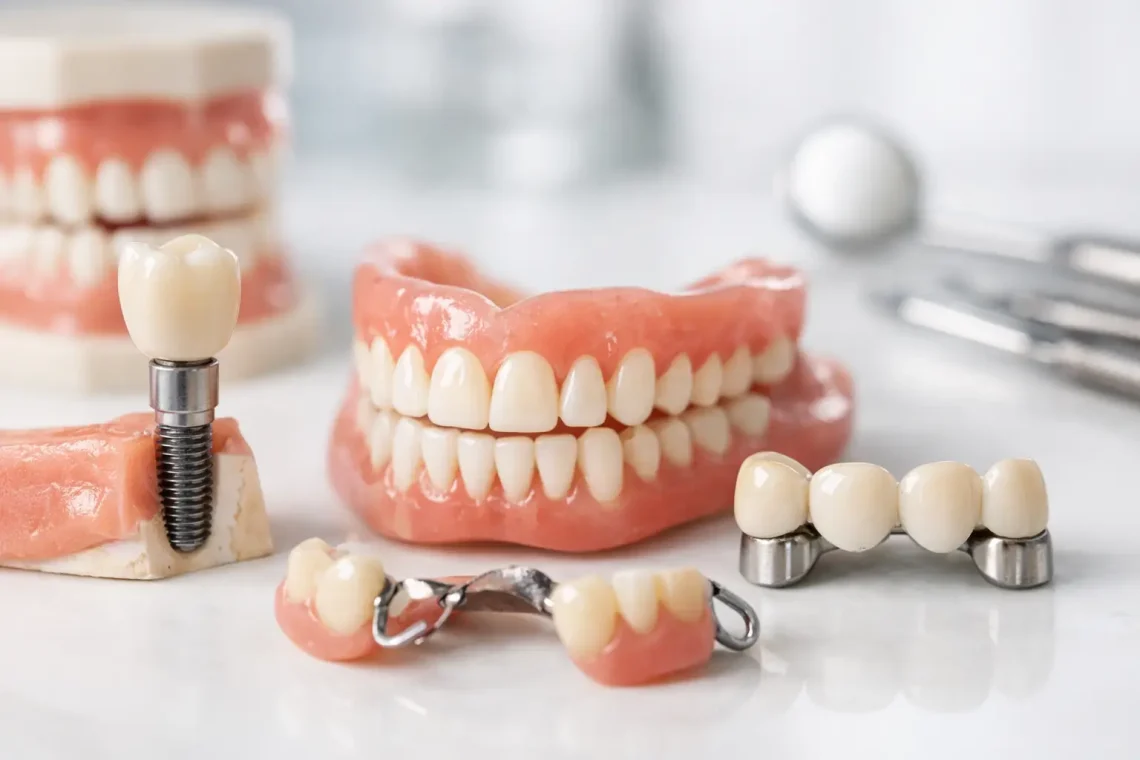
A missing tooth can change more than a photograph. You may start chewing on one side, avoiding foods you once enjoyed, speaking more carefully, or hiding your smile without realizing it. The best tooth replacement options restore more than the visible part of a tooth. They should help you eat comfortably, speak clearly, protect your remaining teeth, and feel confident in daily life.
The right answer is personal. A single missing front tooth, several failing teeth, and a loose lower denture each call for a different plan. Your bone level, gum health, medical history, timeline, and budget all matter. A thorough consultation helps turn a confusing decision into a clear path forward.
Why Replacing Missing Teeth Matters
When a tooth is lost, the effects can spread beyond the gap. Nearby teeth may slowly shift toward the empty space, changing your bite and making cleaning harder. The jawbone beneath a missing tooth can also begin to shrink because it no longer receives the stimulation created by chewing.
This is why waiting is not always the least expensive choice in the long run. Replacing a tooth early may help preserve spacing, bite function, and jaw support. Still, there are times when treatment must be staged, such as after an infection, an extraction, or a period of gum therapy. A specialist can explain what needs attention first and what can be planned for later.
Best Tooth Replacement Options: A Clear Comparison
Dental implants for a permanent, independent solution
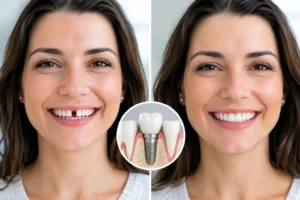
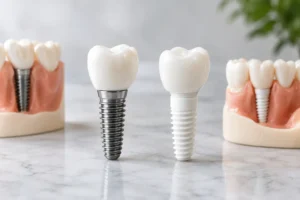
A dental implant replaces the root of a missing tooth with a small post placed in the jawbone. After healing, it supports a custom crown, bridge, or full-arch restoration. Because the implant is anchored in bone, it can feel remarkably similar to a natural tooth when you chew and speak.
For one missing tooth, an implant-supported crown is often the most conservative long-term option because it does not require reshaping the healthy teeth beside the gap. It also helps stimulate the jawbone in that area. With good home care and regular dental visits, implants are designed to provide durable, lasting support.
Implants are not a one-size-fits-all procedure. Adequate bone, healthy gums, and careful treatment planning are essential. Patients with bone loss may still be candidates, but they could need grafting or a different implant approach. Smoking, uncontrolled diabetes, and untreated periodontal disease can affect healing, so these factors should be discussed openly rather than treated as automatic disqualifiers.
Dental bridges when neighboring teeth need restoration
A traditional dental bridge fills a gap by attaching a replacement tooth to crowns placed on the teeth next to it. It is a fixed option, meaning it stays in place and is not removed at night. For some patients, a bridge is a practical solution when the neighboring teeth already need crowns or when an implant is not the preferred choice.
The trade-off is that a conventional bridge requires preparing the teeth on either side of the missing tooth. It also does not replace the tooth root, so it does not provide the same direct bone stimulation as an implant. Bridges can look natural and restore useful function, but they require consistent cleaning underneath the replacement tooth to protect the supporting teeth and gums.
An implant-supported bridge is different. Instead of relying on natural teeth, it is supported by dental implants. This can be especially useful when multiple teeth in a row are missing, allowing patients to replace several teeth without placing an implant for every individual tooth.
Removable partial dentures for a lower upfront cost
A removable partial denture replaces one or more missing teeth and is taken out for cleaning and sleep. It may be a suitable choice for patients who need a cost-conscious way to fill multiple gaps, need a temporary solution during healing, or are not ready for implant treatment.
Modern partial dentures can be more natural-looking than many people expect, but they do have limitations. They may move slightly during eating or speaking, food can collect around the appliance, and metal or acrylic clasps may place pressure on neighboring teeth. They also do not prevent bone loss in the areas where teeth are missing.
A partial denture can be a helpful stepping stone, but it is worth asking how it fits into your long-term plan. If you expect to pursue implants later, your provider can help preserve the option whenever possible.
Full dentures and implant-supported dentures
When all teeth in an upper or lower arch are missing, conventional full dentures remain an accessible option. They can restore appearance and basic function, and they do not require surgery. However, lower dentures in particular can become loose as the jawbone changes over time. Adhesives may help, but they do not create the stability of teeth anchored to implants.
Implant-supported dentures offer a major improvement for many denture wearers. A removable overdenture snaps onto implants for a more secure fit, helping reduce movement while eating and speaking. It can still be removed for cleaning, which some patients prefer.
For patients who want a fixed full-mouth solution, All-On-4 or All-On-X treatment uses a carefully planned number of implants to support a full arch of teeth. The restoration is secured in place by the dental team rather than removed at home. This approach can provide strong chewing support, a natural-looking smile, and improved confidence for people who are tired of unstable dentures or have many failing teeth.
How to Choose the Right Option for Your Smile
The best choice is not always the fastest treatment or the lowest initial price. Think about how you want your teeth to function five, ten, or fifteen years from now. If you are replacing one tooth and want to avoid altering healthy neighboring teeth, an implant may be worth considering. If you need several teeth replaced and are managing a tighter immediate budget, a bridge or removable appliance may make sense while you plan for future care.
Ask direct questions during your consultation. How will this option affect my jawbone? Will I need to remove it at night? What maintenance does it require? If it needs repair in the future, what is involved? A trustworthy treatment recommendation explains both the benefits and the limitations without pressure.
Cost should be discussed clearly, too. The total investment can include imaging, extractions, bone grafting, implant placement, the final restoration, and follow-up care. Financing and insurance benefits may help make treatment more manageable, but the goal is to understand the complete plan rather than compare a single advertised number. An affordable solution should still be built around safety, precision, and long-term function.
The Value of a Detailed Implant Consultation
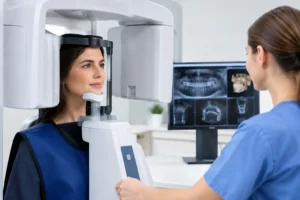
Implant treatment begins with planning, not guesswork. Digital CT imaging allows the dental team to evaluate bone volume, nerve locations, sinus areas, and the best position for an implant before treatment starts. This level of planning is particularly valuable when replacing multiple teeth or rebuilding a full arch.
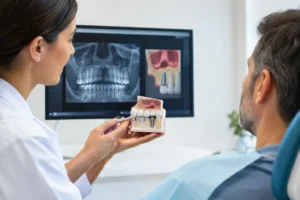
At California Dental Implants Specialists, the consultation is designed to give patients a straightforward understanding of their oral health, options, expected timeline, and payment choices. You should leave knowing whether an implant, bridge, denture, or a staged approach best supports your needs.
If you have been living with a gap, a loose denture, or teeth that no longer feel dependable, you do not have to settle for eating around the problem. A thoughtful evaluation can reveal a treatment path that fits your health, lifestyle, and goals, so you can move forward with a smile that feels secure again.