A missing tooth affects more than a photograph. It can change how comfortably you chew, how clearly you speak, and how confident you feel in everyday conversations. When patients compare titanium zirconia implants, they are usually looking for one answer: which material will give them a secure, natural-looking tooth replacement they can trust for years?
Both titanium and zirconia dental implants can be excellent choices. They are not interchangeable, however. The right material depends on your jawbone, the location of the missing tooth, your bite, gum tissue, health history, and the type of restoration you need. A consultation with implant-focused clinicians and detailed 3D imaging helps turn a confusing material decision into a treatment plan built around your smile.
What Are Titanium and Zirconia Dental Implants?
A dental implant is a small post placed into the jawbone to replace a missing tooth root. After it heals and bonds with the bone, it can support a custom crown, bridge, or full-arch restoration. The implant itself sits below the gumline. The visible tooth above it is typically made from a different material, often porcelain or zirconia.
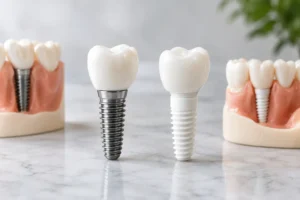
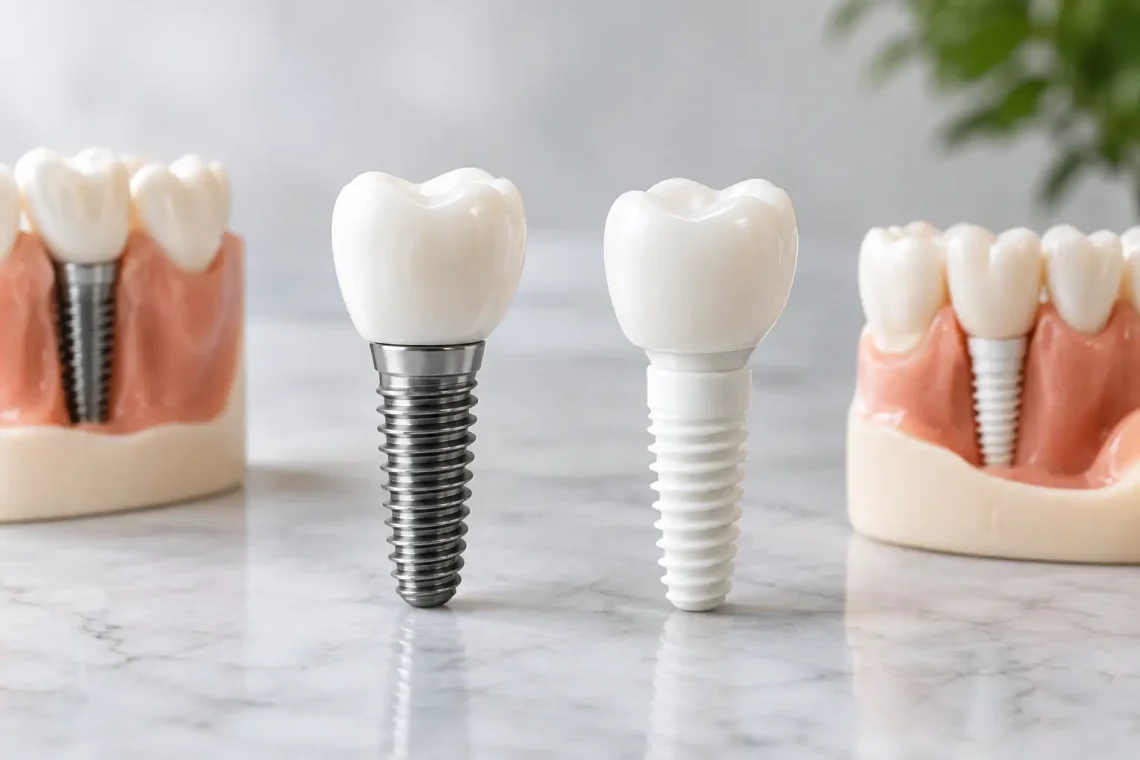
Titanium implants are made from a medical-grade titanium alloy. They have been used successfully in dentistry for decades and are the most widely studied implant option. Most are designed in two parts: the implant post in the bone and an abutment that connects the post to the final crown.
Zirconia implants are made from a high-strength ceramic material. They are naturally white rather than metallic and are often designed as a one-piece implant with the abutment attached. Some systems offer two-piece zirconia options, but titanium remains more adaptable for complex restorative planning.
Titanium Zirconia Implants: The Key Differences
The best choice is rarely about finding a universally “better” implant. It is about selecting the material and design that can support a stable, comfortable restoration in your individual situation.
Strength and long-term clinical history
Titanium has an exceptionally long track record in implant dentistry. It is strong, lightweight, and highly resistant to corrosion. Its surface is designed to encourage osseointegration, the process in which the jawbone heals closely around the implant. This secure bond is one reason titanium is commonly used for single-tooth implants, implant bridges, and full-mouth options such as All-On-4 or All-On-X.
Zirconia is also strong, but ceramic behaves differently under force. It can be a very good option for selected patients, especially in lower-pressure areas or cases with favorable bite conditions. Yet it has less long-term research than titanium, and it may not be the first recommendation for patients with heavy grinding, severe bite forces, limited bone, or complex full-mouth reconstruction needs.
Esthetics at the gumline
Zirconia’s white color is its most visible advantage. For a front tooth with thin gum tissue, a ceramic implant may reduce the possibility of a gray shadow showing through the gums. This can matter for patients with a high smile line or delicate tissue around a highly visible tooth.
Titanium implants can also deliver beautiful, natural-looking results. Skilled implant planning places the implant at the right depth and angle, while a custom abutment and crown are designed to support the gumline naturally. For many patients, the material of the crown and the precision of placement have a greater effect on the final appearance than the color of the implant below the gums.
Treatment flexibility
Titanium offers more restorative flexibility. Because many titanium systems use separate implant and abutment components, the clinician can make detailed adjustments to the angle, emergence profile, and support for the final tooth. This is valuable when the implant position needs to be corrected slightly or when several teeth must work together as a bridge or full arch.
One-piece zirconia implants can require more exact placement from the start because the attached abutment cannot be adjusted independently after surgery. That does not make zirconia inferior. It simply means planning is less forgiving, and the patient must be an appropriate candidate for the system.
Biocompatibility and sensitivities
Titanium is widely considered biocompatible, meaning the body generally accepts it well. True titanium allergy is considered uncommon. Patients who have reacted to jewelry or other metals should still discuss that history during their consultation so the care team can review it carefully.
Some patients prefer zirconia because it is metal-free. That preference is valid, particularly when a ceramic option fits the clinical situation. But a desire for a metal-free implant should be balanced with the need for predictable stability, bite support, and long-term function. Your treatment should never sacrifice structural reliability for a material preference alone.
Which Patients May Be Better Candidates for Titanium?
Titanium is often the preferred choice when strength, flexibility, and proven performance are the highest priorities. It may be especially appropriate for back teeth, where chewing pressure is greater, and for patients replacing multiple teeth. It is also commonly used for implant-supported dentures and full-mouth restorations because those treatments require careful angling and dependable support across the entire bite.
Patients who grind or clench their teeth may also benefit from titanium’s versatility, although a custom nightguard can still be essential to protect any implant restoration. People with bone loss may need bone grafting or a specialized full-arch approach, and titanium systems often provide more options for managing these advanced cases.
When Zirconia May Be Worth Considering
Zirconia may be worth discussing if you are replacing a single tooth in a visible area, have sufficient healthy bone and gum tissue, and strongly prefer a ceramic implant. It can be an appealing option for patients concerned about the appearance of metal beneath thin gums.
A careful examination matters. The clinician must evaluate the space between teeth, the thickness of the gums, the way your upper and lower teeth meet, and whether there is enough bone to position the implant precisely. If those conditions are favorable, zirconia can support a pleasing and functional result.
The Material Is Only One Part of Implant Success
Patients sometimes spend so much time comparing titanium and zirconia that they overlook the factors that often have a greater impact on results. Implant success depends on diagnosis, surgical experience, implant position, bone quality, gum health, bite design, and the quality of the final crown or bridge.
This is why 3D CT imaging is so valuable. It lets the care team see the available bone and important anatomical structures before treatment begins. Digital planning helps determine whether an implant can be placed safely, whether grafting is needed, and which implant design best supports your final restoration.
Your habits matter, too. Smoking, uncontrolled diabetes, untreated gum disease, and severe teeth grinding can affect healing and long-term implant health. These issues do not always rule out implants, but they should be addressed honestly in the treatment plan. The goal is not simply to place an implant. It is to create a foundation that supports comfortable chewing and a confident smile for the long term.
Questions to Ask at Your Implant Consultation
You deserve clear answers before choosing any implant treatment. Ask why a specific material is being recommended for your case, how your bite affects the choice, and what your final crown, bridge, or denture will be made from. You can also ask whether you need bone grafting, what healing timeline to expect, and how the practice will monitor your implant after placement.
At California Dental Implants Specialists, consultations are designed to make those decisions easier. Advanced imaging and a personalized evaluation can show whether titanium, zirconia, or another treatment approach gives you the strongest path toward restoring your teeth.
The implant that looks best on paper is not always the implant that is best for your mouth. A thoughtful treatment plan gives you something more valuable than a material label: the ability to eat, speak, and smile with lasting comfort and confidence.