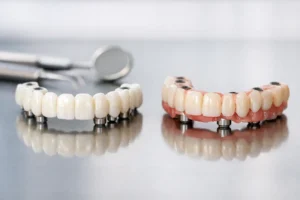
A loose denture can turn an ordinary meal into a calculation: Will I be able to chew this? Will it shift when I talk? For patients ready to replace a full row of failing or missing teeth, the all on x vs all on 4 decision is often the point where a distant goal becomes a real treatment plan. Both options can provide a fixed, natural-looking full-arch smile. The difference is how the implant foundation is planned for your individual bone, bite, and long-term needs.
What All-on-4 Means
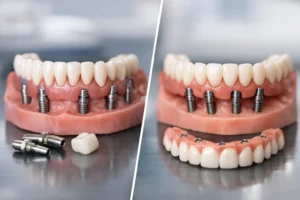
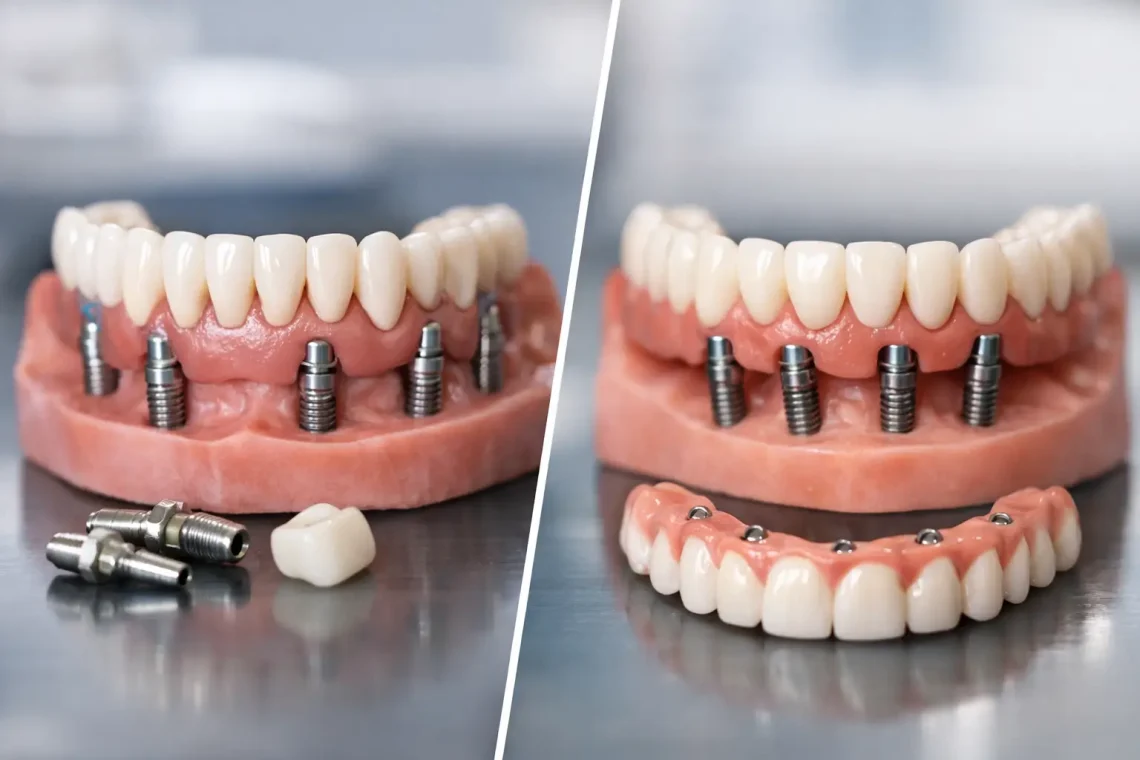
All-on-4 is a full-mouth restoration approach that supports a complete upper or lower arch of teeth on four dental implants. Two implants are usually placed toward the front of the jaw, while the back implants may be angled to take advantage of available bone. That angle can help some patients avoid more extensive grafting procedures.
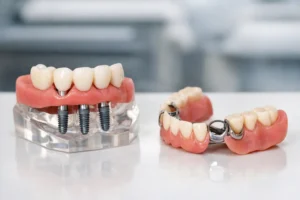
Once the implants are secure, they support a custom full-arch bridge. Depending on your clinical situation, a temporary fixed bridge may be placed on the day of surgery or soon after, followed by a final bridge after healing. The result is designed to feel far more stable than a removable denture while restoring the ability to smile, speak, and eat with greater confidence.
Four implants can be an excellent solution for many people. It is a well-established concept, and it may offer an efficient path to fixed teeth for patients with suitable bone volume and a healthy, manageable bite. But four is not automatically the right number for every mouth.
All-on-X vs. All-on-4: The Key Difference
All-on-X means the number of implants is not predetermined. The “X” may be four, five, six, or occasionally another number based on the clinical plan. Rather than beginning with a fixed implant count, the dentist evaluates what will create the most stable and lasting support for your new arch.
That flexibility matters because every jaw is different. Bone density can vary from one area of the mouth to another. Some patients have lost bone after years of missing teeth, gum disease, or wearing dentures. Others have strong bone but place heavy forces on their teeth from grinding or clenching. The upper jaw can also require a different strategy than the lower jaw.
An All-on-X plan may use additional implants to distribute biting forces more broadly, support a longer bridge, or add a margin of stability where the bone and bite call for it. More implants do not automatically mean better treatment. A carefully positioned four-implant case can be highly successful. The goal is not to place the most implants possible. It is to place the right number in the right locations.
Why implant count is only one part of the decision
The final bridge, the way your upper and lower teeth meet, and the health of your gums all affect long-term performance. A full arch is a connected restoration, so force placed on one area can travel across the bridge and onto the implants. Your treatment team considers the entire system, not just the surgical appointment.
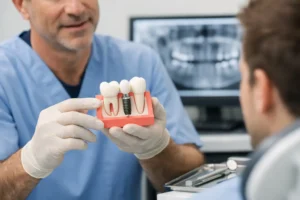
This is why a consultation should include a 3D CT scan, a review of your medical and dental history, and a discussion of your daily needs. Someone who wants to comfortably enjoy a varied diet, has a history of breaking teeth, or has advanced bone loss may need a different design than someone with healthy bone and modest biting forces.
Who May Be a Candidate for All-on-4?
All-on-4 may be appropriate if you are missing most or all teeth in an arch, have dentures that move or cause sore spots, or have several damaged teeth that cannot be predictably saved. It can also be a practical choice for patients with reduced bone in the back of the jaw, since angled posterior implants may use the bone that remains.
Candidates still need a thorough evaluation. Uncontrolled gum infection, untreated medical conditions, heavy smoking, or poor oral hygiene can affect healing and implant success. These concerns do not always rule out treatment, but they may need attention before surgery.
Patients also need realistic expectations. Full-arch implants are fixed in place, but they still require daily cleaning underneath the bridge and routine professional maintenance. The restoration is durable, not maintenance-free.
When All-on-X May Be the Better Choice
All-on-X is often recommended when a more customized implant layout will improve support. For example, a patient with a broad arch, uneven bone quality, or significant bite pressure may benefit from five or six implants. Adding support can help the dentist design a bridge with better force distribution and may reduce stress on individual implants over time.
It can also be useful when the treatment plan includes replacing both arches. When upper and lower full-arch bridges work together, precise bite planning is essential. The number and placement of implants may be adjusted so the new teeth function comfortably as a complete system.
There is a trade-off. More implants can mean a higher surgical and restorative cost, and the procedure may be more complex. Yet choosing fewer implants solely to reach a lower initial price can be shortsighted if the support is not ideal for your anatomy. A transparent treatment plan should explain why a specific number is recommended and what that choice is designed to accomplish.
Cost: Look Beyond the Implant Number
Patients understandably ask whether All-on-4 costs less than All-on-X. In many cases, placing fewer implants can reduce part of the treatment cost. However, full-mouth implant pricing involves much more than the implant posts themselves. It may include extractions, sedation, temporary teeth, the final bridge material, CT imaging, lab work, follow-up care, and any needed bone or gum treatment.
The final bridge material also matters. A durable, natural-looking bridge is a major component of your investment. Ask what type of temporary and final restoration is included, how long each is intended to last, and whether future maintenance is covered.
A low advertised implant price can be helpful for patients considering a single-tooth implant, but it should not be assumed to represent the price of a complete full-arch restoration. The clearest path is a written, personalized estimate after an exam and imaging. At California Dental Implants Specialists, patients can discuss financing and insurance options during a free consultation, so the plan can be evaluated with both health goals and budget in mind.
Healing, Temporary Teeth, and Your Timeline
Many full-arch patients receive a temporary fixed bridge while their implants integrate with the jawbone. This is often called immediate loading, but it is not appropriate in every case. The ability to place teeth right away depends on implant stability, bone quality, your bite, and whether you can follow a soft-food diet during early healing.
Your temporary bridge is not merely cosmetic. It allows you to leave treatment with teeth while protecting the implants during recovery. For several months, you will need to avoid hard, crunchy, or sticky foods that could overload the healing implants. After healing is confirmed, your final bridge is created with attention to fit, color, speech, bite, and facial support.
The timeline varies. Extractions, infection, bone condition, and overall health can all influence how quickly treatment moves forward. A responsible provider will explain whether same-day temporary teeth are realistic for you rather than making a blanket promise.
Questions to Ask at Your Consultation
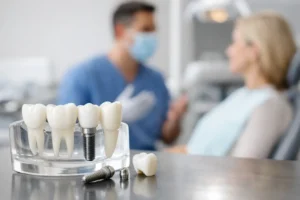
A good consultation should leave you with clarity, not pressure. Ask why four implants are recommended, or why your case would benefit from additional implants. Ask how the team evaluates bone quality, what bridge material is planned, and what happens if an implant does not integrate as expected.
You should also ask about long-term care. Find out how to clean around the bridge, how often you should return for maintenance, and what signs of trouble require a call to the office. Questions about financing, treatment phases, and all expected fees are equally appropriate.
Choose the Plan Built for Your Mouth
All-on-4 and All-on-X are not competing labels where one wins every time. Both can offer a life-changing alternative to removable dentures and failing teeth. The better option is the one that gives your new smile the support it needs without adding treatment you do not need.
If you are tired of hiding your smile or planning meals around unstable teeth, a detailed implant consultation can replace uncertainty with a clear path forward. The right full-arch plan should help you feel comfortable not only on the day you receive your new teeth, but every time you use them.