
Patient education
Peri-Implantitis Explained: Signs, Causes, and Treatment
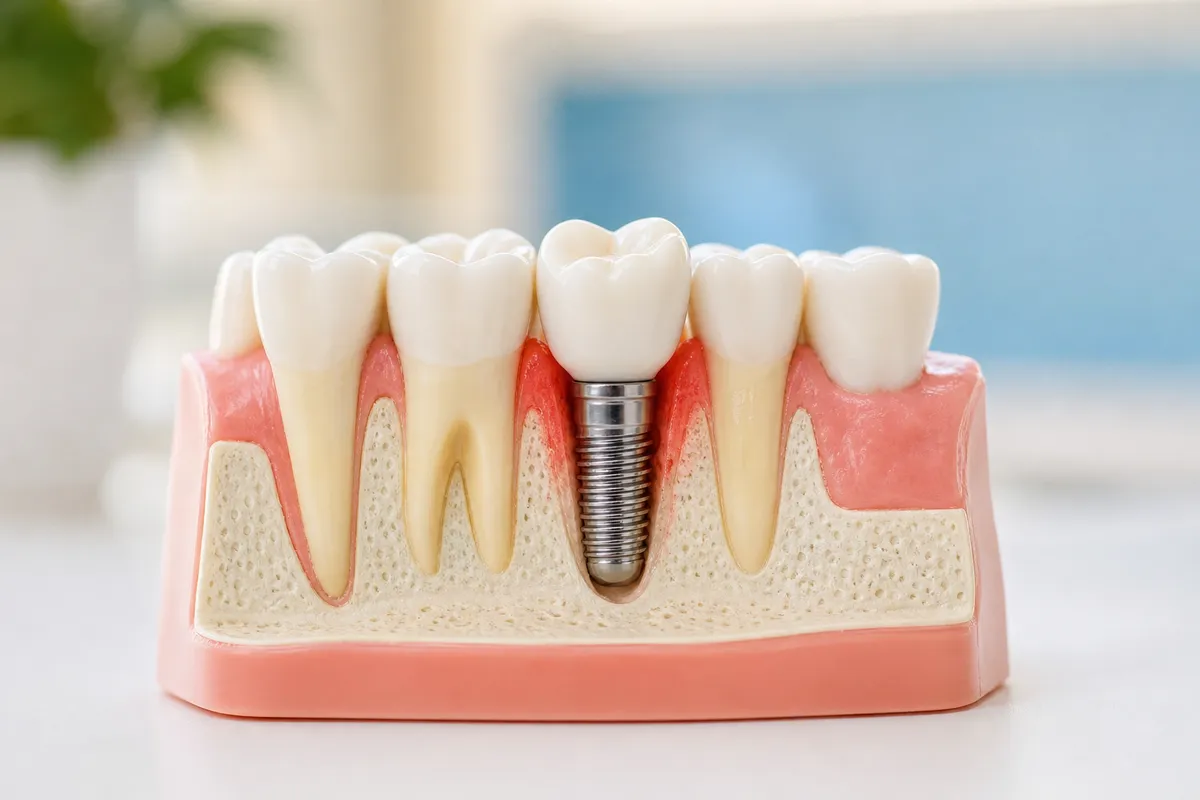
Peri-implantitis is an inflammatory condition around a dental implant that affects both the gum and the bone supporting it. It usually starts with plaque buildup and gum inflammation, and if it isn't treated it can lead to bone loss and, eventually, loss of the implant. Its earlier, reversible stage, inflammation of the gum without bone loss, is called peri-implant mucositis. Catching it early makes treatment much simpler.
Mucositis vs. peri-implantitis
- Peri-implant mucositis: red, swollen, or bleeding gum around the implant, without bone loss. Usually reversible with cleaning and better home care.
- Peri-implantitis: the same inflammation plus loss of the bone around the implant, seen on X-rays. Needs more involved treatment.
Warning signs
- Bleeding when you brush or floss around the implant.
- Red, swollen, or tender gum around it.
- Pus, a bad taste, or bad breath from that area.
- Gum receding so more of the crown or implant shows.
- In later stages, the implant feeling loose.
See signs a dental implant needs evaluation for more.
What raises the risk
- Plaque buildup from cleaning that misses the implant's gumline.
- A history of gum disease.
- Smoking or nicotine use.
- Poorly controlled diabetes.
- Crowns or bridges that are hard to clean around, or leftover cement under the gum.
- Skipping regular checkups.
Related: gum disease and dental implants, diabetes and dental implants, and vaping and dental implants.
How it's treated
Treatment depends on how much bone is involved. It ranges from professional cleaning of the implant surface and better home care, to surgical cleaning, and in some cases bone regeneration. Sometimes the crown or bridge is modified so it's easier to clean. When too much bone has been lost, the implant may need to be removed.
Removal is a last resort; see can a dental implant be removed.
Why it can go unnoticed
Peri-implantitis is often painless in its early stages, and implants don't have a nerve that warns you the way a decaying tooth does. That's why regular checkups, which include probing the gum around implants and periodic X-rays, matter even when everything feels fine.
Prevention
Daily cleaning at the implant's gumline, regular professional cleanings, and not smoking are the foundation. Our guide to cleaning around a dental implant covers the routine.
If an implant's gum is bleeding or swollen, a consultation with an exam and imaging gives you a written, itemized plan.
Related questions
What is peri-implantitis?
An inflammatory condition around a dental implant that affects the gum and the bone supporting it, often linked to plaque buildup. Left untreated, it can lead to bone loss and loss of the implant.
What is the difference between peri-implant mucositis and peri-implantitis?
Mucositis is inflammation of the gum around an implant without bone loss, and it's usually reversible. Peri-implantitis also involves loss of the bone around the implant and needs more involved treatment.
Can peri-implantitis be treated?
Often, yes. Treatment ranges from deep cleaning of the implant surface and better home care to surgical cleaning and sometimes bone regeneration, depending on how much bone is affected. Earlier is easier.