A CT scan for dental implants is often the step that turns a hopeful idea – eating comfortably, speaking clearly, and smiling without hiding your teeth – into a treatment plan built for your actual mouth. Instead of relying on a flat image alone, your implant specialist can see your jawbone, tooth roots, nerves, sinuses, and available space in detailed 3D.
That level of planning matters whether you are replacing one missing tooth or considering a full-mouth solution. Dental implants are designed to be long-lasting, but their success starts well before the implant is placed. A clear view of your anatomy helps your care team plan with precision, protect important structures, and recommend the treatment that fits your health, goals, and budget.
What Is a CT Scan for Dental Implants?
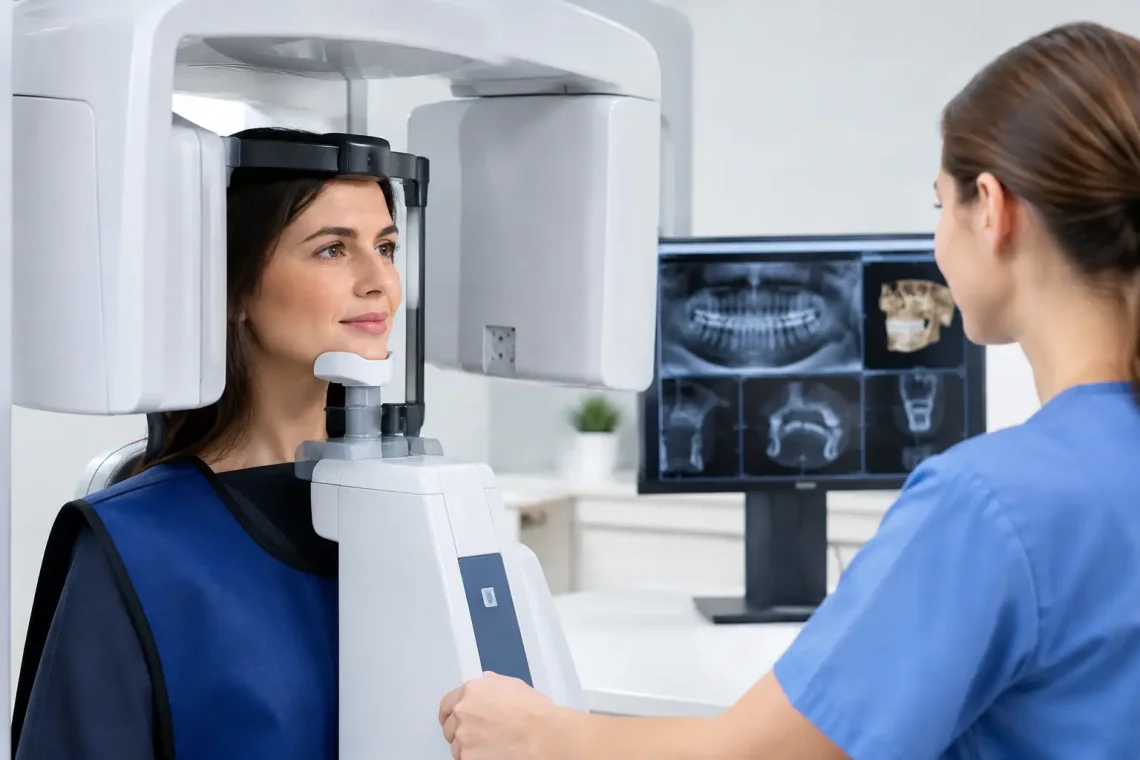
For implant planning, many practices use cone beam computed tomography, often called a CBCT scan. This specialized dental CT scan creates a three-dimensional image of your teeth, jawbone, and surrounding facial structures.
Traditional dental X-rays remain useful, but they show a two-dimensional view. A CBCT scan lets your specialist look at the area from different angles and measure it with greater accuracy. Think of it as the difference between seeing a photograph of a house and reviewing its floor plan, foundation, and layout before making structural changes.
The scan is quick and noninvasive. You will typically stand or sit still while the imaging unit rotates around your head. There are no needles, no enclosed tunnel, and usually no preparation beyond removing glasses, earrings, or removable dental appliances when instructed.
Why 3D Imaging Matters Before Implant Treatment
An implant is placed into the jawbone, where it acts like an artificial tooth root. The implant must be positioned carefully to support the final crown, bridge, or full-arch restoration while respecting the bone and nearby anatomy.
Your CT scan helps your specialist answer practical questions that cannot always be answered with an exam alone. Is there enough bone height and width for an implant? Where does the lower jaw nerve run? How close are the upper back teeth to the sinus cavity? Is there hidden infection, bone loss, or an impacted tooth that could affect treatment?
Those answers guide decisions about implant size, angle, and placement. They can also reveal whether you may benefit from bone grafting, sinus augmentation, tooth extraction, or a different implant approach. Finding these details early is not bad news – it is how your team avoids surprises and plans treatment around your individual needs.
For patients considering All-On-4 or All-On-X full-mouth implants, 3D imaging is especially valuable. Full-arch treatment requires careful coordination of multiple implants, bite position, bone availability, and the final teeth. A scan gives your specialist a detailed roadmap for restoring function, facial support, and a natural-looking smile.
What Your Specialist Looks for on the Scan
A CT scan does more than confirm that bone is present. Bone quality, shape, and location all matter. Dense, healthy bone may offer strong support for an implant, while areas affected by gum disease, long-term tooth loss, infection, or previous extractions may need additional preparation.
Your specialist also evaluates the planned restoration. A dental implant should not simply fit into the bone. It should be placed in a position that supports how you bite, chew, and clean around your new tooth. Planning from the final tooth backward can help create a result that looks natural and functions comfortably.
The scan may also help identify conditions that need attention before surgery. These can include residual root fragments, cysts, sinus concerns, or bone changes that are not obvious during a routine exam. Addressing these findings first supports a safer, more predictable treatment experience.
Is a Dental CT Scan Safe?
Dental CBCT imaging uses radiation, so it should be recommended only when it provides useful diagnostic information. For implant planning, the additional detail can be clinically valuable because the procedure involves placing implants near nerves, sinuses, and other sensitive structures.
The radiation dose varies based on the machine, scan area, and settings used. A focused scan of one implant area may require less imaging than a scan covering both jaws for full-mouth reconstruction. Your dental team should use the smallest appropriate scan area and settings for your treatment needs.
Be sure to tell your provider if you are pregnant or think you may be pregnant. Also share any relevant medical conditions, medications, and previous dental imaging. Your specialist can determine what imaging is appropriate and answer questions about why it is being recommended.
What Happens After the CT Scan?
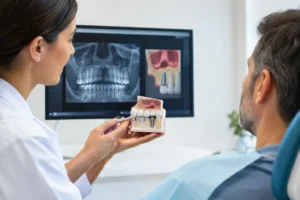
After your scan, your implant specialist reviews the images alongside your oral exam, health history, and treatment goals. This is where advanced technology becomes a personal treatment plan.
For a single missing tooth, the discussion may focus on whether the site is ready for an implant and what type of crown will complete your smile. If several teeth are missing, you may compare individual implants, an implant-supported bridge, or a removable or fixed implant-supported denture. For extensive tooth loss or failing teeth, your team may discuss a full-arch option that restores an entire upper or lower smile.
Not every patient needs the same path. Some people have enough bone to move directly into implant placement, while others need time for healing after an extraction or graft. In certain cases, implants can be placed soon after a tooth is removed. In others, a staged approach may create a stronger foundation. The right timing depends on bone health, infection, medical history, bite forces, and the type of restoration you want.
At California Dental Implants Specialists, in-house digital CT imaging helps make this planning process more efficient and easier to understand. Rather than guessing about what is happening beneath the gums, you can have a clear conversation about your options, timeline, and next steps.
How to Prepare for Your Scan and Consultation
Most patients do not need to fast or make major changes before a dental CT scan. Arrive with a list of your medications, medical conditions, and questions about your teeth or dentures. If you have prior X-rays, treatment records, or information about previous implants, bring those as well when available.
During your consultation, be honest about what is not working. Maybe you avoid steak, worry that your denture will move when you talk, have a painful broken tooth, or feel self-conscious in photos. These details help your team recommend a solution that improves daily life, not just the appearance of your smile.
It is also reasonable to ask about costs, financing, insurance, healing time, and temporary teeth. Implant care is an investment in your health and confidence, and you deserve straightforward answers before you move forward. A thoughtful plan should explain what is included, what may change based on your scan, and how your treatment can be phased if needed.
A Better Plan Starts With Seeing the Full Picture
A dental implant is not a one-size-fits-all procedure. The best results come from understanding the bone, the bite, the surrounding anatomy, and the person behind the smile. A CT scan gives your specialist the information to plan with greater confidence and gives you a clearer picture of what is possible.
If missing or failing teeth are changing how you eat, speak, or feel about your smile, a consultation is a practical first step. You do not need to have every answer before you come in. You simply need a team that can listen, evaluate your needs carefully, and help you move toward comfortable, lasting tooth replacement.