
Patient education
Upper vs. Lower Jaw Dental Implants: Why They Differ
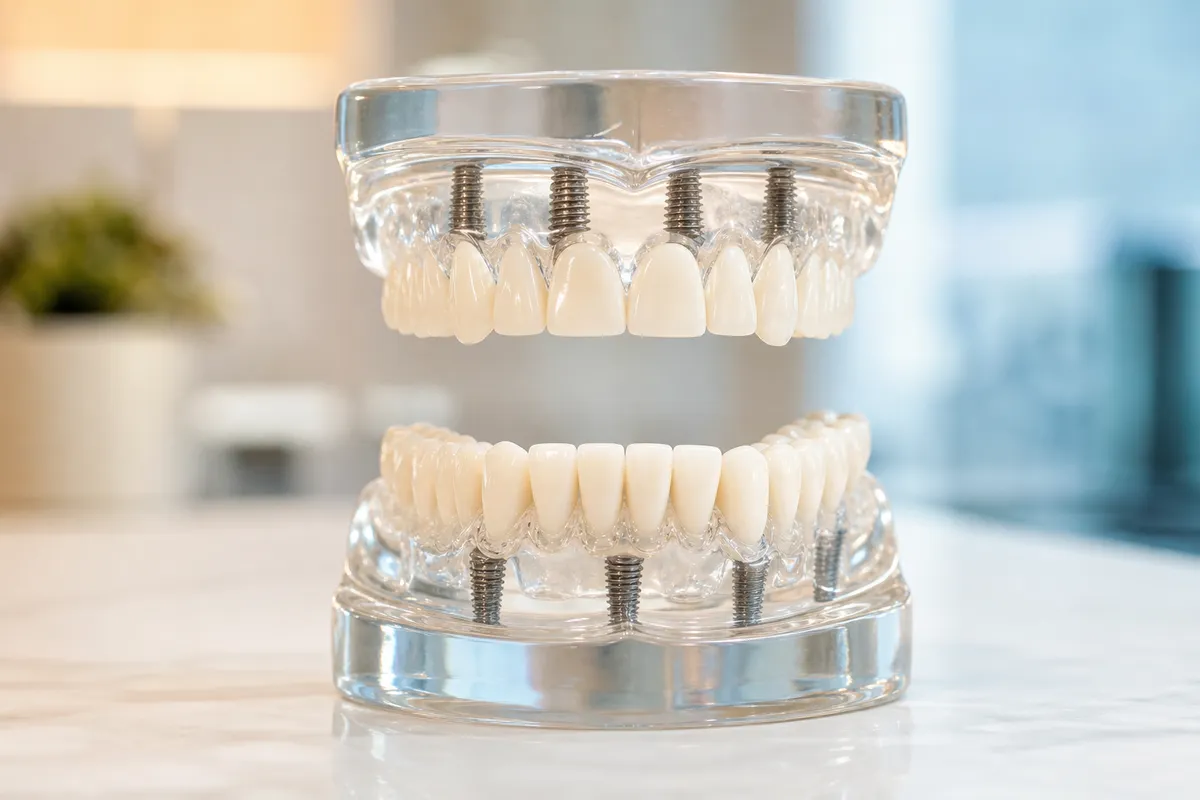
Upper and lower jaw implants differ because the bone and anatomy differ. The upper jaw's bone is often softer, and the sinus sits above the back teeth, which can limit bone height. The lower jaw's bone is usually denser, but a nerve runs through it that implants must avoid. Those differences shape how many implants are used, whether bone grafting is needed, and sometimes how long healing takes.
The upper jaw
- Bone is often less dense, especially toward the back.
- The sinus sits above the upper back teeth; after tooth loss, it can leave little bone height.
- Upper full arches often use more implants to share the load.
- Healing time before the final teeth may be longer.
When sinus height is the limit, a sinus lift can add bone; angled implants in All-On-4 designs can sometimes avoid it. For severe upper bone loss, see zygomatic implants.
The lower jaw
- Bone is usually denser, which helps implants hold well.
- A nerve runs through the lower jaw to the lip and chin; CT imaging maps it so implants are kept clear of it.
- Lower dentures tend to move more than upper ones, which is why implants help them so much.
Why lower dentures benefit so much from implants
An upper denture can hold by suction across the palate. A lower denture sits on a narrower ridge with the tongue moving around it, so it loosens more easily. Two implants can make a large difference; see implant-supported dentures.
Full arches: upper and lower often differ
When both arches are replaced, the plans are frequently not mirror images. The upper arch may use more implants or angled implants to work around the sinus, while the lower arch may need fewer implants because of denser bone. The final teeth on each arch are also designed to meet each other in a balanced bite.
Questions to ask about your jaw
- How much bone do I have where the implants would go, and how dense is it?
- Is the sinus (upper) or the nerve (lower) close to where an implant would sit?
- Will I need grafting first, and how would that change the timeline?
- Is the healing time before my final teeth different for each jaw?
Planning both
Either way, planning starts with CT imaging to measure bone and locate the sinus or nerve. For full arches, the upper and lower plans may differ in implant number and design; see All-On-4 vs. All-On-6.
Our $699 dental implant offer covers the titanium implant post, the implant consultation exam, and X-rays; the CT scan, abutment, crown, and sedation are priced separately and quoted in writing before any treatment begins.
A consultation with an exam and imaging gives you a written, itemized plan.
Related questions
Are upper or lower dental implants harder?
Each jaw has its own challenges. The upper jaw's bone is often softer and the sinus sits above the back teeth; the lower jaw has a nerve that must be avoided. CT imaging maps both before any implant is placed.
Do upper jaw implants take longer to heal?
They may. Because upper-jaw bone is often less dense, upper implants are sometimes given more healing time before the final teeth. Your team decides the timing from your imaging and how the implant settles.
Why do lower dentures tend to be looser than upper ones?
An upper denture can use suction across the palate; a lower one sits on a narrower ridge with the tongue moving around it. That's why two implants can make such a difference to a lower denture.