Losing several teeth changes more than your smile. Foods that once felt easy can become frustrating, conversations may feel less natural, and you may start avoiding photos or social situations. When comparing an implant supported bridge versus partial denture, the right answer comes down to your oral health, the location of the missing teeth, your lifestyle, and what you want your replacement teeth to feel like every day.
A removable partial denture can be a practical, lower-upfront-cost option. An implant-supported bridge is a fixed restoration supported by dental implants placed in the jawbone. Both can fill a gap in your smile, but they offer very different experiences when it comes to stability, chewing, maintenance, and long-term support for your mouth.
Implant Supported Bridge Versus Partial Denture: The Core Difference
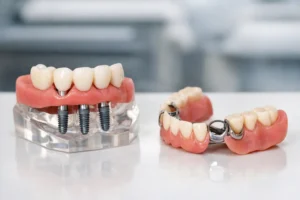
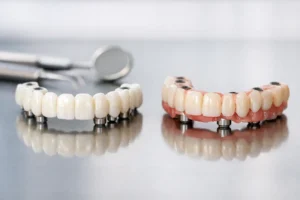
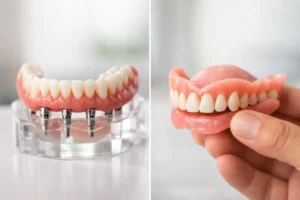
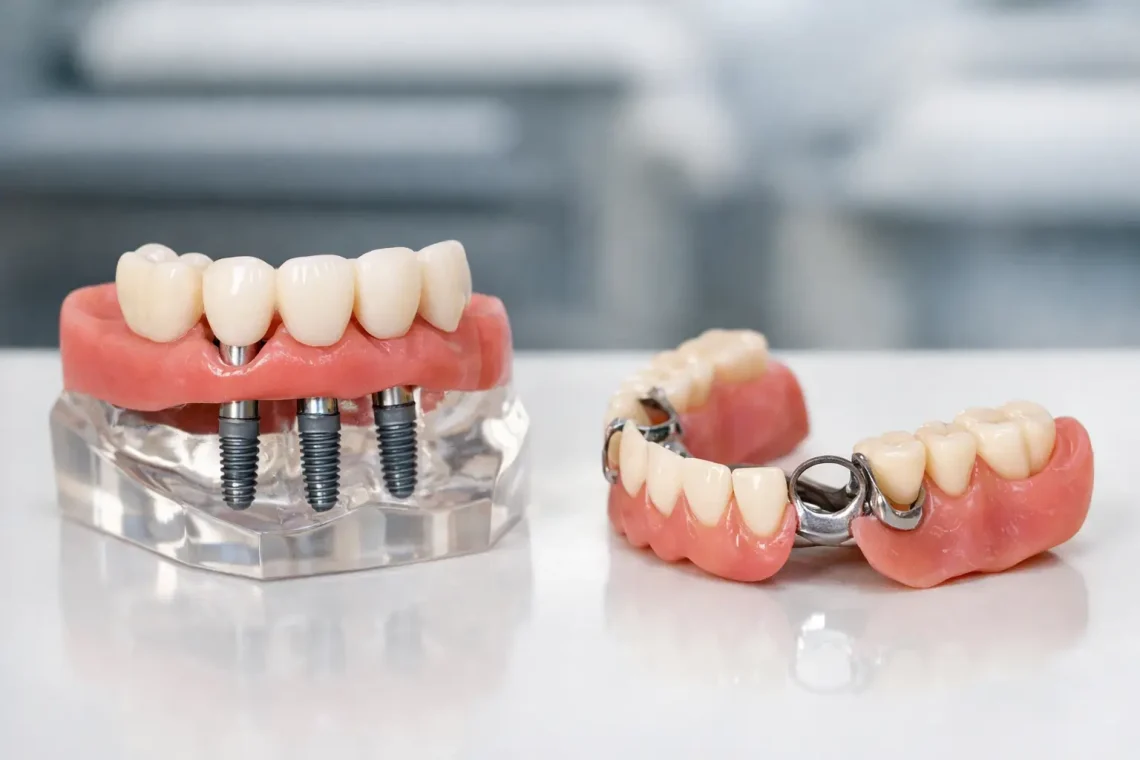
An implant-supported bridge replaces multiple missing teeth with a custom bridge attached to strategically placed dental implants. The implants act like artificial tooth roots, providing a stable foundation below the gumline. Once the final bridge is secured, it stays in place and is designed to look, feel, and function much like natural teeth.
A partial denture is a removable appliance that fills spaces left by missing teeth. It may use a metal or flexible framework with clasps that hold onto nearby natural teeth. You remove it for cleaning and usually at night, depending on your dentist’s instructions.
Neither option is automatically right for every patient. A partial denture may make sense when someone needs an immediate, budget-conscious way to replace teeth or is not ready for surgery. An implant-supported bridge is often the stronger long-term choice for patients who want a secure, fixed solution and are medically and anatomically good candidates for implants.
How an implant-supported bridge feels
The greatest advantage for many patients is stability. Because the bridge is anchored to implants, it does not rely on clasps around neighboring teeth or pressure against the gums. You can speak, smile, and eat with more confidence because the restoration is not meant to shift when you bite.
An implant bridge can also restore stronger chewing function than a removable partial. That matters when you miss crisp apples, steak, salads, or simply the ability to eat at a restaurant without worrying about your teeth moving. While every treatment plan is different, implant-supported teeth are designed to provide dependable everyday function.
How a partial denture feels
Modern partial dentures can look natural and are more comfortable than many people expect. Still, they rest on the gums and may move slightly during chewing or speaking. Some patients need an adjustment period for speech, saliva flow, and the feeling of having an appliance in the mouth.
Over time, the fit can change as the jawbone and gums change. A partial denture may need adjustments, relining, repair, or replacement to remain comfortable. Clasps can also be visible in certain areas of the mouth, although careful design can minimize their appearance.
Comfort, Confidence, and Everyday Convenience
For patients who are tired of taking teeth in and out, a fixed implant bridge can feel life-changing. You brush it in place, clean around it with the tools your dental team recommends, and continue your daily routine without soaking or removing an appliance. There is no adhesive and no need to worry about your teeth slipping during an important conversation.
A partial denture requires a different routine. It must be removed and cleaned thoroughly, and the natural teeth supporting its clasps need consistent care. Food particles can collect beneath the appliance, so cleaning after meals becomes especially important. This is manageable for many patients, but it is a meaningful consideration if convenience is a top priority.
Confidence is personal. Some people are perfectly comfortable with a removable partial. Others want the reassurance of teeth that stay in place from morning to night. A consultation is the best place to discuss what will help you feel most like yourself again.
Protecting Your Jawbone and Remaining Teeth
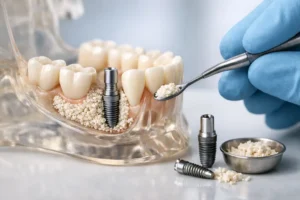
When a tooth is lost, the bone in that area no longer receives the stimulation created by chewing through a natural root. The body can gradually resorb that unused bone. Dental implants are placed in the jawbone and can help provide the stimulation that supports bone preservation.
A partial denture fills the visible space, but it does not replace tooth roots or stimulate the jawbone. Bone changes may continue beneath the missing teeth, which can affect facial support and the fit of the appliance over time.
There is another important difference: an implant-supported bridge is supported by implants, not by the adjacent natural teeth. A partial denture often uses neighboring teeth for retention. Those teeth must withstand the forces of the clasps and appliance, making regular exams and hygiene especially important. If those supporting teeth are already weak, heavily restored, or mobile, a partial may not be the most protective option.
Cost: Looking Beyond the Initial Price
A partial denture usually costs less upfront than an implant-supported bridge. For someone who needs an affordable short-term replacement after extractions, that can be a significant advantage. It can also be a reasonable option when medical conditions, bone availability, or personal preferences make implant treatment unsuitable.
However, the first price is only part of the financial picture. Partial dentures commonly require future adjustments, relines, repairs, or replacement as the mouth changes. If clasps place stress on natural teeth, additional dental work may eventually be needed. These possibilities do not mean a partial denture is a poor choice, but they should be included in an honest long-term comparison.
Implant treatment has a higher initial investment because it includes surgical placement, planning, imaging, healing time, and a custom final bridge. For many patients, the investment is worthwhile because of the stability, function, and durability it can provide. Financing options, insurance benefits when applicable, and a clear written treatment plan can make care more attainable.
At California Dental Implants Specialists, a consultation can clarify the full cost of your recommended treatment, including whether an implant promotion may apply to part of your care. The goal is not to push one solution on every patient. It is to help you understand what is possible and choose a treatment that supports your health, comfort, and budget.
Who Is a Good Candidate for an Implant Bridge?
Many adults with several missing teeth can be candidates for an implant-supported bridge, including people who have worn partial dentures for years. Good candidacy depends on factors such as gum health, bone volume, overall medical history, bite forces, and whether any remaining teeth need treatment first.
Even if you have been told you lack enough bone, do not assume implants are out of reach. Advanced digital CT imaging can show the exact quality and quantity of bone, while a specialist can determine whether treatment options such as bone grafting, alternative implant placement, or a different restoration design may help.
Smoking, uncontrolled diabetes, active gum disease, and teeth grinding do not always rule out implant treatment, but they require careful planning. A quality implant plan should be built around your individual health needs rather than a one-size-fits-all recommendation.
Making the Choice That Fits Your Life
Choose a partial denture if you need a removable solution, want the lowest initial cost, or need a replacement option while preparing for future treatment. It can restore the appearance of missing teeth and provide useful function when properly designed and maintained.
Consider an implant-supported bridge if you want teeth that stay in place, stronger chewing ability, no visible clasps, and support for the jawbone beneath missing teeth. It is particularly appealing for patients who feel frustrated by a loose partial, dislike removing an appliance, or want a more permanent-feeling replacement.
The most valuable next step is a personal evaluation, not a guess based on someone else’s experience. A precise exam and digital imaging can show what is happening below the gums and give you a clear path forward. You deserve a tooth replacement solution that lets you eat, speak, laugh, and smile without holding back.